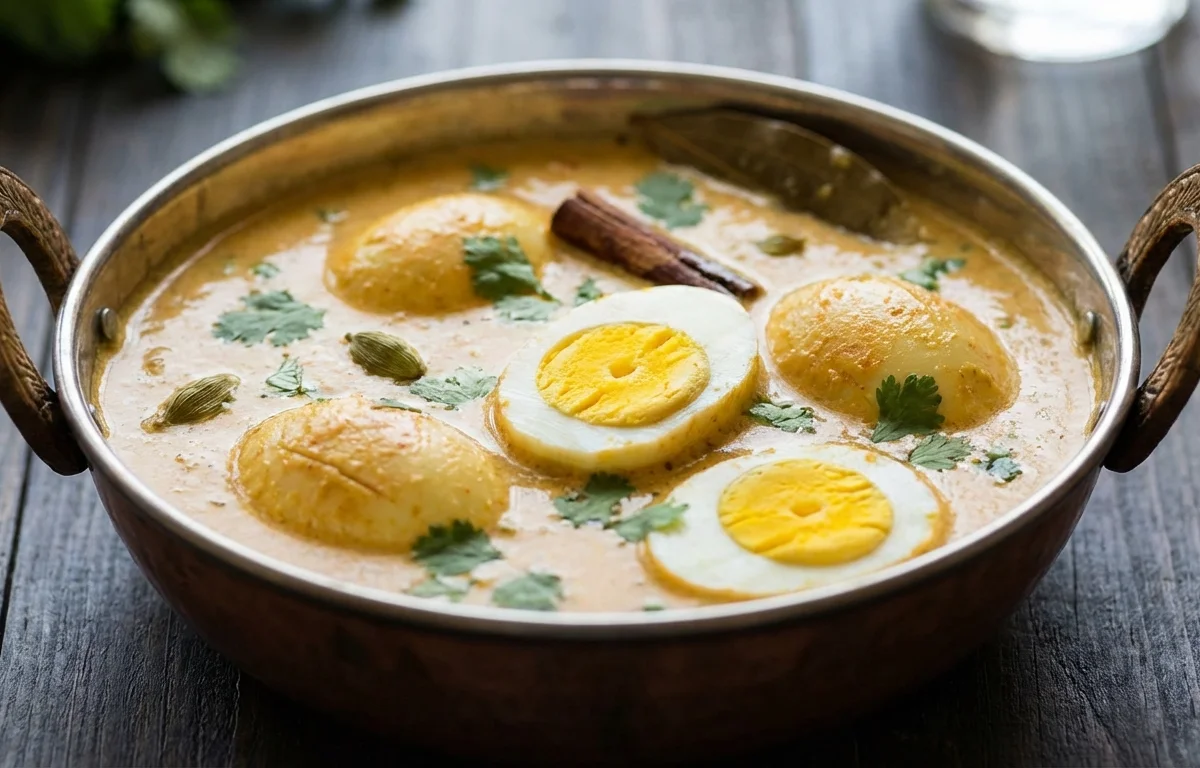
Egg Kurma
Hard-boiled eggs simmered in a rich, velvety coconut-based gravy fragrant with whole spices and fennel. This mild, aromatic curry comes together quickly and pairs beautifully with idiyappam, appam, parotta, or steamed rice for a satisfying weeknight dinner.
For 4 servings
- boil · ~15 min
Boil and peel the eggs.
1.Place 4 eggs in a saucepan and cover with cold water by 1 inch.2.Bring water to a rolling boil, then cover and remove from heat. Let sit for 10 minutes.3.Drain hot water, transfer eggs to an ice bath, and cool for 5 minutes. Peel and set aside.TIPIce bath cooling makes the shells slip right off — don't skip it. - prep · ~3 min
Prepare the coconut paste.
In a blender jar, add grated coconut, soaked poppy seeds (with soaking water), cashew nuts, and 3 tablespoons of water. Grind to a smooth, fine paste. Set aside.
- temper · ~2 min
Bloom the whole spices.
1.Heat oil and ghee together in a kadai over medium heat.2.Add cinnamon stick, cloves, cardamom pods, fennel seeds, and star anise. Sauté until fragrant and fennel turns light golden, about 30 seconds.3.Toss in curry leaves and let them crackle for a few seconds. - saute · ~15 min
Sauté the onions and build the base.
1.Add sliced onions and green chilies to the pan. Cook, stirring often, until onions are soft and deep golden brown, about 8 to 10 minutes.2.Add ginger garlic paste and sauté until the raw smell disappears, about 1 minute.3.Add chopped tomatoes, turmeric powder, coriander powder, garam masala, and salt. Cook until tomatoes break down completely and oil begins to separate at the edges, about 5 to 6 minutes.TIPPatience here pays off — deeply browned onions give the kurma its sweetness and body. - simmer · ~12 min
Simmer the kurma gravy.
1.Lower the heat and stir in the ground coconut-poppy seed paste. Sauté for 2 minutes, stirring continuously to prevent sticking.2.Pour in 1 cup of water, stir well, and bring the gravy to a gentle boil.3.Reduce heat to low, cover, and let it simmer for 10 minutes. The gravy will thicken and the oil will float on top. - prep · ~5 min
Prepare the eggs and finish the dish.
1.Make three shallow lengthwise slits on each boiled egg — this helps them soak up the gravy.2.Gently slide the eggs into the simmering gravy. Spoon some gravy over the top.3.Cover and simmer on low heat for another 5 minutes so the flavors meld. - garnish · ~1 min
Garnish with fresh coriander leaves and serve hot.
Transfer the Egg Kurma to a serving bowl, sprinkle generously with chopped coriander leaves, and serve immediately with idiyappam, parotta, or steamed rice.
What to keep in mind.
6 tips from the recipe — small details that make a real difference to the final dish.
- 1Slitting the boiled eggs before adding them to the gravy allows the rich coconut sauce to seep in, making every bite more flavorful.
- 2Sauté the onion-ginger garlic mixture until the oil visibly separates at the edges — this ensures a well-cooked, non-raw masala base.
- 3Grind the coconut, poppy seeds, and cashews to a very smooth paste using a splash of water; a coarse paste will make the gravy grainy.
- 4For a thicker gravy, reduce the water to ¾ cup and simmer uncovered for an extra 2 minutes after adding the paste.
- 5Leftover kurma keeps well in the fridge for up to 2 days — the flavor deepens as it sits, and the eggs absorb more gravy.
- 6Bloom the whole spices in oil and ghee only until fragrant (about 30 seconds) to avoid burning, which turns the gravy bitter.
Adapt it for your goals.
Low-oil
Replace the oil and ghee with 1 tablespoon of coconut oil and reduce the cashews to 6 pieces; this cuts the fat while keeping the coconut flavor intact.
jainJain
Omit the onion and garlic — use asafoetida (hing) a pinch in the temper and add 1/4 cup of finely chopped raw banana to build body; the gravy remains equally rich.
veganVegan
Swap the hard-boiled eggs with cubes of firm tofu (pan-fried until golden) and replace ghee with an extra teaspoon of coconut oil; the tofu absorbs the gravy beautifully.
high proteinHigh-protein
Add 200 g of sautéed paneer cubes along with the eggs for a double-protein version that stays true to the dish's creamy texture.
nut freeNut-free
Skip the cashews and use 2 tablespoons of raw melon seeds (magaz) instead — they offer the same creaminess without allergens.
Why this is on our healthy list.
Rich in Healthy Fats
Coconut and ghee provide medium-chain triglycerides (MCTs) that support energy metabolism and are easily digested, making this a nourishing choice for a balanced meal.
Good Source of Protein
Eggs deliver about 6 grams of complete protein each, helping with muscle repair and satiety when paired with rice or bread.
Packed with Aromatic Antioxidants
Cinnamon, cloves, and star anise are rich in polyphenols that have anti-inflammatory properties and aid digestion.
Calcium from Poppy Seeds
Poppy seeds contribute a small amount of calcium and magnesium to the gravy, supporting bone health without adding dairy.
Frequently asked questions
Yes, replace the coconut paste with 1/2 cup of thick coconut milk, but reduce the water to 1/2 cup to maintain the gravy's richness.