Gaintha Pitha
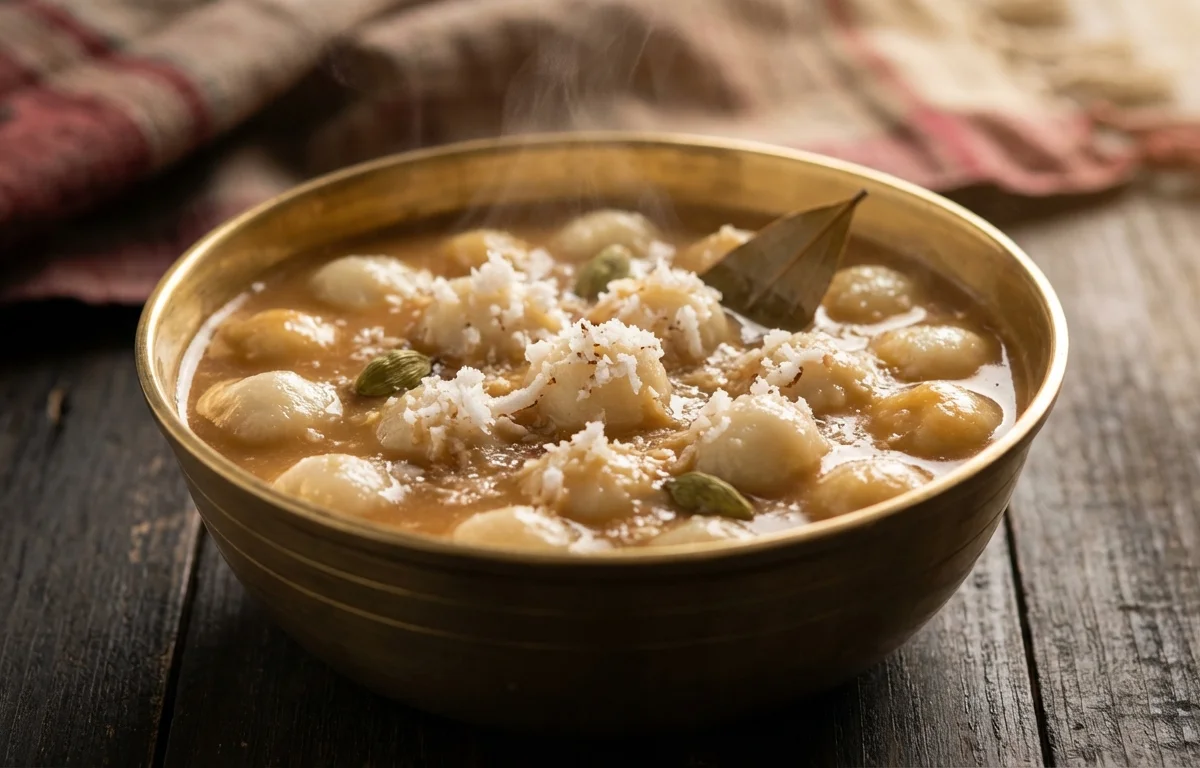
A rustic Odia pitha made with rice flour dough shaped into small dumplings and simmered in a lightly sweet milk base. It is simple, comforting, and especially lovely when served warm on festive mornings.
For 4 servings
- boil · ~4 min
Boil water for the dough.
Bring 1 cup water and salt to a boil in a pan over medium heat.
- mix · ~4 min
Make the rice flour dough.
1.Lower the heat and add the rice flour to the boiling water.2.Mix quickly until the flour comes together in a rough mass.3.Turn off the heat and cover for 3 minutes so the flour softens.TIPMix as soon as the flour goes in so lumps do not form. - prep · ~7 min
Shape the gaintha.
1.When the dough is warm enough to handle, knead it until smooth.2.Grease your palms lightly with ghee.3.Pinch off small portions and roll them into short oval or finger-shaped dumplings.TIPKeep the dumplings small and even so they cook through at the same time. - simmer · ~8 min
Cook the milk base.
1.Heat the milk in a wide pan over medium-low heat.2.Add the crushed cardamom and let the milk come to a gentle simmer.3.Stir often so the milk does not catch at the bottom. - simmer · ~12 min
Simmer the dumplings in milk.
1.Slide the shaped gaintha gently into the simmering milk.2.Cook on low heat until the dumplings turn soft and slightly puffed, 10 to 12 minutes.3.Stir gently once or twice so they do not stick or break.TIPKeep the heat low; a strong boil can make the milk split and the dumplings crack. - mix · ~3 min
Add the jaggery.
Add the grated jaggery after the dumplings are cooked and the heat is low. Stir until it melts fully into the milk.
TIPDo not add jaggery at a hard boil, or the milk may curdle. - simmer · ~3 min
Finish with a short simmer.
Cook for 2 to 3 minutes more on very low heat until the milk lightly thickens and coats the dumplings.
- serve
Serve warm.
Spoon the Gaintha Pitha into katoris and serve warm, with some of the sweet milk in each portion.
What to keep in mind.
7 tips from the recipe — small details that make a real difference to the final dish.
- 1Knead the rice flour dough while still warm, not hot; it smooths out faster and cracks less during shaping.
- 2If the dough feels dry while kneading, wet your fingertips and work in a few drops of warm water rather than adding flour.
- 3Shape the gaintha small and uniform so the centers cook through before the milk reduces too much.
- 4Use a wide pan for the milk so the dumplings sit in a single layer and cook evenly without sticking.
- 5Keep the milk at a gentle simmer only; bubbling too hard can split the milk and rough up the dumplings.
- 6Add jaggery only after the dumplings are fully cooked and the heat is very low to prevent curdling.
- 7Gaintha Pitha thickens as it stands, so loosen leftovers with a splash of warm milk before reheating.
Adapt it for your goals.
Nolen-gur
Use date palm jaggery instead of regular jaggery for a deeper wintery sweetness and a more aromatic milk base.
coconut richCoconut-rich
Replace part of the milk with thin coconut milk for a softer, more fragrant version that pairs beautifully with jaggery.
festive ghee roastedFestive-ghee-roasted
Lightly sauté the shaped dumplings in a little ghee before simmering for a nuttier aroma and slightly firmer texture.
less sweetLess-sweet
Reduce the jaggery if you want the natural taste of milk and cardamom to stand out more, especially for breakfast serving.
Why this is on our healthy list.
Milk-Based Nourishment
Full-fat milk provides protein and calcium, making this pitha more sustaining than a dry sweet snack.
Gentle, Simple Ingredients
With rice flour, milk, jaggery, and cardamom, the dish uses a short ingredient list and minimal processing.
Jaggery for Added Depth
Jaggery sweetens the dish while bringing a more complex, less flat sweetness than refined white sugar.
Frequently asked questions
Jaggery can split milk if added at a hard boil. Lower the heat first, add it after the dumplings are cooked, and stir gently until dissolved.