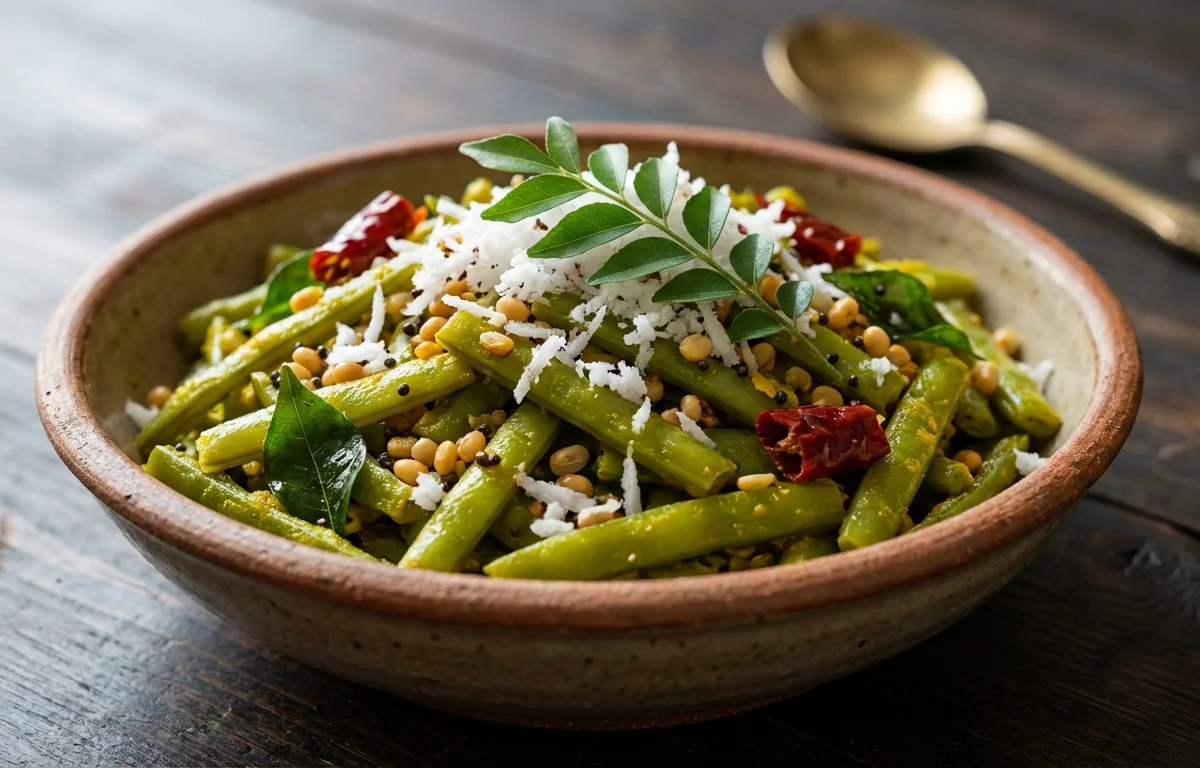
Gawar Upkari
A simple coastal Karnataka style cluster beans stir-fry with a light coconut finish. Tender gawar gets cooked with a mild tempering, making a homely side dish that pairs beautifully with rice and dal.
For 4 servings
- prep · ~10 min
Prepare the gawar.
1.Wash the gawar well and drain.2.Trim both ends and pull away any tough strings.3.Chop into small even pieces so they cook quickly and evenly.TIPIf the beans look mature, remove extra side strings for a more tender bite. - temper · ~2 min
Make the tempering.
1.Heat oil in a kadai over medium heat.2.Add mustard seeds and let them splutter.3.Add urad dal and cook until lightly golden.4.Add dried red chili, curry leaves, and green chili and fry for a few seconds.TIPKeep the heat moderate so the urad dal turns golden and does not burn. - boil · ~15 min
Cook the gawar.
1.Add the chopped gawar to the kadai and mix well with the tempering.2.Add turmeric powder, salt, and water.3.Cover and cook on low heat until the gawar is tender, stirring once or twice.TIPAdd only a little water; upkari should stay semi-dry, not saucy. - mix · ~2 min
Add the coconut.
Once the gawar is cooked and most of the moisture has dried up, add the grated fresh coconut and mix gently. Cook uncovered for 1 to 2 minutes so everything comes together without drying out.
- serve
Serve the gawar upkari hot.
What to keep in mind.
7 tips from the recipe — small details that make a real difference to the final dish.
- 1Chop the cluster beans small and even so they soften at the same rate without turning patchy.
- 2If the gawar is mature, remove extra side strings; otherwise the stir-fry can taste fibrous.
- 3Let the mustard fully splutter before adding urad dal, or the tempering will taste raw.
- 4Cook covered on low heat with just the listed water so the upkari stays semi-dry, not mushy.
- 5Add the coconut only after the beans are tender and the pan looks nearly dry, so it stays sweet and fluffy.
- 6Stir only once or twice while cooking; too much stirring can break the beans and make the texture pasty.
- 7This upkari keeps well for lunch boxes; cool completely before packing so the coconut finish stays fresh.
Adapt it for your goals.
No-onion-garlic
This recipe is naturally free of onion and garlic, making it ideal for a simple satvik-style everyday side.
spicierSpicier
Add one extra green chili or another dried red chili for a hotter upkari that pairs especially well with plain rice and dal.
mixed vegMixed-veg
Combine gawar with diced carrots or potatoes for a softer, less bitter variation that suits children and lunch boxes.
low coconutLow-coconut
Reduce the coconut for a lighter finish while keeping the same tempering and semi-dry texture.
Why this is on our healthy list.
Fiber-Rich Vegetable Side
Cluster beans are a good vegetable choice for adding fiber and bulk to a simple meal of rice and dal.
Balanced Plant Ingredients
The dish combines cluster beans, a little urad dal, and coconut for a satisfying mix of plant-based texture and nourishment.
Lightly Cooked and Minimal Oil
Because it uses a small amount of oil and gentle cooking, the dish stays light while still tasting full and comforting.
Frequently asked questions
Cluster beans naturally have a mild bitterness. Using tender beans, removing strings well, and finishing with fresh coconut helps balance it.