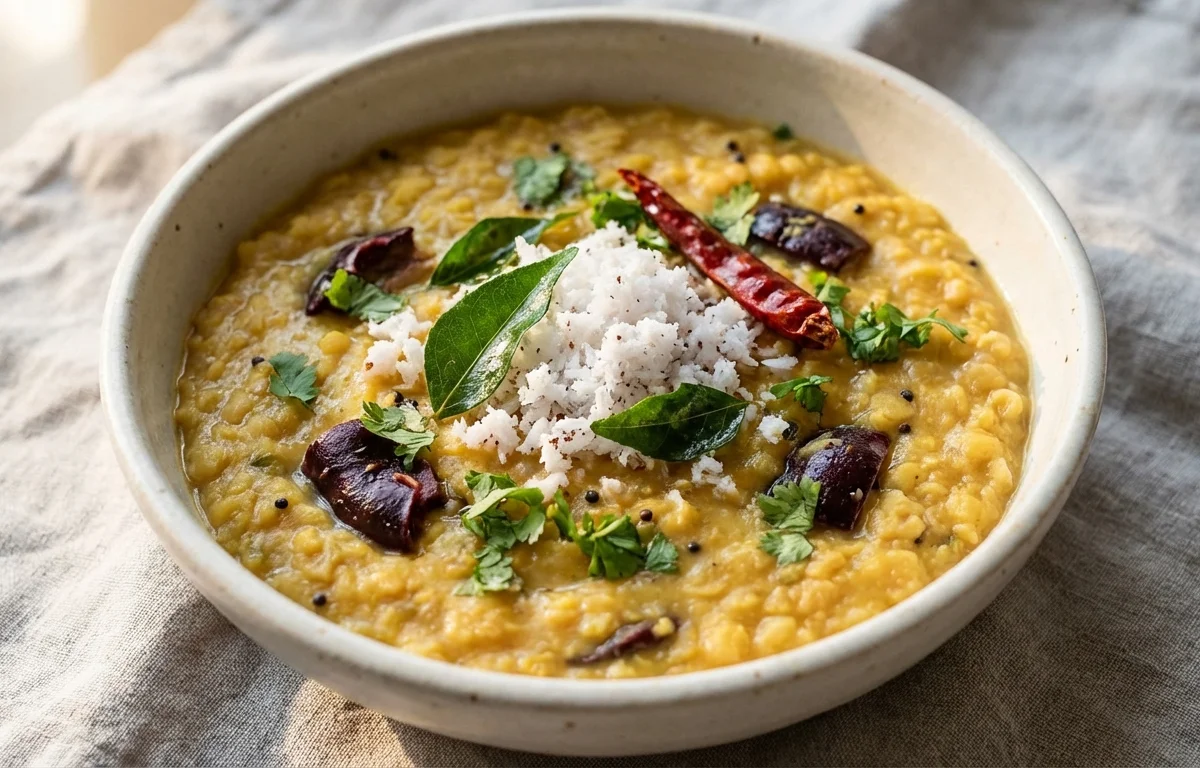
Goan Dal Toy
A light, comforting Goan dal made with moong dal, coconut, and a gentle tempering of curry leaves and mustard seeds. It is mellow, fragrant, and perfect with steamed rice as part of a simple home-style meal.
For 4 servings
- prep · ~5 min
Wash the dal and ready the ingredients.
1.Rinse the moong dal in a few changes of water until the water runs mostly clear.2.Slit the green chili and lightly crush the garlic cloves.3.Measure the grated coconut, spices, ghee, and water.TIPA thorough rinse helps the dal cook up cleaner and lighter. - pressure cook · ~15 min
Cook the dal until soft.
Add moong dal, water, green chili, turmeric powder, and salt to a pressure cooker. Cook until the dal is very soft and easy to mash, about 3 whistles on medium heat.
- mix · ~3 min
Add the coconut and loosen the dal.
Open the cooker once the pressure drops naturally. Add the grated coconut and mash the dal lightly with the back of a ladle for a smooth, pourable texture.
TIPDal Toy is usually lighter than thick North Indian dals, so add a splash of water if needed. - simmer · ~4 min
Simmer the dal briefly.
Set the cooker or pot back on low heat and simmer the dal for 3 to 4 minutes so the coconut blends into the broth.
- temper · ~2 min
Make the tempering.
1.Heat ghee in a small pan over medium heat.2.Add mustard seeds and let them splutter.3.Add cumin seeds, curry leaves, and crushed garlic.4.Cook for 30 to 40 seconds until the garlic smells fragrant but not dark.TIPKeep the heat moderate so the garlic turns fragrant and sweet instead of bitter. - assemble · ~1 min
Pour the tempering over the dal.
Add the hot tempering to the simmering dal and mix well. Let it bubble for 1 minute so the flavors come together.
- serve
Serve hot with steamed rice.
What to keep in mind.
6 tips from the recipe — small details that make a real difference to the final dish.
- 1Let the pressure drop naturally so the moong dal finishes softening without catching at the bottom.
- 2Mash only lightly after cooking; Dal Toy should stay smooth and pourable, not turn into a thick paste.
- 3Add the grated coconut after pressure cooking, not before, so it keeps a fresher sweet flavor.
- 4Keep the tempering on medium heat and stop as soon as the garlic turns aromatic; browned garlic can make the dal taste bitter.
- 5If the dal thickens as it sits, loosen it with hot water before serving to keep the traditional light consistency.
- 6This dal reheats well the next day; warm gently and add the tempering fresh if you want the best aroma.
Adapt it for your goals.
Vegan
Replace ghee with coconut oil for a fully plant-based version that still suits the Goan coconut flavor profile.
no garlicNo-garlic
Skip the garlic in the tempering for a simpler, satvik-style bowl that keeps the focus on coconut, curry leaves, and moong.
spicierSpicier
Add an extra green chili or finely chop the chilies before cooking if you want a sharper heat in this otherwise mellow dal.
thinner rice meal styleThinner-rice-meal style
Add a little more hot water before serving if you prefer Dal Toy extra light and soupy to mix easily with steamed rice.
Why this is on our healthy list.
Gentle Plant Protein
Moong dal provides plant-based protein and makes this a nourishing, everyday dish that pairs well with rice.
Comforting and Easy to Digest
Split yellow moong is commonly valued for being lighter than many other dals, making this preparation soothing and simple.
Includes Beneficial Aromatics
Garlic, curry leaves, cumin, and mustard seeds add flavor along with traditional digestive and antioxidant-rich ingredients.
Frequently asked questions
Yes. Simmer the rinsed moong dal with water, chili, turmeric, and salt in a pot until very soft, then continue with the coconut and tempering.