Gongura Pachadi
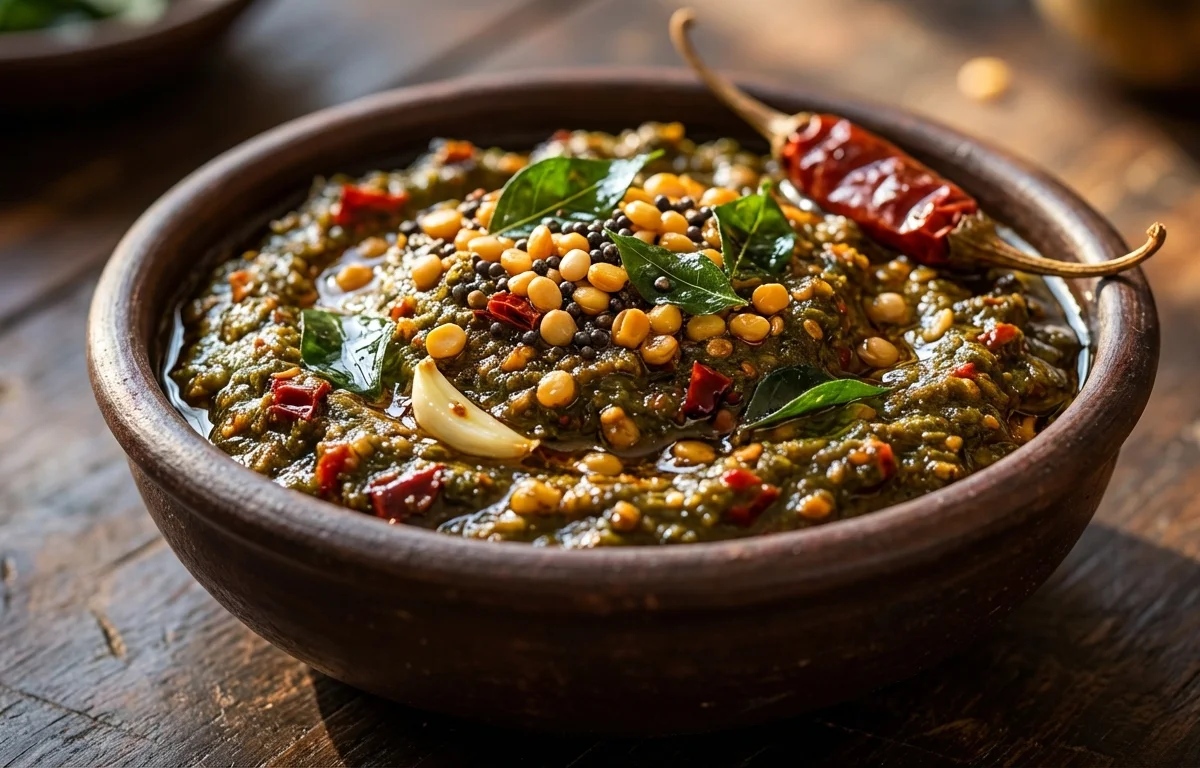
Tangy gongura leaves cooked down with chilies, garlic, and a simple tempering make a bold Andhra-style pachadi. It is sharp, spicy, and deeply savory, with a thick texture that goes beautifully with hot rice and ghee.
For 8 servings
- prep
Prepare the gongura and chilies.
Pick and wash the gongura leaves well to remove any grit, then drain and roughly chop them. Break the dried red chilies and slit the green chilies.
- saute · ~2 min
Cook the spices and garlic.
1.Heat 1 tbsp oil in a pan over medium heat.2.Add the dried red chilies, green chilies, garlic, fenugreek seeds, and cumin seeds.3.Cook for 1 to 2 minutes until the garlic smells fragrant and the spices lightly darken. - saute · ~10 min
Cook the gongura leaves.
1.Add the chopped gongura leaves to the same pan.2.Sprinkle in the salt and mix well.3.Cook over medium heat for 8 to 10 minutes, stirring often, until the leaves wilt, turn soft, and most of their moisture cooks off.TIPCook until the mixture looks thick and glossy; extra moisture will make the pachadi loose. - rest · ~10 min
Cool the mixture slightly.
Take the pan off the heat and let the gongura mixture cool for 10 minutes before grinding.
- mix
Grind the pachadi.
Transfer the cooled mixture to a grinder jar and pulse to a coarse or smooth chutney, as you like. Do not add water.
- temper · ~1 min
Make the tempering.
1.Heat the remaining 1 tbsp oil in a small pan.2.Add mustard seeds and let them splutter.3.Add urad dal and cook until lightly golden.4.Add curry leaves and fry for a few seconds.TIPKeep the heat medium so the urad dal turns golden, not dark brown. - assemble
Finish the pachadi.
Pour the hot tempering over the ground gongura pachadi and mix well.
- serve
Serve with hot rice.
Serve the gongura pachadi as a bold side with hot rice, ghee, dosa, or plain dal rice.
What to keep in mind.
7 tips from the recipe — small details that make a real difference to the final dish.
- 1Dry the washed gongura leaves well before cooking so the pachadi cooks down faster and stays thick.
- 2Do not over-roast the fenugreek seeds; even a small pinch turns bitter quickly if it gets too dark.
- 3Cook the gongura until the pan looks almost dry and the leaves turn glossy, or the chutney will taste watery.
- 4Let the mixture cool before grinding so steam does not create excess moisture in the jar.
- 5Pulse without adding water; a coarse grind gives a more traditional pachadi texture with better rice-mixing body.
- 6Pour the tempering while still hot over the ground chutney for the best aroma from mustard, urad dal, and curry leaves.
- 7Store in a clean dry jar in the fridge and always use a dry spoon to help it keep well.
Adapt it for your goals.
Jaggery-balanced
Add a tiny pinch of jaggery while grinding to gently round out gongura's sharp sourness without making the pachadi sweet.
extra garlicExtra-garlic
Increase the garlic and lightly crush it before sautéing for a more pungent, rustic Andhra-style pachadi.
sesame richSesame-rich
Grind in a spoon of roasted sesame seeds for a nuttier, slightly thicker pachadi that pairs especially well with rice.
low oilLow-oil
Reduce the oil slightly and use a very small tempering; the pachadi will be lighter but still tangy and bold.
Why this is on our healthy list.
Leafy Greens Goodness
Gongura leaves bring the benefits of leafy greens, adding plant compounds and a fresh, tangy character to the dish.
Digestive Spice Support
Cumin, fenugreek, garlic, and curry leaves are traditional aromatics that add depth while supporting easier digestion in a rich meal.
Pairs Well with Simple Meals
Because it is intensely flavored, a small amount can make plain rice or dal more satisfying without needing many heavy additions.
Frequently asked questions
Usually the leaves were not dried well after washing or the mixture was ground before enough moisture cooked off. Cook the leaves until thick and almost dry, and do not add water while grinding.



.webp)