
Idada
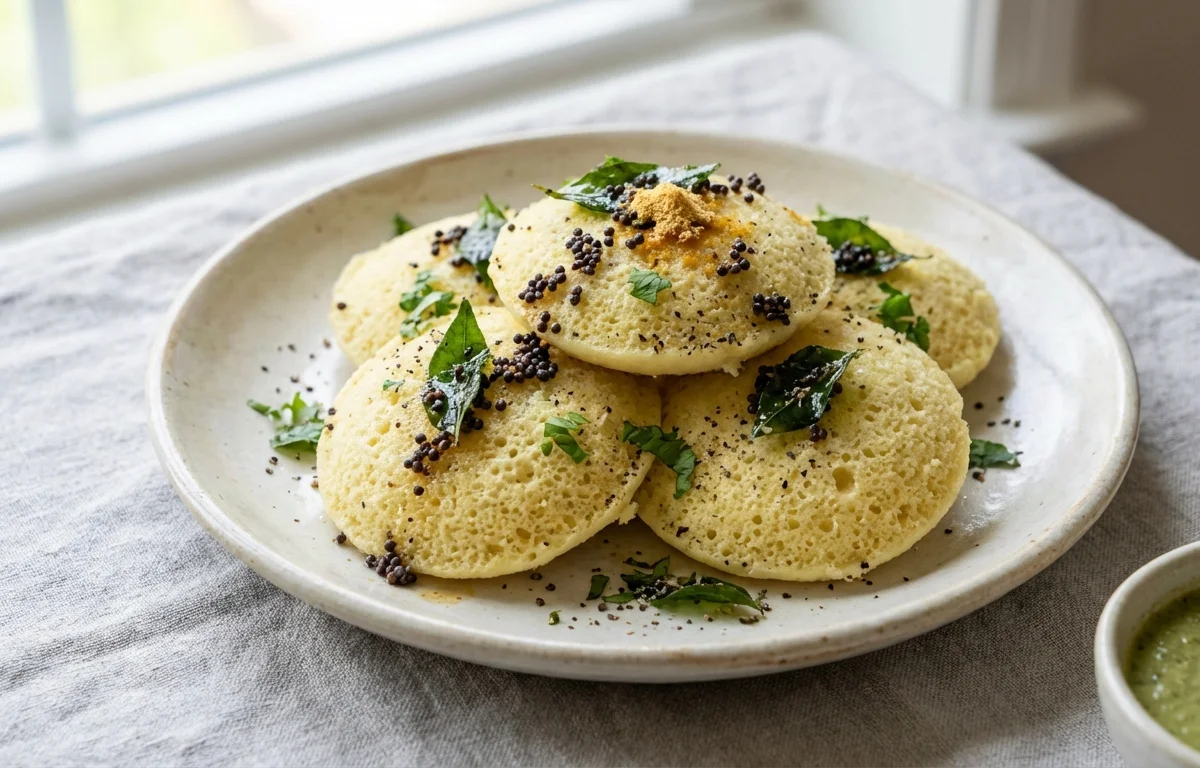
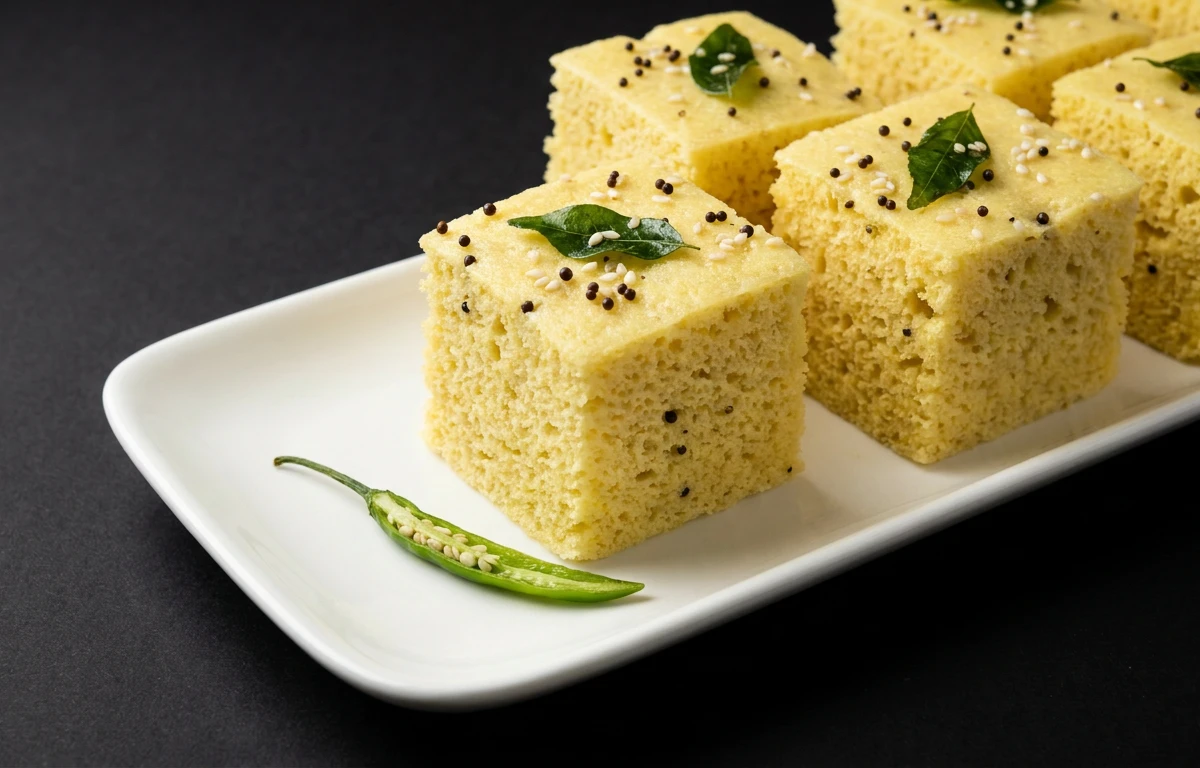
A soft, savory Gujarati steamed cake made with fermented rice and lentils. It cooks up airy and lightly tangy, then gets a simple mustard and sesame tempering that makes every bite fragrant and comforting.
For 4 servings
- prep · ~360 min
Soak the rice and lentils.
1.Wash the rice, urad dal, and chana dal well.2.Soak them together in plenty of water for 6 hours.3.Drain fully before grinding.TIPA full soak helps the batter grind smooth and ferment evenly. - mix · ~10 min
Grind the batter.
1.Add the soaked rice and lentils to a grinder with ginger, green chili, and yogurt.2.Add a little water as needed and grind to a thick, slightly coarse batter.3.Mix in salt and turmeric powder. - rest · ~480 min
Ferment the batter.
Cover the batter and leave it in a warm place for 8 hours, until slightly risen and airy.
TIPKeep the batter thick; a loose batter makes dense idada. - prep · ~5 min
Ready the steamer and pan.
Bring water to a simmer in a steamer. Lightly grease a round steel plate or shallow cake tin with a little oil.
- mix · ~2 min
Add fruit salt and pour the batter.
1.Stir the fermented batter once gently.2.Add fruit salt and fold lightly until the batter turns airy.3.Immediately pour it into the greased plate and spread it evenly.TIPDo not overmix after adding fruit salt or the batter will lose its lift. - steam · ~15 min
Steam the idada.
Place the plate in the steamer, cover, and steam until set and a skewer comes out clean.
- rest · ~5 min
Cool the steamed cake slightly.
Take the plate out and let the idada cool for 5 minutes so it firms up before cutting.
- temper · ~1 min
Make the tempering.
1.Heat the remaining oil in a small pan over medium heat.2.Add mustard seeds and let them splutter.3.Add sesame seeds and curry leaves, and cook for a few seconds.TIPKeep the heat medium so the sesame seeds toast without burning. - garnish
Top with tempering and cilantro.
Pour the hot tempering over the idada and scatter cilantro on top.
- serve
Cut into pieces and serve.
What to keep in mind.
7 tips from the recipe — small details that make a real difference to the final dish.
- 1Drain the soaked rice and dals very well so the batter stays thick enough to steam up fluffy.
- 2Grind to a slightly coarse texture, not fully smooth; that gives idada its traditional soft-but-grainy crumb.
- 3If your kitchen is cool, ferment the batter in an oven with only the light on for steadier rise.
- 4Add fruit salt only after the steamer is ready, then pour and steam immediately for maximum lift.
- 5Steam on a gentle simmer rather than a hard boil so the surface stays even and doesn't turn rubbery.
- 6Let the idada rest for 5 minutes before slicing, or the hot crumb can tear and compress.
- 7Pour the tempering while both the idada and oil are hot so the mustard, sesame, and curry leaf aroma sinks in.
Adapt it for your goals.
No-yogurt
Replace yogurt with water and ferment a little longer for a dairy-free version with a cleaner, more pronounced fermented flavor.
spicierSpicier
Increase green chili and add a little crushed black pepper to the batter for a sharper, warmer bite.
vegetable loadedVegetable-loaded
Fold in very finely grated bottle gourd or carrot before steaming for extra moisture and a slightly more substantial texture.
jain styleJain-style
Skip ginger and use only green chili for heat, keeping the rest of the method the same.
Why this is on our healthy list.
Fermented and Easy to Digest
The fermented rice-and-lentil batter is traditionally valued for becoming lighter and gentler to eat than an unfermented mixture.
Plant Protein from Lentils
Urad dal and chana dal add protein and make the steamed cake more filling than a rice-only preparation.
Steamed, Not Fried
Because idada is steamed, it stays soft and satisfying without needing much oil in the main cooking.
Aromatics with Added Value
Ginger, green chili, curry leaves, cilantro, and sesame seeds bring flavor along with beneficial plant compounds and variety.
Frequently asked questions
It should look slightly risen, airy, and smell mildly tangy. If it is flat and heavy, give it more time in a warm spot.



.webp)
.webp)
.webp)