
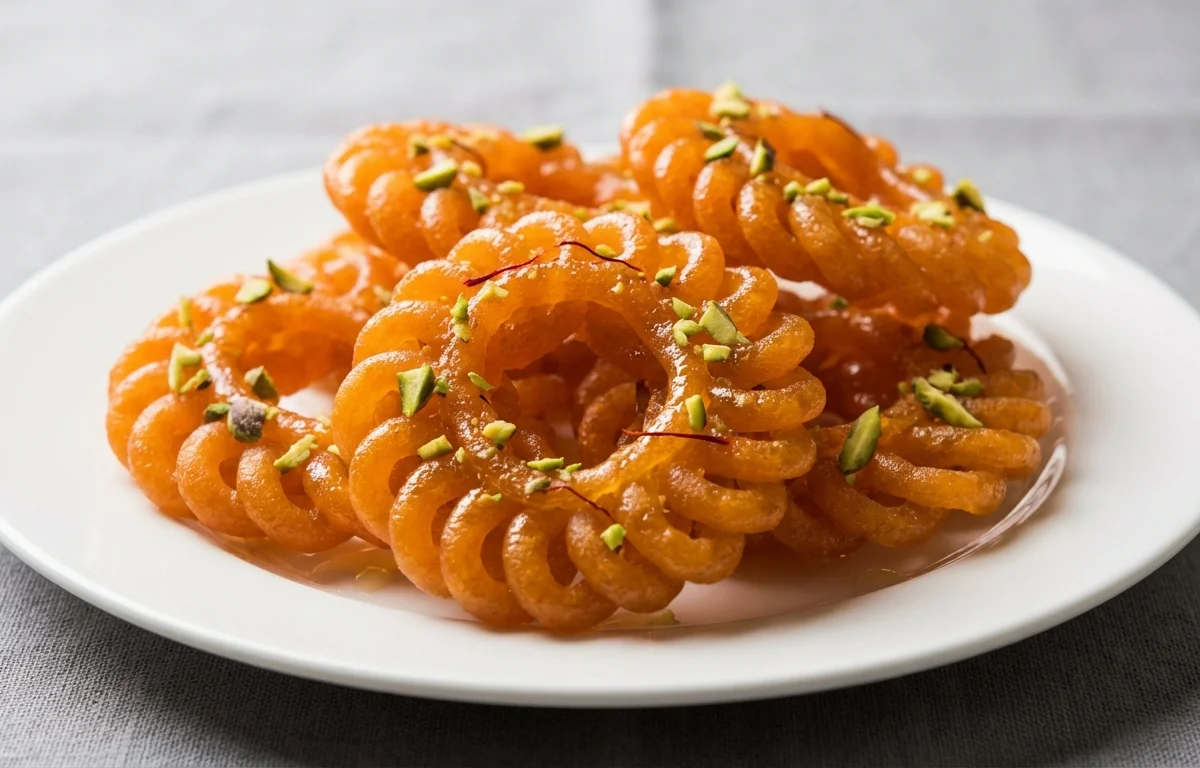
Imarti
Delicate, flower-shaped sweets with a crispy exterior and a syrup-soaked, melt-in-the-mouth center. Made from a fermented urad dal batter piped into hot ghee, these traditional North Indian treats are a festive favorite with their stunning saffron-orange hue.
For 4 servings
- prep
Soak and grind the urad dal.
1.Wash urad dal 3-4 times until water runs clear.2.Soak in enough water for 3 hours. Drain well.3.Transfer to a grinder and add 2 tbsp ice-cold water.4.Grind to a smooth, fluffy paste without any graininess.5.Add rice flour and a pinch of salt. Beat by hand for 5 minutes until light and airy.TIPThe batter must be thick enough to hold shape when piped. Grind in short bursts to avoid heating. - mix
Prepare the piping cloth.
Transfer batter to a sturdy muslin piping cloth. Snip a small hole at the tip. The hole should be about the size of a mustard seed.
TIPPractice piping a few circles on parchment before moving to hot ghee. - boil · ~7 min
Make the sugar syrup.
1.Combine sugar and water in a heavy bottom pan. Heat on medium.2.Add saffron strands and bring to a boil.3.Simmer until syrup reaches one-string consistency (about 5-7 minutes).4.Add lemon juice and cardamom powder. Stir and keep warm on low heat.TIPOne-string test: dip a spoon, cool slightly, touch with finger and pull — a single thread should form. - fry · ~9 min
Pipe and fry the Imartis.
1.Heat ghee in a flat kadai over medium-low heat (160°C/320°F).2.Hold the piping cloth firmly and pipe concentric circles directly into the ghee.3.Make a small outer circle, then overlap an inner circle to form a flower shape.4.Fry on low heat for 3-4 minutes on one side until crisp but not brown.5.Flip carefully with a skewer and fry the other side for 2-3 minutes.6.Drain briefly and immediately transfer to the warm sugar syrup.TIPKeep the ghee temperature low — high heat will brown the Imarti before it cooks through. Fry until just crisp. - rest · ~15 min
Soak in syrup.
Let Imartis soak in the warm syrup for 10-15 minutes, turning once halfway. They will absorb the syrup and become glossy.
TIPThe syrup must be warm, not hot. Hot syrup makes Imarti soggy; cold syrup won't absorb properly. - garnish
Garnish with pistachios and serve.
Lift Imartis from syrup, let excess drain, and arrange on a plate. Scatter slivered pistachios on top. Serve warm or at room temperature.
What to keep in mind.
7 tips from the recipe — small details that make a real difference to the final dish.
- 1Grind the urad dal with ice-cold water to keep the batter fluffy and prevent it from heating up.
- 2The batter should be thick enough to hold a stiff peak; if too runny, the imarti will flatten in the ghee.
- 3Keep the ghee at a steady low heat (160°C/320°F) – too hot and the imarti will brown before it cooks through.
- 4Practice piping a few test circles on parchment to get a feel for the flow before working over hot ghee.
- 5Fry imartis until just crisp and pale golden; they continue to soften as they soak in syrup.
- 6Soak imartis in warm (not hot) syrup for a shiny, soft texture; cold syrup won't absorb properly.
- 7Store leftover imartis in an airtight container at room temperature for up to 2 days.
Adapt it for your goals.
Gluten-Free
This recipe is naturally gluten-free as it uses urad dal and rice flour; no changes needed for a gluten-free diet.
Reduced SugarReduced Sugar
For a less sweet version, reduce the sugar syrup to a two-string consistency and soak imartis for a shorter time (5 minutes) so they absorb less syrup.
Saffron FreeSaffron-Free
Omit saffron for a pale golden imarti, or color with a pinch of turmeric for a similar hue without the floral flavor.
Nut FreeNut-Free
Skip the pistachio garnish to make the dish nut-free; the imarti base itself contains no nuts.
Why this is on our healthy list.
Fermented Legume Base
Urad dal is a good source of plant-based protein and dietary fiber; the fermentation process may improve digestibility and nutrient absorption.
Rich in Saffron Antioxidants
Saffron contains crocin and other antioxidants that support mood and overall wellness, used here in modest festive quantities.
Energy-Dense Sweetener
Sugar provides quick energy, making imarti a traditional choice for post-meal or festive refreshment in moderate portions.
Frequently asked questions
Hard imartis usually result from over-frying or ghee temperature that's too high. Fry at low heat (160°C) until just pale golden and crisp.


