Kakara Pitha
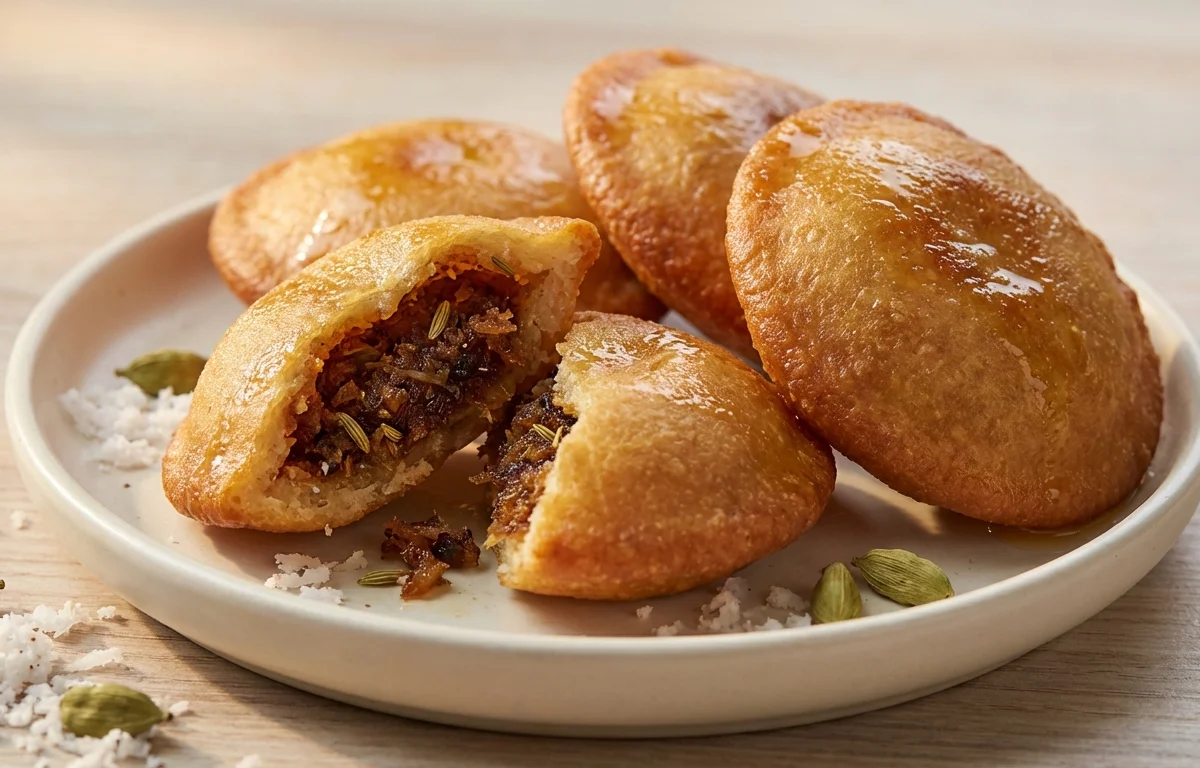
A beloved Odia sweet made with a soft wheat dough and a fragrant coconut-jaggery filling. These stuffed patties are shaped by hand and shallow fried until lightly crisp outside and tender in the middle.
For 8 servings
- saute · ~7 min
Make the coconut filling.
1.Heat 1 tbsp ghee in a pan over low heat.2.Add grated coconut and cook for 2 minutes, stirring gently.3.Add grated jaggery, crushed cardamom seeds, and black pepper.4.Cook until the jaggery melts and the mixture turns sticky but not wet, about 4 to 5 minutes.TIPKeep the heat low so the jaggery melts smoothly and does not harden or burn. - rest · ~10 min
Cool the filling.
Transfer the filling to a plate and let it cool completely so it firms up and becomes easy to portion.
- knead · ~15 min
Knead the dough.
Mix whole wheat flour, semolina, and salt in a bowl. Add warm water little by little and knead into a soft, smooth dough. Cover and rest for 15 minutes.
TIPThe dough should feel softer than poori dough so it seals easily without cracking. - assemble · ~10 min
Shape the kakara pitha.
1.Divide the dough into 8 equal balls.2.Divide the cooled filling into 8 small portions.3.Flatten one dough ball into a small disc with your fingers.4.Place one portion of filling in the center, bring the edges together, seal well, and flatten gently into a thick patty.TIPSeal the edges tightly so the filling stays inside while frying. - fry · ~15 min
Shallow fry the pithas.
1.Heat 0.5 cup ghee in a wide pan over low to medium heat.2.Place 3 to 4 shaped pithas in the pan without crowding.3.Cook until the bottom turns golden, then flip and fry the other side.4.Fry both sides evenly until lightly crisp and deep golden, about 3 to 4 minutes per side.TIPUse gentle heat so the dough cooks through before the outside gets too dark. - serve
Serve the kakara pitha warm or at room temperature.
What to keep in mind.
7 tips from the recipe — small details that make a real difference to the final dish.
- 1Cool the coconut-jaggery filling fully before stuffing, or it will loosen the dough and cause leaks.
- 2If the filling looks wet after jaggery melts, cook it a minute longer until it clumps when stirred.
- 3Keep the dough slightly softer than poori dough so the patties flatten without cracking at the edges.
- 4Grease your fingers lightly with ghee while shaping to prevent sticking and help smooth the surface.
- 5Press the stuffed patty evenly; very thick centers can stay doughy while the outside browns.
- 6Shallow fry on low-medium heat only, so the wheat shell cooks through before the jaggery inside overheats.
- 7Store cooled kakara pitha in an airtight box for a day at room temperature, then rewarm on a tawa.
Adapt it for your goals.
Deep-fried
For a more festive, fuller crust, fry the shaped pithas fully submerged in ghee or oil over medium-low heat.
less sweetLess-sweet
Reduce the jaggery slightly to let the fresh coconut and cardamom stand out more clearly.
no pepperNo-pepper
Skip the black pepper if you want a milder, more straightforward coconut-cardamom sweetness.
veganVegan
Use coconut oil instead of ghee in the filling and for frying to keep the sweet dairy-free.
Why this is on our healthy list.
Whole Grain Base
Whole wheat flour adds more fiber and grain-derived nutrients than a refined flour shell.
Coconut-Based Filling
Fresh coconut contributes natural richness, texture, and plant-based fats that make the filling satisfying.
Less Processed Sweetener
Jaggery is traditionally used in this sweet and offers a deeper flavor than plain white sugar.
Frequently asked questions
Usually the filling was too wet or the edges were not sealed tightly. Cook the filling until sticky, cool it completely, and pinch the dough closed well.