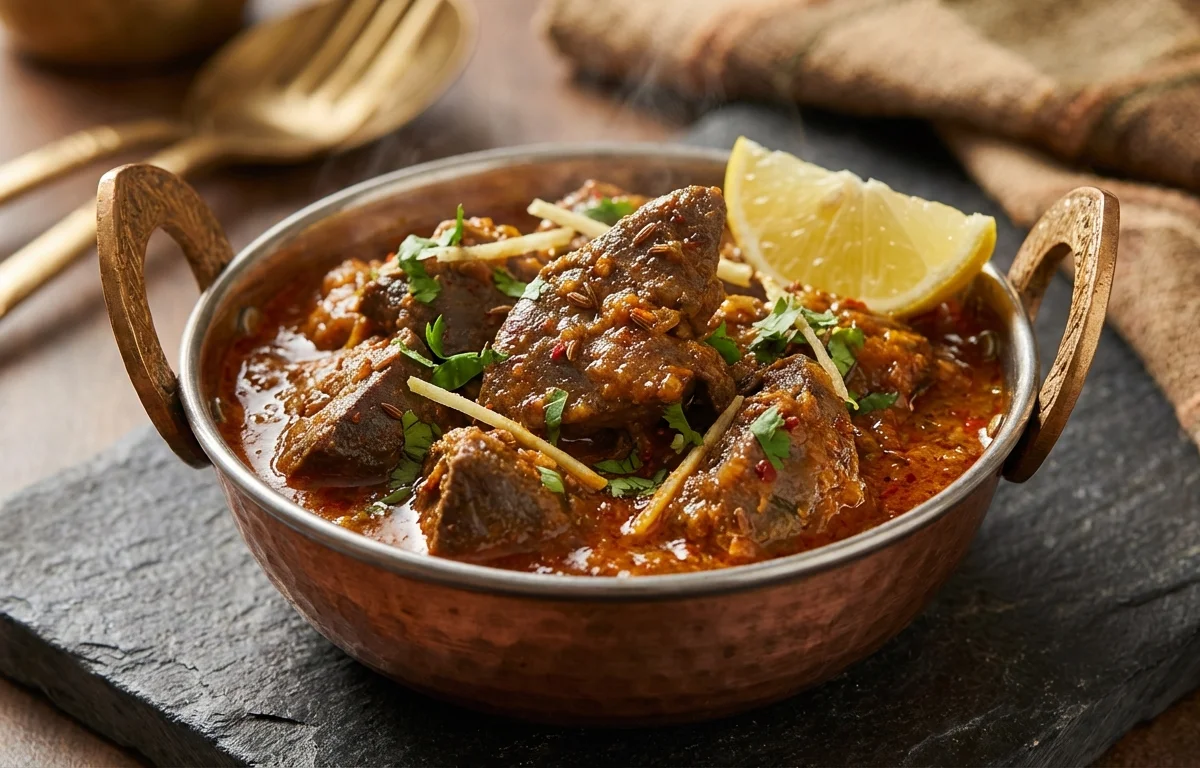
Kaleji Masala
A spicy, home-style liver dish with onions, tomatoes, and warm whole spices. Kaleji cooks quickly and turns tender when finished just right, making it a flavorful side or small main with roti or rice.
For 4 servings
- prep · ~10 min
Prep the kaleji and vegetables.
1.Rinse the mutton liver quickly and drain well.2.Cut it into bite-size pieces and keep aside.3.Slice the onion finely, chop the tomato, slit the green chili, and chop the coriander leaves.TIPKeep the liver pieces medium and even so they cook fast without turning tough. - saute · ~8 min
Cook the whole spices and onions.
1.Heat oil in a pan over medium heat.2.Add cumin seeds and bay leaf and cook until fragrant, about 30 seconds.3.Add the sliced onion and cook until light golden, 6 to 7 minutes. - saute · ~6 min
Build the masala base.
1.Add ginger-garlic paste and green chili and cook for 1 minute.2.Add tomato, turmeric powder, red chili powder, coriander powder, black pepper, and salt.3.Cook until the tomatoes soften and the masala looks thick, 4 to 5 minutes.TIPCook the tomatoes down well so the liver gets coated in a rich masala instead of a watery sauce. - saute · ~5 min
Cook the kaleji in the masala.
1.Add the mutton liver and mix well to coat every piece.2.Cook on medium-high heat for 3 to 4 minutes, stirring often.3.Pour in the water and mix again.TIPDo not cook liver for too long at this stage or it will become grainy and firm. - simmer · ~8 min
Simmer until just tender.
Cover the pan and cook on low heat for 6 to 8 minutes, stirring once or twice, until the liver is just cooked through and the masala turns semi-dry.
TIPThe liver should be tender with no raw center; overcooking makes it dry. - garnish
Finish with garam masala, lemon juice, and coriander leaves.
- serve
Serve hot with roti, paratha, or rice.
What to keep in mind.
8 tips from the recipe — small details that make a real difference to the final dish.
- 1Drain the rinsed liver very well before cooking so it sears in the masala instead of steaming.
- 2Keep the liver pieces evenly sized; mixed sizes make some pieces turn rubbery before others are done.
- 3Cook the onions only to light golden, not deep brown, so the masala stays balanced and doesn't taste bitter.
- 4Let the tomatoes cook down until oil starts to separate slightly; that gives the kaleji a clingy masala coating.
- 5Once the liver goes into the pan, keep the heat medium-high at first and stir often for quick, even cooking.
- 6Stop cooking as soon as the center is no longer raw; liver continues to firm up from residual heat.
- 7Add lemon juice only at the end to brighten the richness without making the liver tough during cooking.
- 8This dish reheats best gently on low heat with a splash of water; hard reheating can make the liver dry.
Adapt it for your goals.
Dry-style
Use less water and cook uncovered at the end for a bhuna-style kaleji with a thicker, clingier masala that's great with paratha.
spicierSpicier
Add extra green chili or a little more red chili powder if you want a sharper, dhaba-style heat.
chicken liverChicken-liver
Swap goat liver for chicken liver for a milder taste and faster cooking; reduce simmer time so it stays soft.
low oilLow-oil
Use slightly less oil and cook the onions a bit slower with a splash of water; good if you want a lighter everyday version.
Why this is on our healthy list.
Rich in Iron
Goat liver is naturally rich in iron, making this dish a nutrient-dense option compared with many meat curries.
High-Quality Protein
The liver provides complete animal protein, which helps make this dish filling even when served in small portions.
Contains Vitamin A and B Vitamins
Liver is known for being packed with vitamin A and several B vitamins, while onions and tomatoes add additional micronutrients.
Frequently asked questions
It should be just cooked through with no raw center, but still soft and tender. If it turns dry, grainy, or crumbly, it has cooked too long.


.webp)