Kerala Fish Fry
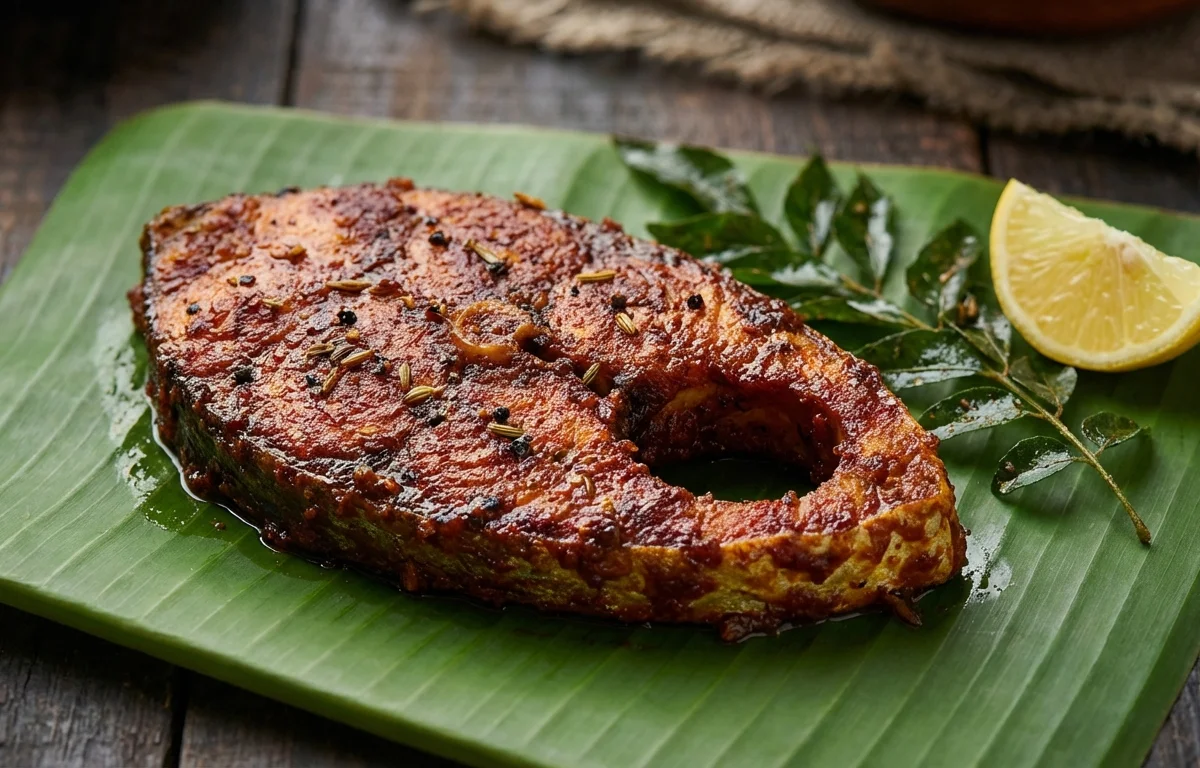
Spicy pan-fried fish coated in a bold Kerala-style masala with chili, black pepper, ginger, garlic, and curry leaves. Crisp at the edges and juicy inside, it is a classic coastal side that goes beautifully with rice and simple curries.
For 4 servings
- prep · ~5 min
Pat the fish dry and score it lightly.
Rinse the fish steaks if needed, then pat them very dry with a clean cloth or paper towel. Make 2 to 3 shallow slits on each piece so the masala coats well.
TIPDry fish fries better and helps the masala cling without slipping off. - mix · ~4 min
Make the Kerala fry masala.
1.Mix red chili powder, black pepper, turmeric powder, ginger paste, garlic paste, lemon juice, salt, and rice flour in a bowl.2.Add a few drops of water only if needed to make a thick paste.3.Stir in half of the torn curry leaves. - rest · ~15 min
Coat the fish and let it rest.
Rub the masala all over both sides of each fish piece and into the slits. Set aside for 15 minutes so the flavors soak in.
TIPA short rest is enough here; too long can make delicate fish release water. - fry · ~8 min
Shallow-fry the fish.
1.Heat coconut oil in a wide pan over medium heat.2.Place the fish pieces in a single layer and scatter the remaining curry leaves around them.3.Cook 3 to 4 minutes on the first side until crisp and browned.4.Turn gently and cook the second side for 3 to 4 minutes until the fish is cooked through.TIPKeep the heat medium so the masala does not burn before the fish cooks through. - serve · ~1 min
Serve the fish hot.
Take the fish out of the pan once the edges are crisp and the center flakes easily. Serve hot with the fried curry leaves from the pan.
What to keep in mind.
7 tips from the recipe — small details that make a real difference to the final dish.
- 1Pat the seer fish completely dry before coating, or the masala will loosen and splatter in the pan.
- 2Keep the marinade as a thick paste; too much water prevents the rice flour from forming a crisp crust.
- 3Do not overcrowd the pan; fry in a single layer so the edges brown instead of steaming.
- 4Wait until the first side releases easily before turning, otherwise the masala coating may stick and tear.
- 5Torn curry leaves fried in the coconut oil perfume the fish and become a crisp garnish, so do not skip them.
- 6If using thinner fish slices, reduce the frying time slightly to keep the center juicy and not overcooked.
- 7Leftovers are best reheated in a skillet, not the microwave, to bring back the crisp masala coating.
Adapt it for your goals.
Low-oil
Use a well-seasoned nonstick pan and reduce the coconut oil, turning carefully so the masala still browns without soaking up excess fat.
air fryerAir-fryer
Brush the marinated fish lightly with coconut oil and air-fry until browned for a less hands-on version with crisp edges.
extra spicyExtra-spicy
Increase the black pepper and red chili powder slightly for a fiercer coastal-style fry that pairs especially well with plain rice.
pomfret versionPomfret-version
Use whole pomfret with deeper slits instead of seer fish steaks for a more traditional whole-fish presentation.
Why this is on our healthy list.
Protein-Rich Main
Seer fish provides substantial protein, making this fry filling and useful as a satisfying side or main with rice.
Spice-Based Flavor
Ginger, garlic, black pepper, turmeric, and curry leaves build strong flavor without needing heavy sauces or breading.
Moderate Coating
A small amount of rice flour gives crispness to the exterior without the thick batter used in many deep-fried fish dishes.
Frequently asked questions
A short rest works best here. Much longer marination can make delicate fish release moisture, which loosens the masala and affects frying.