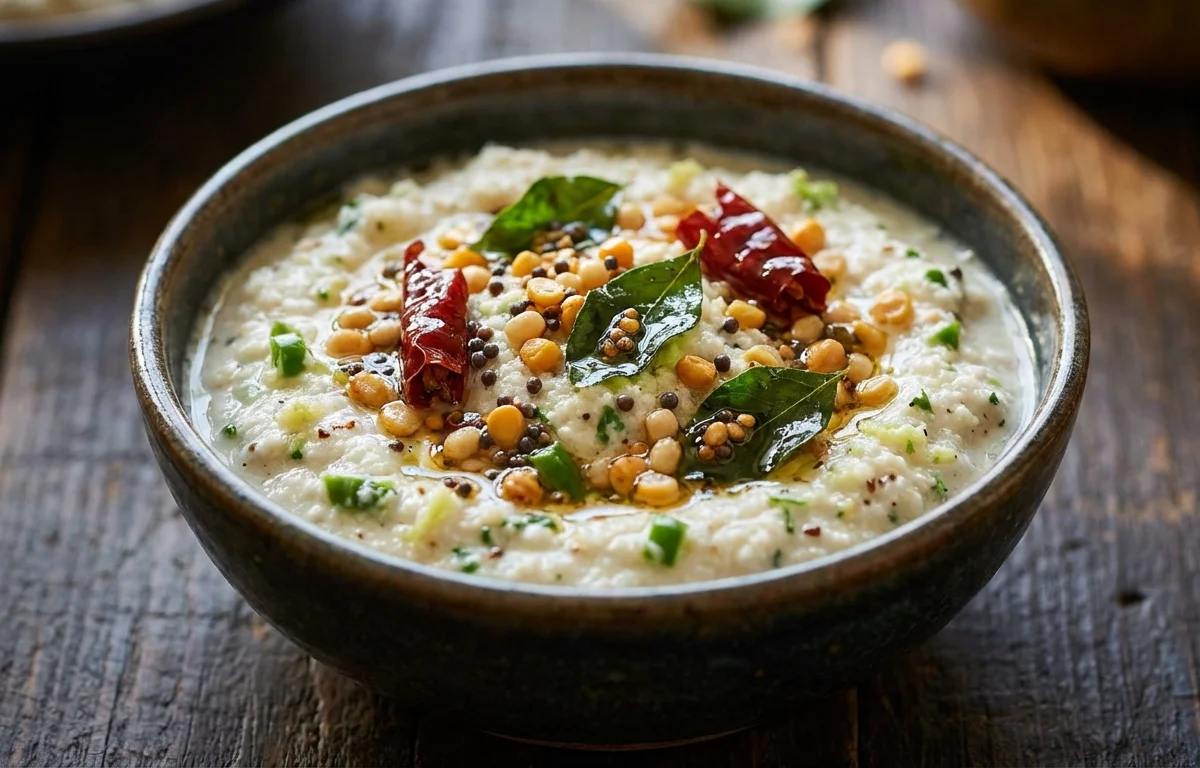
Kobbari Pachadi
Fresh coconut, green chilies, and roasted gram come together in this classic Andhra-style pachadi. It is creamy, lightly spicy, and finished with a simple tempering that adds warmth and crunch.
For 8 servings
- prep · ~3 min
Prep the ingredients.
1.Grate the coconut if using fresh coconut pieces.2.Peel the ginger and roughly chop it.3.Break the dried red chili into pieces. - mix · ~3 min
Grind the pachadi base.
1.Add coconut, roasted chana dal, green chili, ginger, tamarind paste, and salt to a mixer jar.2.Add a little water for grinding.3.Grind to a smooth or slightly coarse chutney, depending on how you like it.4.Transfer the pachadi to a serving bowl.TIPAdd water little by little so the pachadi stays thick and flavorful. - temper · ~2 min
Make the tempering.
1.Heat oil in a small pan over medium heat.2.Add mustard seeds and let them splutter.3.Add urad dal and cook until lightly golden.4.Add dried red chili and curry leaves and cook for a few seconds until fragrant.TIPKeep the heat moderate so the urad dal turns golden without burning. - assemble
Pour the tempering over the pachadi.
Pour the hot tempering over the ground coconut mixture and mix gently. Taste and adjust the texture with a spoon of water only if needed.
- serve
Serve the kobbari pachadi.
What to keep in mind.
7 tips from the recipe — small details that make a real difference to the final dish.
- 1Grind with water a spoon at a time; this pachadi tastes best thick, not runny.
- 2If your coconut is mature and slightly dry, use a splash of warm water for a smoother grind.
- 3Stop the mixer once or twice and scrape down the sides so the roasted gram blends evenly.
- 4Let the mustard seeds fully splutter before adding urad dal, or the tempering can taste raw.
- 5Fry the urad dal only to light golden; darker browning can turn the pachadi slightly bitter.
- 6Pour the tempering over the chutney while it is hot to wake up the aroma of curry leaves and chili.
- 7Because fresh coconut spoils quickly, refrigerate leftovers promptly and finish within a day.
Adapt it for your goals.
Garlic
Add 1-2 small garlic cloves while grinding for a sharper, more robust chutney that pairs especially well with idli and dosa.
spicierSpicier
Increase the green chilies or add an extra dried red chili in the tempering if you want a hotter Andhra-style pachadi.
shallotShallot
Grind in a small piece of shallot or pearl onion for extra sweetness and depth, a nice variation for serving with hot rice.
low oilLow-oil
Use a smaller tempering with just enough oil to bloom the mustard and curry leaves if you want a lighter everyday version.
Why this is on our healthy list.
Healthy Fats from Coconut
Fresh coconut contributes satisfying fats that add richness and help make this chutney filling in small portions.
Plant-Based Protein Boost
Roasted chana dal and urad dal add some plant protein and make the pachadi more substantial than plain coconut chutney.
Digestive Aromatics
Ginger, curry leaves, and mustard seeds bring traditional aromatic ingredients that add flavor along with digestive appeal.
Frequently asked questions
Yes. Thaw it fully and squeeze out any excess water before grinding so the pachadi stays thick and flavorful.



.webp)