Kokum Curry
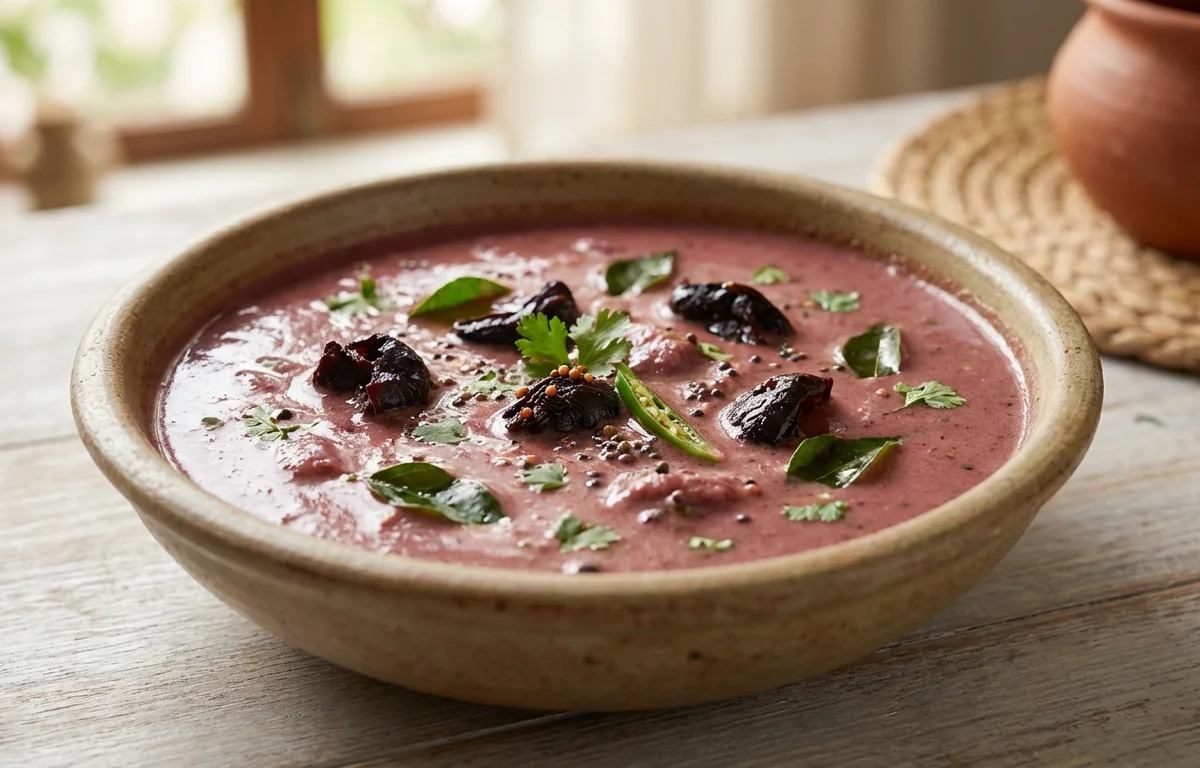
A light, tangy coastal curry with the sharp fruitiness of kokum balanced by creamy coconut. It comes together with a simple tempering and makes a refreshing side for steamed rice on warm days.
For 4 servings
- prep · ~15 min
Soak the kokum.
Soak the kokum in a little warm water for 15 minutes until softened. Lightly squeeze it once or twice so the color and tang release into the water.
- mix · ~3 min
Grind the coconut paste.
1.Add grated coconut, cumin seeds, and garlic to a grinder jar.2.Pour in 0.5 cup water.3.Grind to a smooth, pourable paste. - boil · ~5 min
Cook the curry base.
1.Pour the coconut paste into a pan.2.Add the soaked kokum with its soaking water, remaining water, green chili, and salt.3.Stir well and bring it to a gentle boil over medium heat.TIPKeep the heat moderate once it starts bubbling so the coconut does not split. - simmer · ~5 min
Simmer the curry briefly.
Lower the heat and simmer for 4 to 5 minutes, stirring now and then, until the curry looks lightly thickened and fragrant.
- temper · ~1 min
Make the tempering.
1.Heat oil in a small pan over medium heat.2.Add mustard seeds and let them splutter.3.Add curry leaves and cook for a few seconds. - assemble · ~1 min
Finish the curry with the tempering.
Pour the hot tempering over the simmered curry and stir once. Take it off the heat right away.
- serve
Serve warm with rice.
What to keep in mind.
6 tips from the recipe — small details that make a real difference to the final dish.
- 1Squeeze the soaked kokum gently before adding it so the soaking water carries more color and tang into the curry.
- 2Grind the coconut very smooth; a gritty paste makes the curry feel coarse instead of silky and light.
- 3Keep the boil gentle once the coconut paste is in the pan, or the curry can split and turn oily.
- 4Taste after simmering before adding extra salt, because kokum's sharpness can make the seasoning seem lower at first.
- 5Pour the tempering over the curry while it is hot and take the pan off the heat immediately to preserve the curry leaf aroma.
- 6If making ahead, reheat on low heat only until warm; avoid a hard boil to keep the coconut base smooth.
Adapt it for your goals.
Jain
Skip the garlic and increase cumin slightly for a cleaner, sattvic version that still keeps the classic kokum-coconut balance.
spicierSpicier
Add one extra green chili or crush the existing chilies lightly before simmering for a sharper heat that suits rice well.
thinner saarThinner-saar
Use a little more water for a lighter, more broth-like curry that is especially refreshing in hot weather.
shallot temperingShallot-tempering
Add a few sliced shallots to the tempering for a sweeter, more robust coastal flavor and a slightly heartier finish.
Why this is on our healthy list.
Naturally Dairy-Free
The curry gets its creaminess from fresh coconut rather than dairy, making it suitable for those avoiding milk-based ingredients.
Light Yet Satisfying
Its thin coconut base and simple tempering make it feel soothing and refreshing while still pairing well with a full meal.
Aromatic Whole Spices
Cumin, mustard seeds, curry leaves, garlic, and green chili bring flavor depth, so the curry tastes lively without many ingredients.
Frequently asked questions
Yes, but soak it in warm water first and grind it very smoothly. The curry may be slightly less sweet and creamy than with fresh coconut.