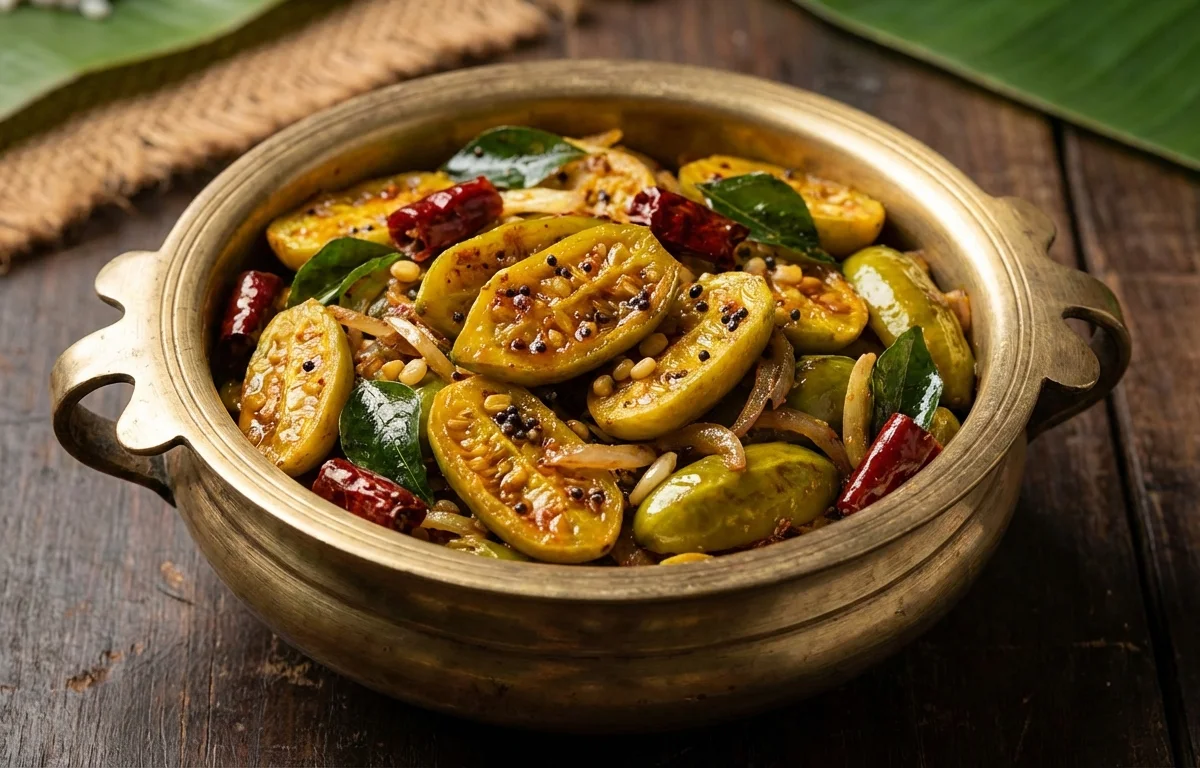
Kovakka Fry
Thinly sliced kovakka tossed with a simple South Indian tempering and everyday spices, then cooked until tender with crisp edges. It is an easy dry side that goes especially well with rice, sambar, or curd.
For 4 servings
- prep
Slice the kovakka.
Wash the kovakka well, trim both ends, and slice them thin so they cook evenly and get lightly crisp at the edges.
- temper · ~4 min
Make the tempering.
1.Heat oil in a wide pan over medium heat.2.Add mustard seeds and let them splutter.3.Add urad dal and cook until lightly golden.4.Add curry leaves, sliced onion, and green chili.TIPUse a wide pan instead of a deep pot so the kovakka fries instead of steaming. - saute · ~4 min
Cook the onions.
Sauté until the onion turns soft and lightly golden, about 3 to 4 minutes.
- saute · ~3 min
Add the kovakka and spices.
1.Add the sliced kovakka to the pan and mix well.2.Sprinkle in turmeric powder, red chili powder, coriander powder, and salt.3.Toss everything well so the slices are evenly coated. - saute · ~12 min
Fry until tender and lightly crisp.
Cook on medium to medium-low heat, stirring every few minutes, until the kovakka is tender and the edges are lightly browned. This takes about 10 to 12 minutes.
TIPDo not cover the pan for long, or the vegetable will release water and turn soft instead of fry well. - serve
Serve hot.
Serve the kovakka fry hot as a side with rice and sambar, rasam, or curd.
What to keep in mind.
7 tips from the recipe — small details that make a real difference to the final dish.
- 1Slice the kovakka evenly and fairly thin so all the pieces turn tender at the same time and get crisp edges.
- 2Use a wide, heavy pan and avoid crowding; packed slices will steam instead of fry.
- 3Let the mustard seeds fully splutter before adding urad dal, or the dal can brown too fast and turn bitter.
- 4Cook uncovered for most of the time so the kovakka stays dry and lightly crisp rather than soft.
- 5Stir every few minutes, not constantly; brief contact with the pan helps the slices brown better.
- 6If the kovakka starts releasing too much moisture, raise the heat slightly for a minute to dry the pan.
- 7Leftovers keep well in the fridge for about 2 days; reheat in a skillet, not the microwave, to bring back some crispness.
Adapt it for your goals.
Low-oil
Use a well-seasoned wide pan and reduce the oil slightly; cook on medium-low and stir less often so the kovakka still browns.
spicierSpicier
Increase the red chili powder or add one extra slit green chili for a hotter side dish that pairs especially well with curd rice.
coconutCoconut
Finish with a small handful of fresh grated coconut for a softer, slightly sweet Kerala-style touch.
no onionNo-onion
Skip the onion for a simpler, lighter fry that still gets plenty of flavor from the tempering and dry spices.
Why this is on our healthy list.
Vegetable-Forward Side
Kovakka makes this a simple vegetable-based accompaniment that adds variety and bulk to a rice meal without feeling heavy.
Moderate Oil Cooking
The dish gets its crisp edges from pan-frying with a modest amount of oil rather than deep-frying.
Digestive Spice Support
Curry leaves, mustard seeds, green chili, turmeric, and coriander bring aroma and traditional spice benefits along with flavor.
Frequently asked questions
Usually the pan was crowded, the slices were too thick, or the pan was covered too long. Use a wide pan, slice thin, and cook mostly uncovered.