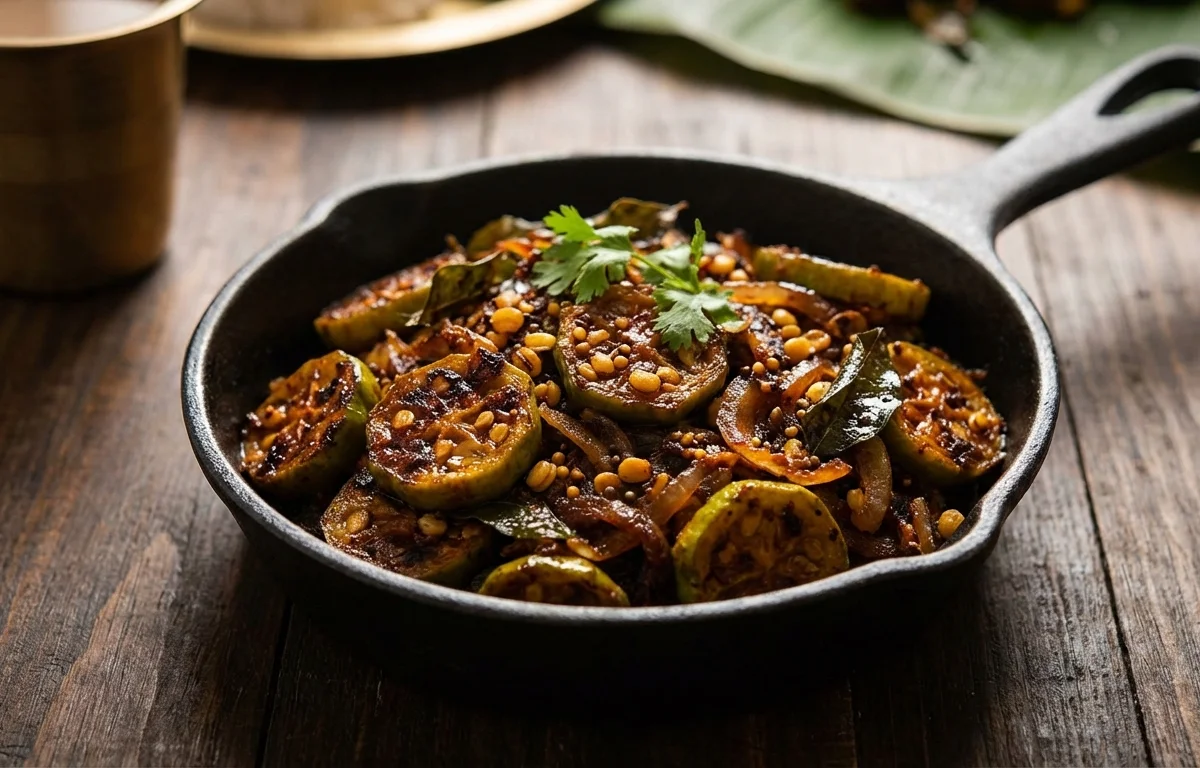
Kovakkai Varuval
Thinly sliced ivy gourd cooked with a simple South Indian tempering until tender and lightly crisp at the edges. This homestyle varuval is mildly spiced, easy to make, and perfect with rasam rice or curd rice.
For 4 servings
- prep
Slice the kovakkai.
Wash the kovakkai well, trim the ends, and slice them thin so they cook evenly and turn lightly crisp in the pan.
- temper · ~2 min
Make the tempering.
1.Heat oil in a wide pan over medium heat.2.Add mustard seeds and let them splutter (20-30 sec).3.Add urad dal and cook until lightly golden (20-30 sec).4.Add curry leaves and let them crackle briefly.TIPUse a wide pan so the kovakkai roasts instead of steaming. - saute · ~4 min
Cook the onion.
Add the sliced onion and sauté until soft and lightly translucent.
- saute · ~3 min
Add the kovakkai and spices.
1.Add the sliced kovakkai and mix well with the onion.2.Sprinkle in turmeric powder, red chili powder, coriander powder, and salt.3.Stir well so the slices are evenly coated with the spices. - saute · ~15 min
Cook until tender and lightly crisp.
Cook on medium to medium-low heat, stirring every few minutes, until the kovakkai turns tender and the edges look lightly browned and crisp. Keep the pan uncovered for the best texture.
TIPDo not add water, or the varuval will soften instead of getting that dry roasted finish. - serve
Serve hot.
What to keep in mind.
7 tips from the recipe — small details that make a real difference to the final dish.
- 1Slice the kovakkai as evenly and thinly as possible so all the pieces turn tender at the same time and get crisp edges.
- 2Use a wide, heavy pan and avoid overcrowding; packed slices trap steam and the varuval will turn soft instead of roasted.
- 3Wait for the urad dal to turn lightly golden before adding onion, or it can stay raw-tasting and miss its nutty crunch.
- 4Keep the pan uncovered throughout cooking; even a brief cover will release moisture and dull the dry varuval texture.
- 5Stir only every few minutes once the kovakkai is in the pan so the slices have time to brown instead of breaking up.
- 6If your kovakkai is very mature with hard seeds, discard the seedy core while slicing for a better final texture.
- 7Leftovers reheat best in a skillet, not the microwave, to bring back the lightly crisp edges.
Adapt it for your goals.
Low-oil
Use a good nonstick or well-seasoned pan and reduce the oil slightly; ideal if you want a lighter everyday poriyal-style side.
no onionNo-onion
Skip the onion for a simpler, more austere varuval that pairs especially well with rasam rice and other strongly flavored mains.
coconut finishCoconut-finish
Add a spoonful of fresh grated coconut at the end for a softer South Indian home-style finish and a sweeter contrast to the spices.
spicierSpicier
Increase the red chili powder or add a broken dry red chili in the tempering if you want a hotter version for curd rice or dal rice.
Why this is on our healthy list.
Vegetable-forward side dish
This dish is built mainly from ivy gourd, making it an easy way to add more vegetables to a rice-based meal.
Lightly cooked with modest oil
The varuval gets its texture from pan-roasting rather than deep-frying, so it stays satisfying without being overly heavy.
Includes digestive spices
Curry leaves, mustard seeds, turmeric, and coriander powder add aroma and traditional spice complexity along with the vegetable.
Frequently asked questions
Usually the slices were too thick, the pan was crowded, or water was added. Cook uncovered in a wide pan and let moisture evaporate.