
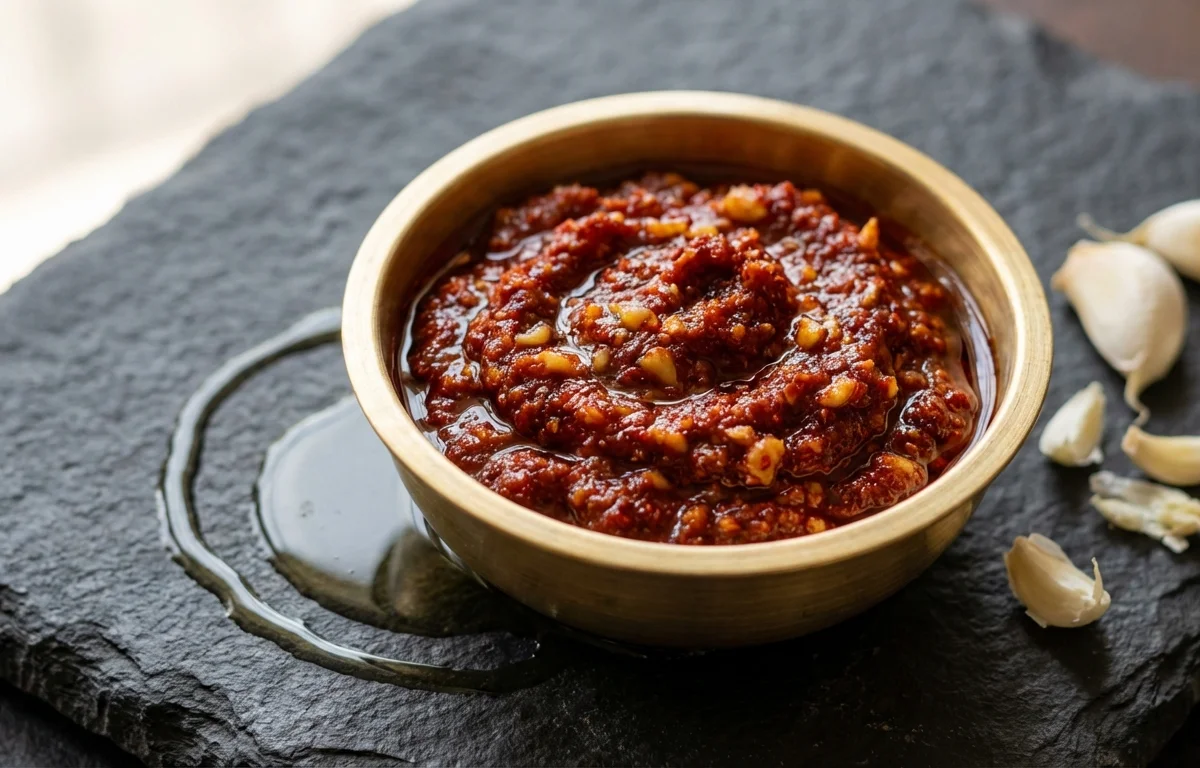
Lasan ni Chutney
A bold Gujarati garlic chutney with deep heat, a little tang, and a coarse texture that wakes up any plate. It comes together quickly and is perfect with bhakri, thepla, khichdi, or simple dal rice.
For 8 servings
- prep
Peel the garlic and measure the ingredients.
Keep the garlic cloves ready along with red chili powder, lemon juice, salt, cumin seeds, and oil.
- temper · ~1 min
Toast the cumin lightly.
Heat the oil in a small pan over low heat. Add cumin seeds and cook just until fragrant, about 20 to 30 seconds.
- mix · ~2 min
Crush the chutney.
1.Add garlic, red chili powder, salt, and lemon juice to a mortar or small grinder jar.2.Pour in the warm cumin and oil.3.Crush or pulse to a coarse chutney without adding water. - rest · ~5 min
Let the chutney rest for 5 minutes.
- serve
Serve with bhakri, thepla, or khichdi.
What to keep in mind.
6 tips from the recipe — small details that make a real difference to the final dish.
- 1Toast the cumin only until fragrant; if it darkens, the chutney can turn bitter fast.
- 2Use a mortar or pulse briefly in a small grinder so the chutney stays coarse, not pasty.
- 3Do not add water; keeping it dry helps preserve the sharp garlic flavor and improves shelf life.
- 4Let it rest for 5 minutes before serving so the lemon softens the raw garlic edge.
- 5If the garlic cloves are very large or pungent, start with slightly less lemon and adjust after tasting.
- 6Store in a clean, dry jar in the fridge and always use a dry spoon to keep it fresh longer.
Adapt it for your goals.
Less-spicy
Reduce the red chili powder and add a little extra lemon for a milder chutney that still tastes bold with thepla or dal-rice.
smokySmoky
Use a small portion of Kashmiri chili powder for color and mild smoky depth without making the chutney overly hot.
jaggery balancedJaggery-balanced
Add a tiny pinch of jaggery to soften the aggressive garlic heat and create a more rounded sweet-spicy Gujarati-style finish.
no oilNo-oil
Dry-toast the cumin and grind it in without oil if you want a lighter chutney; the flavor will be sharper and less rounded.
Why this is on our healthy list.
Garlic-rich condiment
This chutney is built around garlic, which adds strong flavor along with naturally occurring beneficial plant compounds.
Low-added-ingredient accompaniment
With no sugar and only a small amount of oil, it adds intensity to a meal without needing heavy ingredients.
Digestive spice support
Cumin and lemon juice bring brightness and classic digestive-friendly flavors often paired with hearty Gujarati meals.
Frequently asked questions
Yes. Use a small grinder jar, but pulse in short bursts so it stays coarse instead of turning into a smooth paste.



.webp)
.webp)
.webp)