
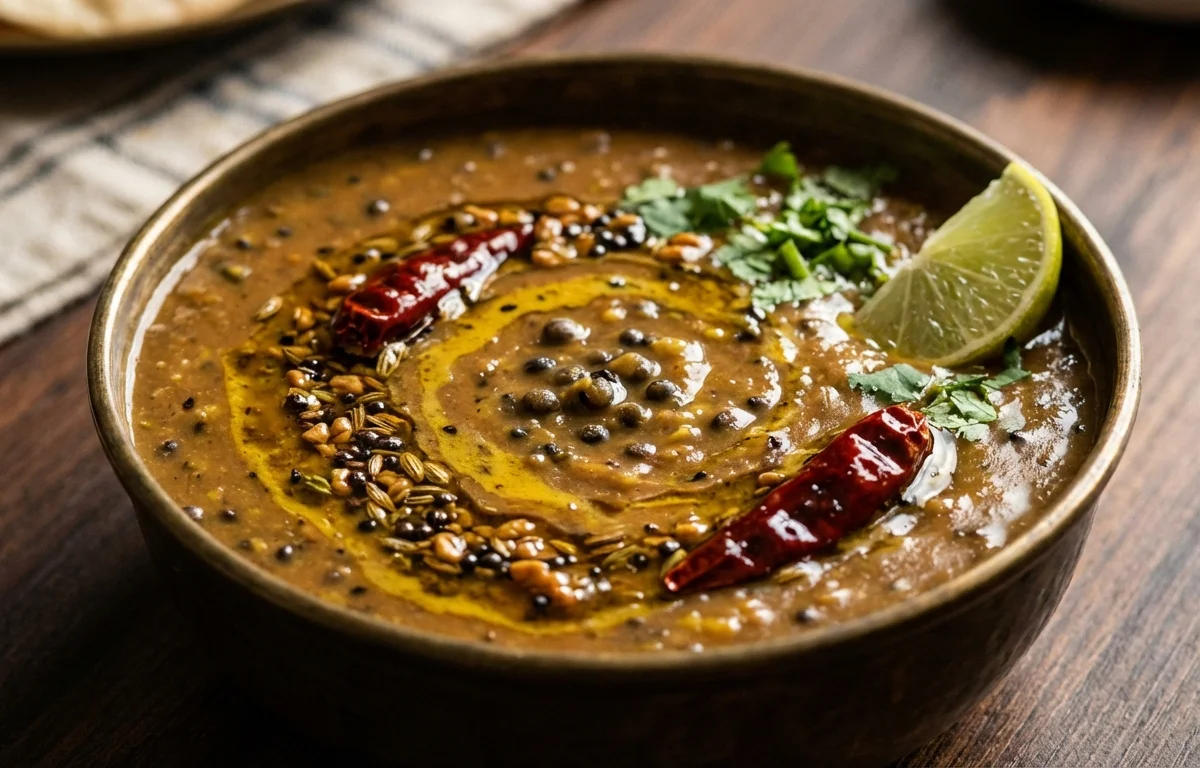
Mati Dal
A humble yet soul-warming Bengali-style dal made with yellow split peas. Slow-simmered with ginger and tempered with panch phoron, bay leaf, and a hint of sugar for that classic sweet-savory balance. This everyday dal is silky, light on the stomach, and pairs perfectly with steamed rice.
For 4 servings
- prep · ~30 min
Soak the yellow split peas.
Rinse the yellow split peas thoroughly under cold water until the water runs clear. Soak in enough water to cover for 30 minutes, then drain.
- boil · ~35 min
Boil the dal until soft.
1.Add the soaked and drained peas to a heavy-bottomed pot with 3 cups of water.2.Stir in turmeric powder, ginger paste, and salt.3.Bring to a rolling boil, then reduce heat to a gentle simmer.4.Cook uncovered for 30-35 minutes, stirring occasionally, until the peas are completely soft and begin to break down.5.Add a splash of hot water if the dal gets too thick before the peas are fully cooked.TIPSimmer gently — a rapid boil will make the dal frothy and spill over. - mix · ~2 min
Mash and smooth the dal.
Once the peas are very soft, use the back of a ladle or a whisk to mash them lightly against the sides of the pot. Stir in the sugar. The consistency should be smooth and slightly flowing — add 0.25 to 0.5 cup of hot water if needed to reach a pouring-cream consistency.
TIPDon't over-mash — a little texture from a few whole peas makes it feel more rustic and homemade. - temper · ~2 min
Make the tempering.
1.Heat mustard oil in a small tadka pan over medium heat until it just begins to smoke lightly.2.Add the bay leaf and dried red chili. Fry until the chili darkens slightly (20-30 seconds).3.Add the panch phoron and let it crackle and pop for about 15 seconds until fragrant.4.Immediately pour the entire tempering over the simmering dal and stir well.TIPMustard oil must smoke slightly to lose its raw pungency — don't skip this step. - simmer · ~3 min
Simmer to meld the flavors.
Let the dal bubble gently for another 2-3 minutes after adding the tempering so the spiced oil infuses through.
- garnish
Finish with ghee and cilantro.
Drizzle ghee on top and scatter fresh chopped cilantro. Serve hot with steamed rice.
TIPThe ghee added at the end is what gives this dal its signature silky finish — don't skip it.
What to keep in mind.
7 tips from the recipe — small details that make a real difference to the final dish.
- 1Soak the yellow split peas for at least 30 minutes to ensure even cooking and a creamy texture.
- 2Simmer the dal gently; a rolling boil can cause froth and spillage, especially with split peas.
- 3For a rustic home-style texture, mash lightly with a ladle, leaving some peas whole.
- 4Mustard oil must be heated until it just begins to smoke to mellow its pungent edge before tempering.
- 5Pour the hot tempering directly over the simmering dal — the sizzle infuses the spices deeply.
- 6Add the final ghee just before serving; it gives the dal a silky mouthfeel and rich aroma.
- 7The dal thickens as it cools; stir in a splash of hot water when reheating to restore the pouring-cream consistency.
Adapt it for your goals.
Vegan
The recipe is already vegan if you omit the ghee finish and use a neutral oil or extra mustard oil instead. All other ingredients are plant-based.
Low OilLow-Oil
Reduce the mustard oil for tempering to 1 teaspoon and skip the ghee. The dal will still be flavorful from the spices, just lighter on fat.
Tomato TadkaTomato Tadka
Add 1 small diced tomato to the tempering pan after the panch phoron cracks, sauté until soft, then pour over the dal. This adds a gentle tang that brightens the sweetness.
Why this is on our healthy list.
High in Plant Protein
Yellow split peas are a legume rich in protein and fiber, making this dal a satisfying, muscle-friendly base for a plant-forward meal.
Digestive Comfort
Ginger and turmeric, both present in this dish, are traditionally used in Bengali cooking to aid digestion and reduce bloating.
Moderate Glycemic Impact
The fiber in split peas slows down carbohydrate absorption, helping to maintain stable blood sugar levels when eaten as part of a balanced meal.
Antioxidant Spices
Turmeric and panch phoron (which typically includes fenugreek, cumin, nigella, mustard, and fennel seeds) provide a range of anti-inflammatory phenolic compounds.
Frequently asked questions
Yes, cook the soaked split peas in a pressure cooker with 1.5 cups of water, turmeric, ginger, and salt for 3-4 whistles, then mash and add the tempering afterwards.



-curry.webp)
.webp)