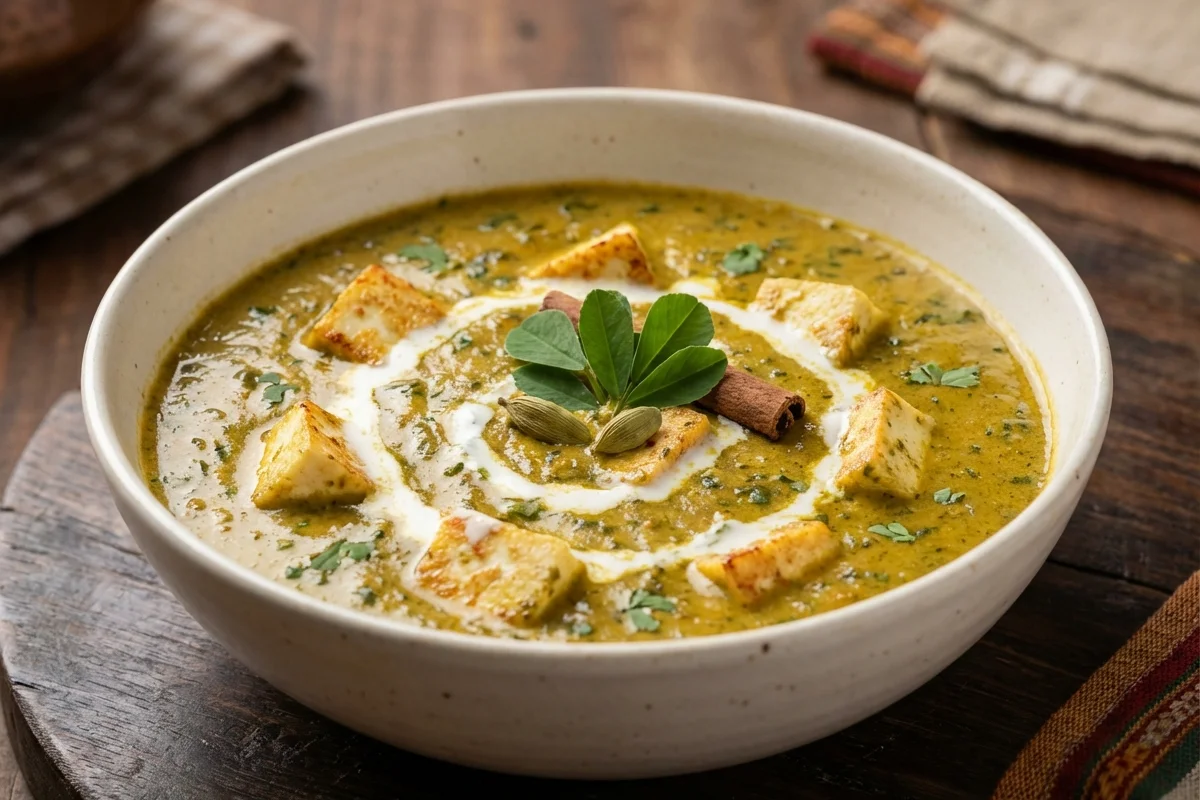
Methi Chaman
A fragrant Kashmiri delicacy featuring tender paneer cubes and fresh fenugreek leaves in a creamy, spiced spinach gravy. Earthy methi balances perfectly with the mildness of paneer and the richness of a smooth spinach base, finished with a touch of cream.
For 4 servings
- prep · ~5 min
Blanch the spinach and prepare the puree.
1.Bring 4 cups of water to a rolling boil in a large pot.2.Add spinach leaves and blanch for 2 minutes until just wilted.3.Immediately transfer spinach to a bowl of ice water to stop cooking.4.Drain the ice water and blend spinach with ½ cup fresh water into a smooth puree.TIPBlanch and shock spinach to keep its vibrant green color in the final dish. - fry · ~5 min
Pan-fry the paneer.
1.Heat 1 tbsp oil in a non-stick pan over medium heat.2.Add paneer cubes and fry gently until light golden on all sides (3-4 min).3.Remove paneer and soak in a bowl of warm water to keep it soft.TIPSoaking fried paneer in warm water prevents it from drying out. - saute · ~3 min
Cook the fenugreek leaves.
1.Place chopped methi leaves in a pan over medium heat.2.Dry-roast for 2-3 minutes until they wilt and moisture evaporates.3.Remove from pan and set aside.TIPDry-roasting methi reduces its bitterness while retaining the earthy aroma. - temper · ~6 min
Make the base with tempering.
1.Heat 1 tbsp ghee in the same pan over medium heat.2.Add cumin seeds and let them splutter for 30 seconds.3.Add asafoetida and stir for 5 seconds.4.Add chopped onions and sauté until translucent (4-5 min). - saute · ~4 min
Build the aromatic masala.
1.Add minced garlic, grated ginger, and slit green chilies to the pan.2.Sauté for 1-2 minutes until the raw smell disappears.3.Add turmeric powder and cumin powder. Stir for 30 seconds.4.Add the wilted methi leaves and mix well. - simmer · ~10 min
Combine spinach puree and simmer.
1.Pour in the smooth spinach puree and stir everything together.2.Add salt and mix well.3.Bring to a gentle simmer and cook for 8-10 minutes until the gravy thickens slightly.TIPSimmer uncovered and stir occasionally to avoid burning at the bottom. - assemble · ~4 min
Add paneer and finish the dish.
1.Gently fold in the fried paneer cubes.2.Simmer for another 2 minutes so the paneer absorbs the flavors.3.Sprinkle garam masala and drizzle fresh cream on top.4.Turn off the heat and let it rest for 2 minutes.TIPDon't over-stir after adding paneer; the cubes are delicate and may break. - garnish
Garnish and serve hot with naan or paratha.
What to keep in mind.
6 tips from the recipe — small details that make a real difference to the final dish.
- 1Blanch spinach in salted boiling water to lock in its bright green color.
- 2Squeeze the blanched spinach well before blending to avoid a watery puree.
- 3Dry-roast fresh methi leaves until no moisture remains to tame their bitterness.
- 4Soak fried paneer cubes in warm water to keep them soft and creamy inside.
- 5Simmer the gravy uncovered to thicken it naturally, stirring often to prevent sticking.
- 6Add garam masala only at the end to preserve its volatile aroma.
Adapt it for your goals.
Dairy-free
Substitute paneer with extra-firm tofu (pressed and pan-fried) and use coconut cream or cashew cream instead of dairy cream. The gravy remains lush and aromatic, suitable for vegan diners.
high proteinHigh-protein
Add a handful of boiled chickpeas or cooked chana dal along with the spinach puree. This boosts the protein content while adding a subtle nutty texture that complements the methi flavor.
low oilLow-oil
Skip the oil for frying paneer—instead, bake or air-fry the cubes at 200°C for 8 minutes until golden. Reduce ghee to 1 tsp; the spinach-methi gravy is rich enough without extra fat.
Why this is on our healthy list.
Rich in Iron and Folate
Spinach and fenugreek leaves are excellent plant-based sources of iron and folate, supporting healthy red blood cells and energy metabolism.
Bone-Supporting Calcium
Paneer provides a generous amount of calcium and protein, which help maintain strong bones and muscle tissue.
Antioxidant Power from Greens
The combination of spinach and methi delivers antioxidants like beta-carotene and vitamin C, which help combat oxidative stress.
Digestive Aid from Spices
Cumin seeds, asafoetida, and ginger in this dish are known in Ayurveda to stimulate digestion and reduce bloating.
Frequently asked questions
Yes, thaw frozen spinach and skip the blanching step. For dried methi, use 2-3 tablespoons (crushed) and add it directly to the tempering—no need to dry-roast.