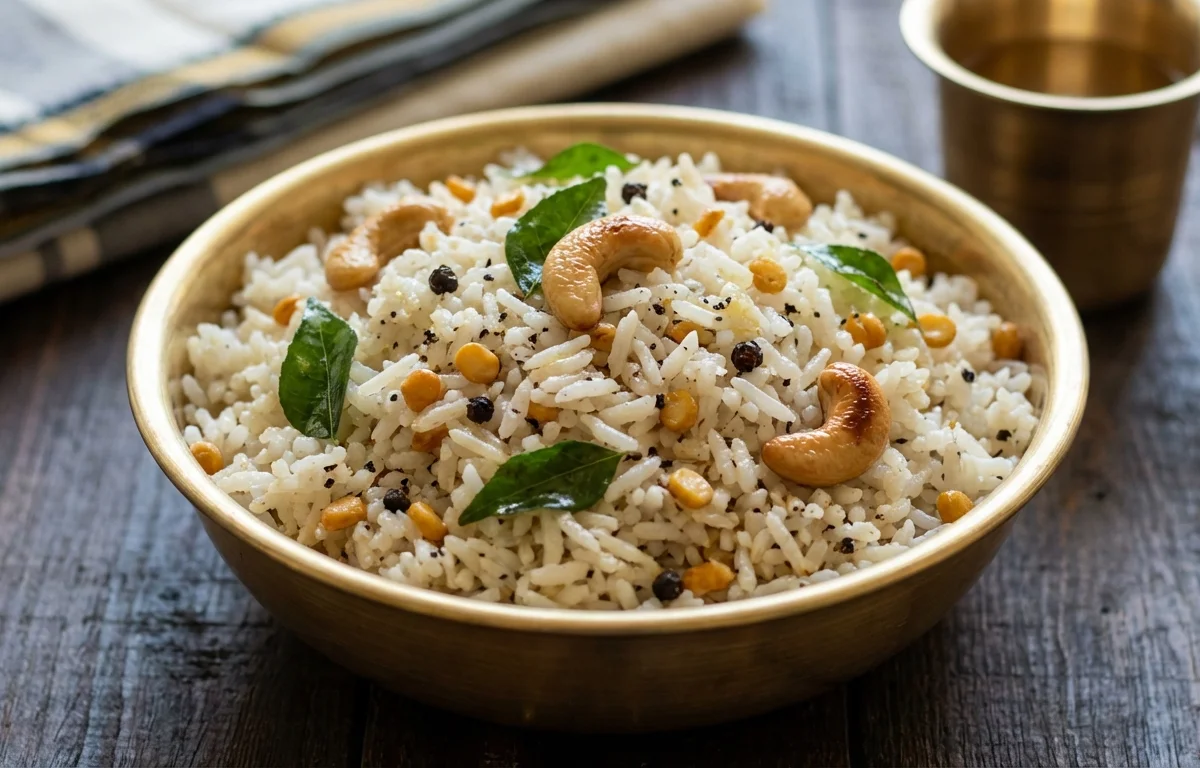
Milagu Sadam
Fragrant South Indian pepper rice with warm spices, curry leaves, and a gentle ghee tempering. It is simple, comforting, and deeply flavorful, making it a lovely small rice dish to pair with poriyal, papad, or raita.
For 4 servings
- prep · ~20 min
Rinse and soak the rice.
Wash the rice until the water runs mostly clear, then soak it in fresh water for 20 minutes. Drain before cooking.
- boil · ~15 min
Cook the rice until fluffy.
Bring water and salt to a boil in a pot. Add the drained rice, cover, and cook on low heat until the grains are tender and the water is absorbed. Spread the rice on a plate or tray to cool slightly so the grains stay separate.
TIPWarm but not hot rice mixes best and does not turn mushy. - roast · ~4 min
Roast the spices and dals.
1.Heat a small pan over low heat.2.Add black peppercorns, cumin seeds, toor dal, urad dal, and dried red chili.3.Roast until the dals turn light golden and the spices smell fragrant.4.Cool completely, then grind to a coarse powder.TIPKeep the heat low so the pepper turns aromatic, not burnt and bitter. - temper · ~2 min
Make the tempering.
1.Heat ghee in a wide pan over medium heat.2.Add mustard seeds and let them splutter.3.Add cashews and fry until lightly golden.4.Add curry leaves and asafoetida, then stir for a few seconds. - mix · ~2 min
Mix the rice with the pepper spice powder.
Add the cooked rice to the pan and sprinkle in the ground pepper mixture. Toss gently until the rice is evenly coated and heated through.
- serve
Serve the Milagu Sadam warm.
What to keep in mind.
6 tips from the recipe — small details that make a real difference to the final dish.
- 1Cool the cooked rice on a wide plate before mixing so the grains stay separate and don't turn pasty.
- 2Grind the roasted pepper mix coarse, not fine; tiny crushed bits give better texture and a slower peppery heat.
- 3Roast the dals on low heat until just light golden, because over-browned dal can make the spice mix taste bitter.
- 4Add curry leaves only after the mustard splutters to avoid trapped moisture making the ghee spit.
- 5Mix the rice gently in a wide pan with a flat spoon so the spice powder coats evenly without breaking the grains.
- 6If making ahead, keep the pepper powder separate and toss with reheated rice just before serving for the freshest aroma.
Adapt it for your goals.
Vegan
Replace ghee with sesame oil or coconut oil for a plant-based version with a more pronounced South Indian aroma.
low gheeLow-ghee
Use less ghee and add a small spoon of oil for tempering if you want a lighter everyday rice dish.
garlicGarlic
Add thinly sliced garlic to the tempering before the curry leaves for a bolder, more rustic pepper rice.
peanutPeanut
Swap cashews for roasted peanuts for extra crunch and a more budget-friendly variation.
Why this is on our healthy list.
Digestive Spice Support
Black pepper, cumin, curry leaves, and asafoetida are traditional digestive ingredients that make this rice feel warming and comforting.
Some Protein and Crunch
Toor dal, urad dal, and cashews add a little protein and texture, making the rice more satisfying than plain seasoned rice.
Simple Comfort Food
Made with rice, whole spices, and a modest tempering, this is a straightforward dish with familiar pantry ingredients.
Frequently asked questions
Yes. Day-old rice works very well because the grains are firmer and separate easily when tossed with the pepper spice powder.