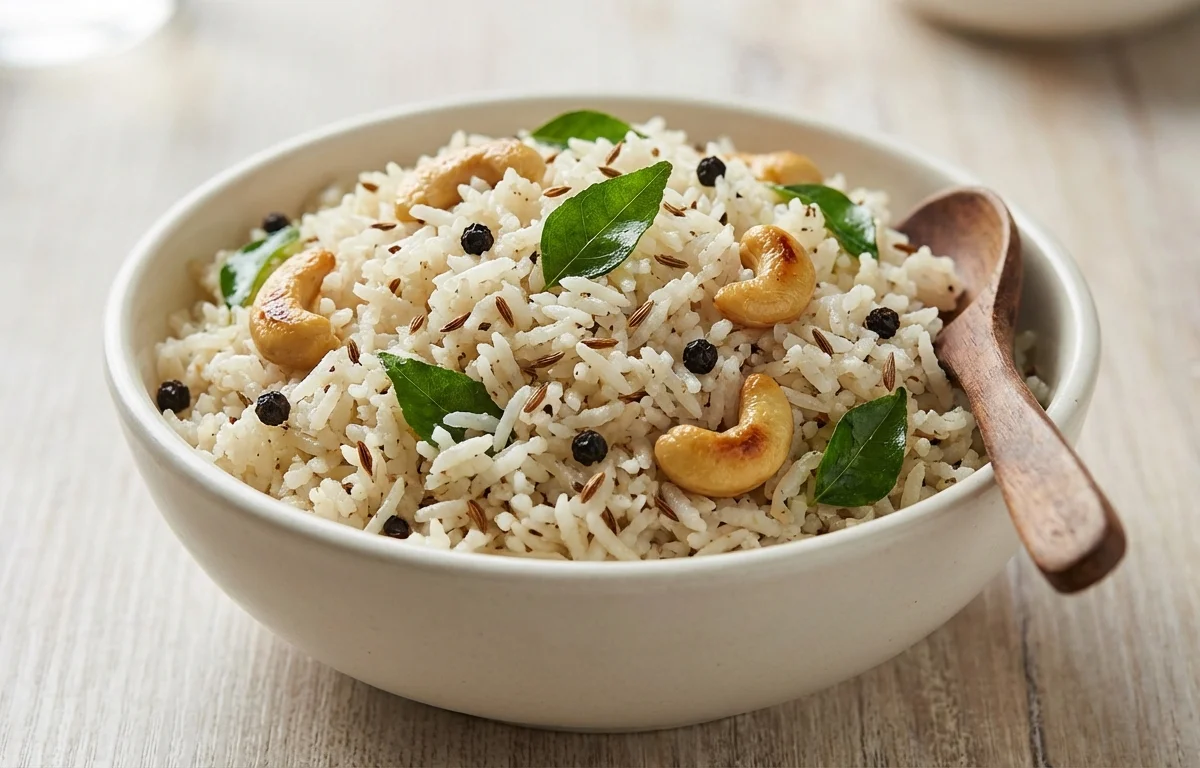
Milagu Seeraga Sadam
Fragrant South Indian pepper cumin rice with warm spices, curry leaves, and a gentle heat that lingers. It is simple, comforting, and perfect as a small rice dish in a larger meal.
For 4 servings
- prep · ~15 min
Rinse and soak the rice.
Wash the rice until the water runs mostly clear, then soak it in fresh water for 15 minutes. Drain well before cooking.
- boil · ~15 min
Cook the rice until fluffy.
1.Bring the water to a boil in a pot.2.Add the drained rice and salt, then stir once.3.Cover and cook on low heat until the rice is tender and the water is absorbed, 12 to 15 minutes.4.Spread the cooked rice on a plate or wide bowl and let it cool slightly so the grains stay separate.TIPSlightly cooled rice mixes better with the spice tempering and does not turn mushy. - prep · ~2 min
Crush the pepper and cumin.
Coarsely crush the black peppercorns and cumin seeds using a mortar and pestle or spice grinder. Keep the texture slightly coarse for better flavor and bite.
- temper · ~4 min
Make the tempering.
1.Heat the ghee in a wide pan over medium heat.2.Add the cashews and cook until lightly golden.3.Add the urad dal and chana dal and cook until golden and aromatic.4.Add the curry leaves and asafoetida and let them sizzle for a few seconds. - saute · ~1 min
Toast the crushed spices.
Add the crushed pepper and cumin to the pan and sauté for 20 to 30 seconds until fragrant. Keep the heat low so the spices do not burn.
TIPDo not over-toast the pepper, or it can turn bitter. - mix · ~2 min
Mix the rice with the tempering.
Add the cooked rice to the pan and gently toss until every grain is coated with the pepper-cumin mixture and ghee. Mix just until combined.
- serve
Serve the milagu seeraga sadam warm.
What to keep in mind.
7 tips from the recipe — small details that make a real difference to the final dish.
- 1Drain the soaked rice well before cooking so the grains stay fluffy and separate after tempering.
- 2Spread the cooked rice on a wide plate while warm; this stops carryover steam from making it sticky.
- 3Crush the pepper and cumin coarsely, not to a fine powder, for better aroma and little bursts of spice.
- 4Toast the pepper-cumin only on low heat for a few seconds; burnt pepper will make the rice harsh and bitter.
- 5Fry cashews first, then the dals, so each gets evenly golden without the nuts over-darkening.
- 6When adding curry leaves to ghee, stand back and let the moisture sputter off before stirring.
- 7Use a wide pan for mixing so you can fold the rice gently without breaking the grains.
Adapt it for your goals.
Vegan
Replace ghee with sesame oil or coconut oil for a plant-based version that still carries the pepper-cumin tempering well.
low oilLow-oil
Reduce the ghee slightly and use a very wide pan for tossing; the rice stays aromatic with a lighter finish.
no nutsNo-nuts
Skip the cashews if needed and add a little extra urad dal and chana dal for crunch in the tempering.
festival styleFestival-style
Add a few more cashews and a touch more ghee for a richer temple-style taste and aroma.
Why this is on our healthy list.
Digestive Spice Support
Black pepper, cumin, asafoetida, and curry leaves are traditional spices used to make a simple rice dish feel lighter and more aromatic.
Balanced Energy Base
Rice provides an easy, comforting carbohydrate base, while dals and cashews add some texture and satiety.
Includes Plant Ingredients
Curry leaves, cumin, pepper, urad dal, and chana dal bring plant-based compounds and variety beyond plain seasoned rice.
Frequently asked questions
Yes. Slightly dry, cooled leftover rice works very well because the grains stay separate when tossed with the tempering.