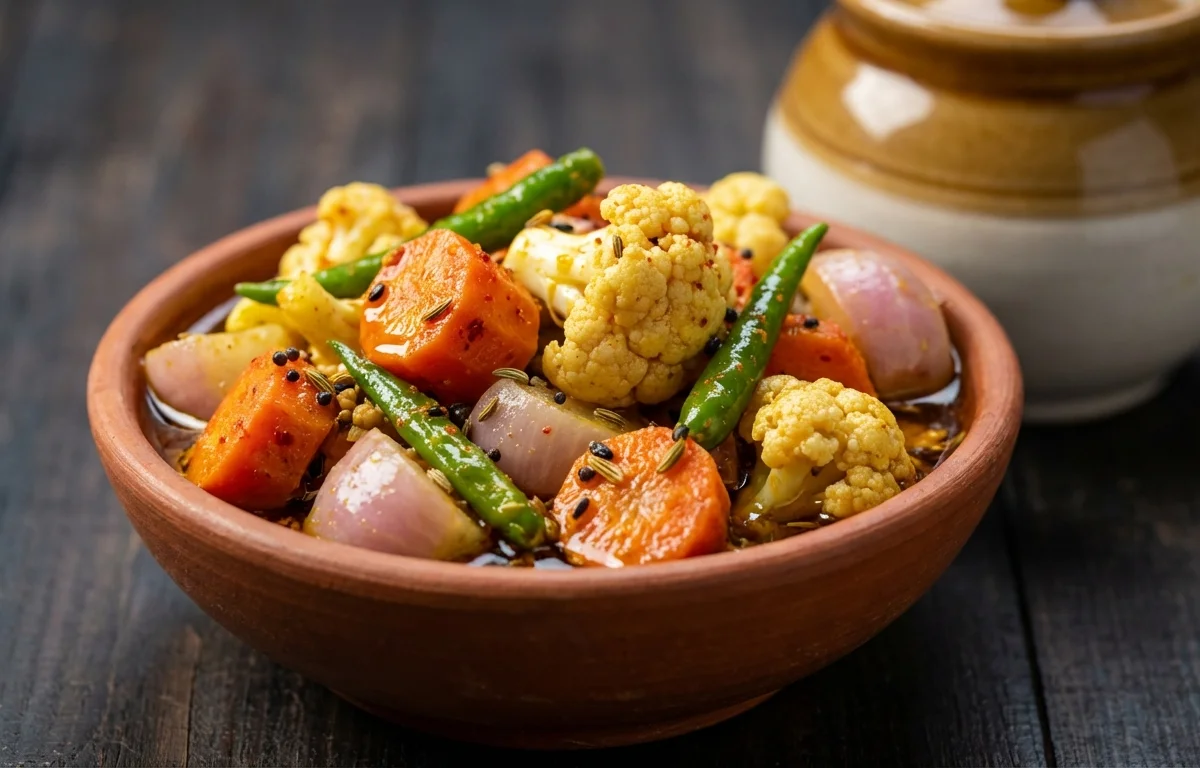
Mixed Pickle
A bold Indian pickle made with chopped mango, lemon, carrot, green chili, and ginger tossed in mustard oil and warming spices. It turns tangy, spicy, and deeply flavorful as it sits, making every simple meal more exciting.
For 8 servings
- prep · ~15 min
Prepare the fruits and vegetables.
1.Wash and dry the raw mango, lemon, carrot, green chili, and ginger very well.2.Peel and cut the raw mango into small cubes.3.Cut the lemon into small wedges and remove the seeds.4.Cut the carrot, green chili, and ginger into small, even pieces.TIPAny moisture can spoil the pickle, so dry everything thoroughly before mixing. - mix · ~5 min
Mix the pickle ingredients.
1.Add raw mango, lemon, carrot, green chili, and ginger to a large dry bowl.2.Add crushed mustard seeds, fenugreek seeds, fennel seeds, nigella seeds, turmeric powder, red chili powder, and salt.3.Mix well until the spices coat everything evenly. - temper · ~4 min
Heat the mustard oil.
Warm the mustard oil in a small pan until it reaches smoking point, then turn off the heat. Add asafoetida and let the oil cool until just warm.
TIPHeating the oil fully removes its raw sharpness and gives the pickle a cleaner flavor. - mix · ~3 min
Pour in the oil and combine.
Pour the warm mustard oil over the mixed ingredients and stir well so every piece is coated. Transfer the pickle to a clean, dry glass jar and press it down lightly.
- rest · ~2880 min
Let the pickle mature.
Cover the jar and keep it in a cool, dry place for 2 to 3 days, shaking or stirring once daily. The vegetables will soften slightly and the flavors will meld beautifully.
- serve
Serve the mixed pickle in small portions.
What to keep in mind.
6 tips from the recipe — small details that make a real difference to the final dish.
- 1Dry the mango, lemon, carrot, chili, and ginger completely after washing; even a little water can shorten the pickle's shelf life.
- 2Let the mustard oil cool to just warm before pouring, so it blooms the spices without softening the vegetables too quickly.
- 3Use a clean, dry glass jar and always remove pickle with a dry spoon to prevent spoilage.
- 4Shake or stir the jar once a day during the 2 to 3 day resting time so the salt and spices distribute evenly.
- 5If the lemon peel tastes too firm after a day, let the pickle mature another day until the wedges soften slightly.
- 6Press the pickle down in the jar so the oil coats the top layer well; exposed pieces can dry out or discolor.
Adapt it for your goals.
Extra-spicy
Add more green chili or a little extra red chili powder for a fiercer, North Indian style heat.
no lemonNo-lemon
Skip the lemon and increase raw mango for a sharper, more mango-forward pickle with a firmer bite.
garlicGarlic
Add peeled garlic cloves for a stronger savory edge that pairs especially well with dal-rice meals.
quick fridgeQuick-fridge
Store it in the refrigerator and start using after a day if you want a fresher, crunchier pickle with less maturation.
Why this is on our healthy list.
Rich in Plant Compounds
Mustard, fenugreek, fennel, nigella, ginger, and turmeric bring a range of naturally aromatic plant compounds to the pickle.
Vegetable and Fruit Variety
Raw mango, lemon, carrot, chili, and ginger add a mix of produce, giving the condiment more diversity than a single-ingredient pickle.
Digestive Spice Support
Fennel, ginger, asafoetida, and fenugreek are traditional pickle spices often valued in Indian cooking for their digestive qualities.
Frequently asked questions
Moisture can encourage spoilage and make the pickle go bad faster, so dry produce, bowl, jar, and spoon thoroughly.