Mochai Sundal
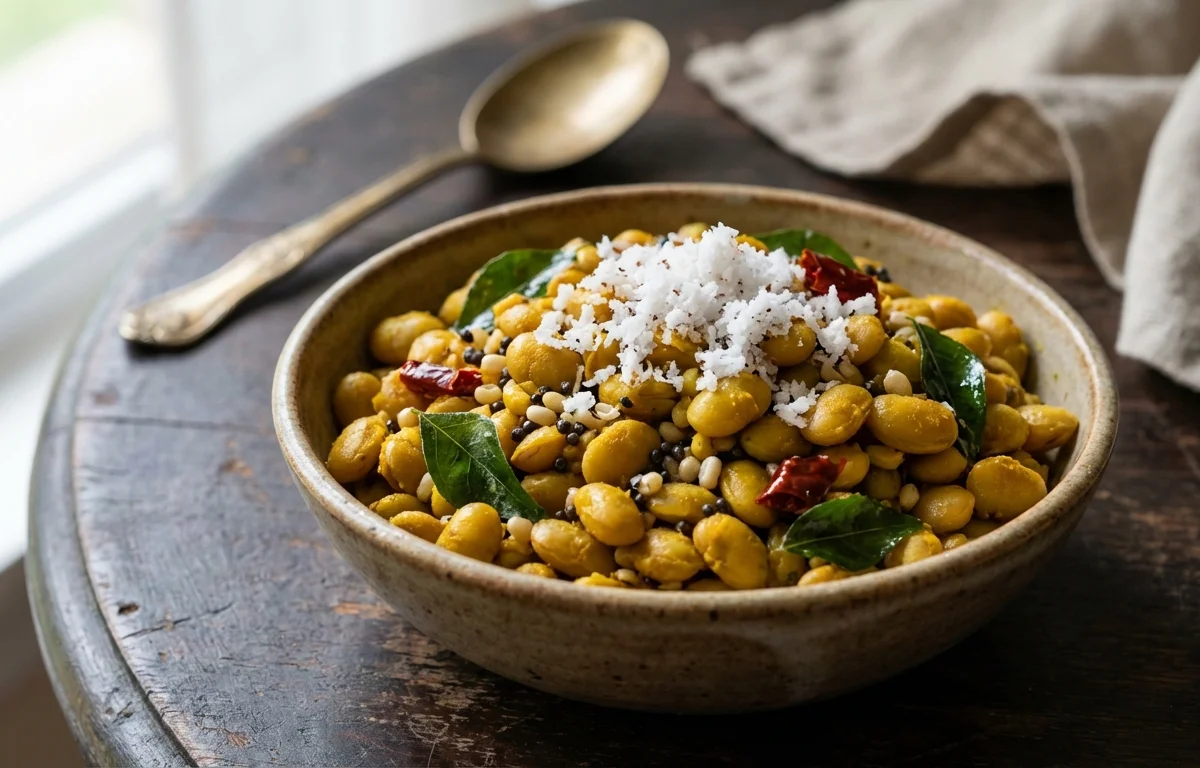
A classic South Indian snack made with tender field beans, a simple tempering of spices, and fresh coconut. This protein-packed dish is a festive favorite, especially during Navaratri, and makes for a healthy, flavorful side.
For 4 servings
Soak and Prepare Beans
- Rinse the dried mochai beans thoroughly under cold running water.
- Place them in a large bowl and cover with ample water. Let them soak for at least 8 hours or overnight.
- Once soaked, drain the soaking water and rinse the beans again.
Pressure Cook the Beans
- Transfer the soaked and rinsed beans to a pressure cooker.
- Add 3 cups of fresh water, 1/4 tsp turmeric powder, and 1/2 tsp of salt.
- Secure the lid and pressure cook on medium heat for 4-5 whistles, or for about 15 minutes.
- Turn off the heat and allow the pressure to release naturally. This ensures the beans are cooked through but not mushy.
- Once the pressure has subsided, open the cooker. Drain any excess water and set the cooked beans aside.
Prepare the Tempering (Tadka)
- Heat coconut oil in a heavy-bottomed pan (kadai) over medium heat.
- Add the mustard seeds and wait for them to splutter completely.
- Add the urad dal and chana dal. Sauté for about 45-60 seconds, stirring continuously, until they turn a light golden brown.
- Immediately add the broken dried red chillies, curry leaves, and asafoetida. Sauté for another 30 seconds until the curry leaves are crisp and the mixture is fragrant.
Combine and Finish
- Add the cooked mochai beans to the pan with the tempering.
- Sprinkle the remaining 1/2 tsp of salt (or to taste).
- Gently toss everything together to coat the beans evenly with the spices. Sauté for 2-3 minutes to allow the flavors to meld.
- Turn off the heat. Stir in the fresh grated coconut and lemon juice.
- Mix well one last time.
Serve
- Serve the Mochai Sundal warm as a nutritious snack or as a side dish with a South Indian meal.
What to keep in mind.
6 tips from the recipe — small details that make a real difference to the final dish.
- 1Soaking the beans overnight is essential for even cooking and better digestion.
- 2Do not overcook the beans. They should be tender enough to be pressed easily but still hold their shape.
- 3For a shortcut, you can use frozen or canned mochai beans. If using frozen, thaw and boil until tender. If using canned, rinse well and skip the pressure cooking step.
- 4Always add the grated coconut and lemon juice after turning off the heat to preserve their fresh taste and texture.
- 5Adjust the number of red chillies to suit your spice preference. For more heat, add a slit green chilli during tempering.
- 6Ensure the dals in the tempering turn golden brown for a nutty flavor and crunchy texture, but be careful not to burn them.
Adapt it for your goals.
With Raw Mango
Add 1/4 cup of finely chopped raw mango along with the coconut for a tangy and crunchy twist. This is a popular variation in Tamil Nadu.
Spicier VersionSpicier Version
Add 1-2 finely chopped green chillies to the tempering along with the red chillies for an extra kick of heat.
With Other LegumesWith Other Legumes
This recipe works beautifully with other legumes like chickpeas (chana), black-eyed peas (karamani), or peanuts (verkadalai).
With Sundal PowderWith Sundal Powder
For a more complex flavor, add 1-2 teaspoons of a homemade or store-bought sundal powder (a mix of roasted dals and spices) along with the cooked beans.
Why this is on our healthy list.
Excellent Source of Plant-Based Protein
Field beans are packed with protein, which is crucial for muscle building, tissue repair, and overall body function, making this a great dish for vegetarians and vegans.
High in Dietary Fiber
The high fiber content from the beans promotes healthy digestion, helps maintain stable blood sugar levels, and contributes to a feeling of fullness, aiding in weight management.
Rich in Minerals
Mochai Sundal is a good source of essential minerals like iron, which is vital for preventing anemia, and magnesium, which supports bone health and nerve function.
Provides Healthy Fats
The use of coconut and coconut oil provides medium-chain triglycerides (MCTs), which are easily digestible fats that can serve as a quick source of energy.
Frequently asked questions
One serving of Mochai Sundal (approximately 1 cup or 155g) contains around 270-290 calories, primarily from the beans, coconut oil, and fresh coconut.