Mooga Ghashi
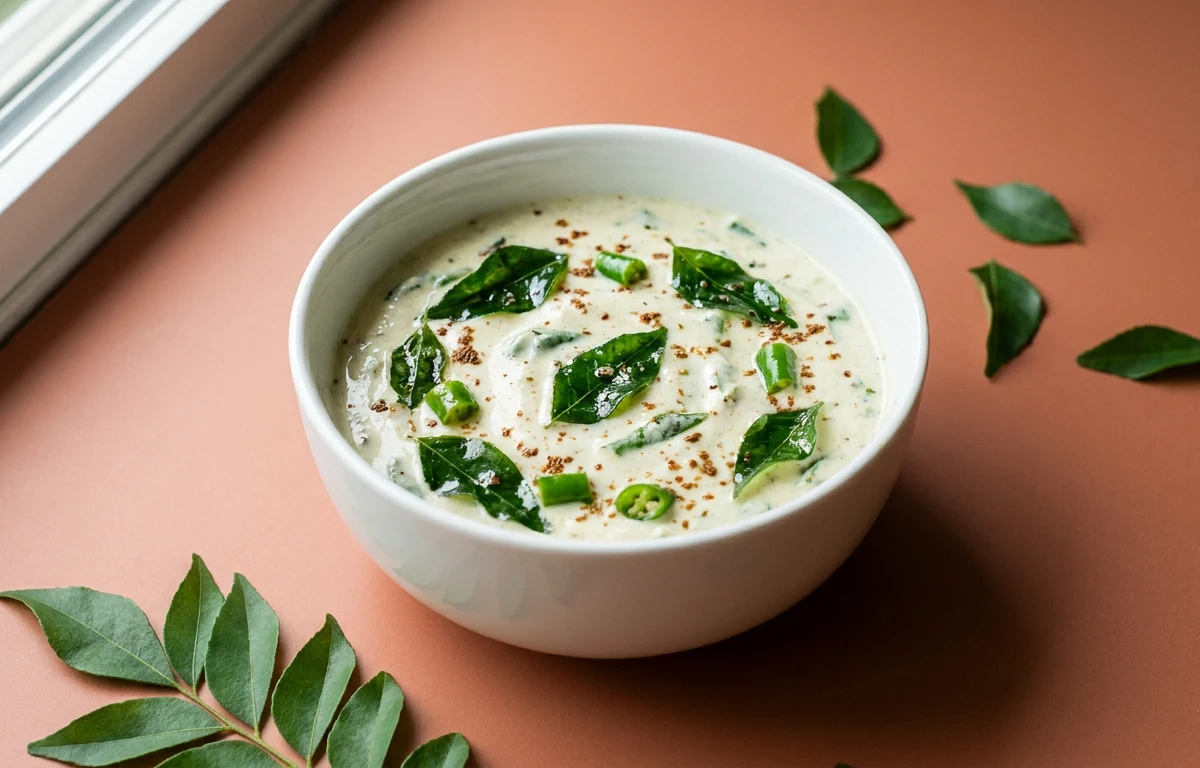
A comforting Mangalorean-style curry made with whole moong and a coconut-spice paste. It has a gentle heat, a lovely earthy taste, and a finishing tempering that makes it especially good with rice.
For 4 servings
- prep · ~480 min
Soak the whole moong.
Wash the whole moong well, cover with plenty of water, and soak overnight. Drain before cooking.
- pressure cook · ~20 min
Cook the moong until soft.
Add the soaked whole moong and 3 cups water to a pressure cooker. Cook until soft but not mushy, about 4 to 5 whistles, then let the pressure release naturally.
TIPThe beans should hold their shape. Overcooked moong can make the curry pasty. - roast · ~3 min
Roast the spices for the masala.
1.Heat a small pan over low to medium heat.2.Dry roast the dried red chili, coriander seeds, and cumin seeds until fragrant and lightly darkened.3.Take the pan off the heat and let the spices cool slightly.TIPKeep the heat moderate so the chilies and cumin do not burn and turn bitter. - mix · ~3 min
Grind the coconut masala.
Blend the grated coconut, roasted spices, tamarind paste, and a little water into a smooth, thick paste.
- simmer · ~10 min
Cook the ghashi.
1.Transfer the cooked moong with its cooking liquid to a pot if needed.2.Add the ground coconut masala, turmeric powder, and salt.3.Mix well and add a little more water if the curry looks too thick.4.Bring to a gentle simmer and cook until the raw coconut smell fades and the curry thickens slightly.TIPStir often once the coconut paste goes in so it does not catch at the bottom. - temper · ~1 min
Make the tempering.
1.Heat the oil in a small pan over medium heat.2.Add mustard seeds and let them splutter.3.Add curry leaves and fry briefly until fragrant. - assemble · ~1 min
Pour the tempering over the curry.
Pour the hot tempering over the simmering mooga ghashi and mix gently.
- serve
Serve hot with rice.
What to keep in mind.
7 tips from the recipe — small details that make a real difference to the final dish.
- 1Soak the whole moong fully overnight so it cooks evenly and keeps a creamy interior without splitting too much.
- 2Pressure-cook just until the beans are soft and intact; broken, mushy moong will make the ghashi heavy and pasty.
- 3Roast the chilies, coriander, and cumin only until aromatic and slightly darkened, not smoky, to avoid bitterness.
- 4Grind the coconut masala thick and smooth with minimal water so the curry stays rich instead of watery.
- 5After adding the coconut paste, keep the simmer gentle and stir often; a hard boil can make coconut-based gravies catch at the bottom.
- 6If the curry thickens on standing, loosen it with hot water rather than cold so the texture stays smooth.
- 7Pour the tempering over the curry while both are hot for the best mustard-curry leaf aroma.
Adapt it for your goals.
Spicier
Use 1 to 2 extra dried red chilies for a hotter ghashi that still keeps the coconut base balanced.
thinner curryThinner-curry
Add a little extra hot water while simmering if you want a looser consistency to mix easily with rice.
milderMilder
Reduce the dried red chilies for a gentler version that highlights the earthy moong and coconut more clearly.
no onion no garlicNo-onion-no-garlic
This recipe is already naturally free of onion and garlic, making it suitable for simple satvik-style meals.
Why this is on our healthy list.
Plant Protein from Whole Moong
Whole moong makes this curry filling and nourishing, with plant protein that helps turn a simple rice meal into a more balanced one.
Fiber-Rich Legume Base
Using whole moong instead of split lentils adds more fiber and a hearty texture that can support fullness.
Spice-Forward, Not Heavy
Flavor comes mainly from roasted spices, tamarind, and curry leaves, so the dish tastes rich without relying on a lot of oil.
Frequently asked questions
Yes, but the moong will take longer to cook and may not soften as evenly. Overnight soaking gives the best texture for this curry.