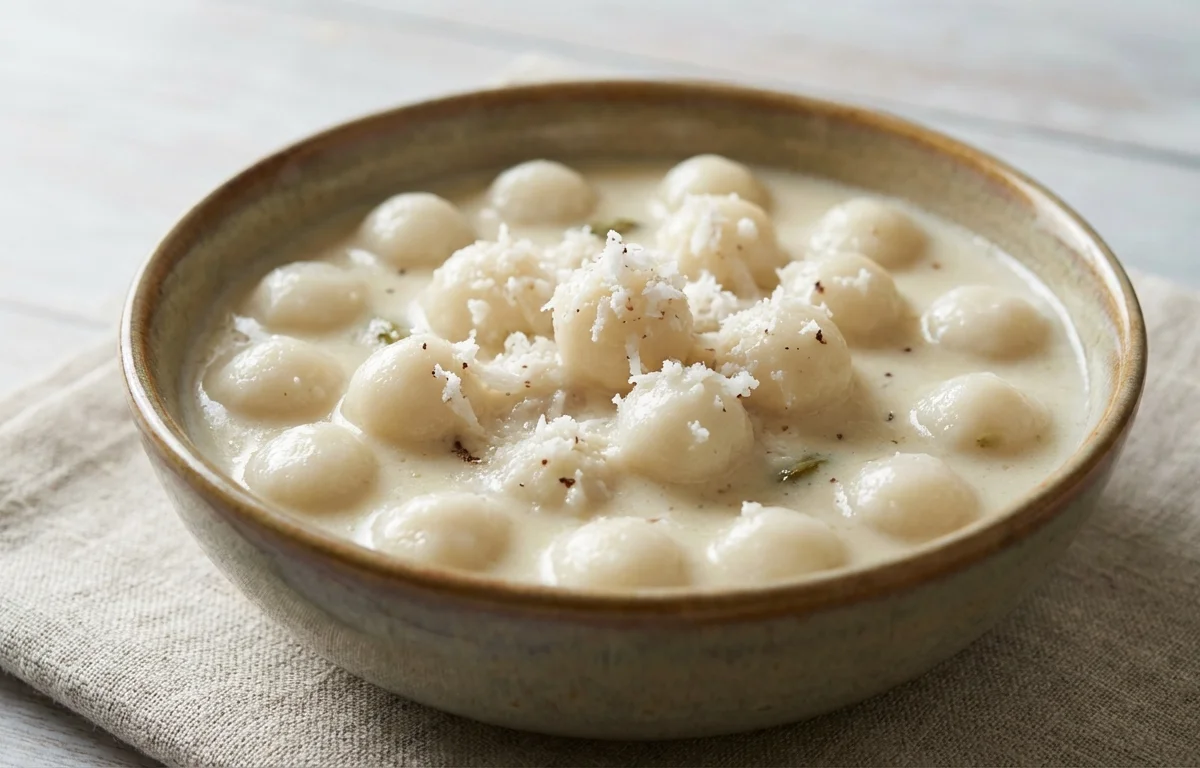
Paal Kozhukattai
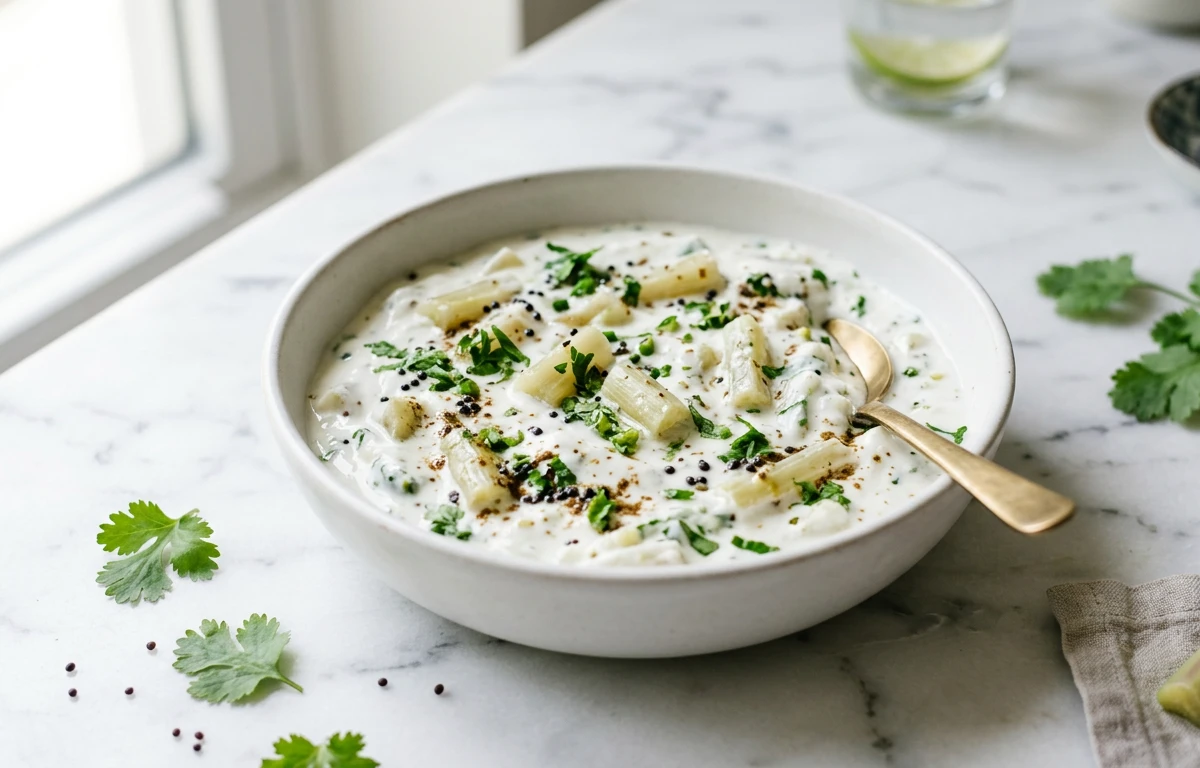
Tiny soft rice flour dumplings simmered in lightly sweetened milk make this Tamil sweet simple and soothing. It is delicate, mildly rich, and especially lovely warm for festivals or as a gentle dessert after a meal.
For 4 servings
- boil · ~4 min
Boil water for the dumpling dough.
Heat 1 cup water with salt in a pan until it comes to a boil.
TIPKeep the heat low once it boils so the dough cooks evenly without turning lumpy. - mix · ~7 min
Make the rice flour dough.
1.Lower the heat and add the rice flour to the hot water.2.Stir quickly with a spoon until it comes together.3.Cook for 1 to 2 minutes until the flour loses its raw look.4.Take it off the heat and cover for 5 minutes. - rest · ~5 min
Cool the dough slightly.
Let the dough cool until warm enough to handle comfortably.
- prep · ~10 min
Shape the kozhukattai.
1.Grease your palms lightly with ghee.2.Pinch off tiny portions of dough.3.Roll each one into a smooth small ball.4.Keep the shaped dumplings covered so they do not dry out.TIPMake the balls small and even so they cook at the same rate. - boil · ~6 min
Make the jaggery syrup.
1.Heat the jaggery with 1/2 cup water in a pan.2.Stir until the jaggery melts fully.3.Strain if needed to remove any grit.4.Return the syrup to the pan. - simmer · ~10 min
Cook the dumplings in the syrup.
1.Bring the jaggery syrup to a gentle simmer.2.Add the shaped rice dumplings carefully.3.Cook on low heat until they turn glossy and float lightly, about 8 to 10 minutes.4.Stir gently once or twice so they do not stick.TIPDo not boil hard after adding the dumplings or they may break. - simmer · ~8 min
Heat the milk separately.
In another pan, heat the milk and let it come to a gentle simmer. Do not let it reduce too much.
- mix · ~4 min
Combine the milk and dumplings.
1.Lower the heat under both pans.2.Add the warm milk gradually to the cooked dumplings and syrup.3.Mix gently until combined.4.Add cardamom powder and chopped coconut.TIPKeep the heat low when adding milk so it stays smooth and does not split. - simmer · ~4 min
Simmer briefly and finish the dessert.
Simmer for 3 to 4 minutes so the flavors come together, then turn off the heat.
- serve
Serve Paal Kozhukattai warm or at room temperature.
What to keep in mind.
7 tips from the recipe — small details that make a real difference to the final dish.
- 1Knead the dough while it is still warm; a warm dough rolls smoother and cracks less.
- 2Keep the dumplings tiny and uniform, or larger ones may stay dense in the center.
- 3Cover shaped kozhukattai with a damp cloth so the surface does not dry before cooking.
- 4Strain melted jaggery syrup if it looks sandy, so the final milk mixture stays smooth.
- 5Add only warm milk to the jaggery pan on low heat to reduce the chance of curdling.
- 6Once the dumplings float and look glossy, avoid overcooking or they can turn chewy.
- 7If reheating leftovers, warm gently and add a splash of milk to loosen the texture.
Adapt it for your goals.
Vegan
Replace milk with thin coconut milk plus a little thick coconut milk at the end, and use coconut oil instead of ghee for a dairy-free version.
low sweetLow-sweet
Reduce the jaggery slightly for a more delicate, milky dessert where the rice dumplings and cardamom stand out.
festive richFestive-rich
Add a few roasted cashews in ghee and a pinch of edible camphor for a more celebratory temple-style finish.
elaichi coconutElaichi-coconut
Increase fresh coconut and cardamom a little if you prefer a more aromatic, coconut-forward Tamil-style payasam.
Why this is on our healthy list.
Milk-Based Nourishment
Full-fat milk adds protein and calcium, making this sweet more sustaining than a syrup-only dessert.
Gentle, Simple Ingredients
Made from rice flour, milk, jaggery, and cardamom, this dish uses familiar pantry ingredients and has a soft texture that feels easy to enjoy.
Less Refined Sweetening
Jaggery offers a deeper sweetness than white sugar and is traditionally preferred in many South Indian sweets.
Frequently asked questions
This usually happens if the jaggery mixture is boiling hard or the milk is added cold. Use warm milk and combine on very low heat.