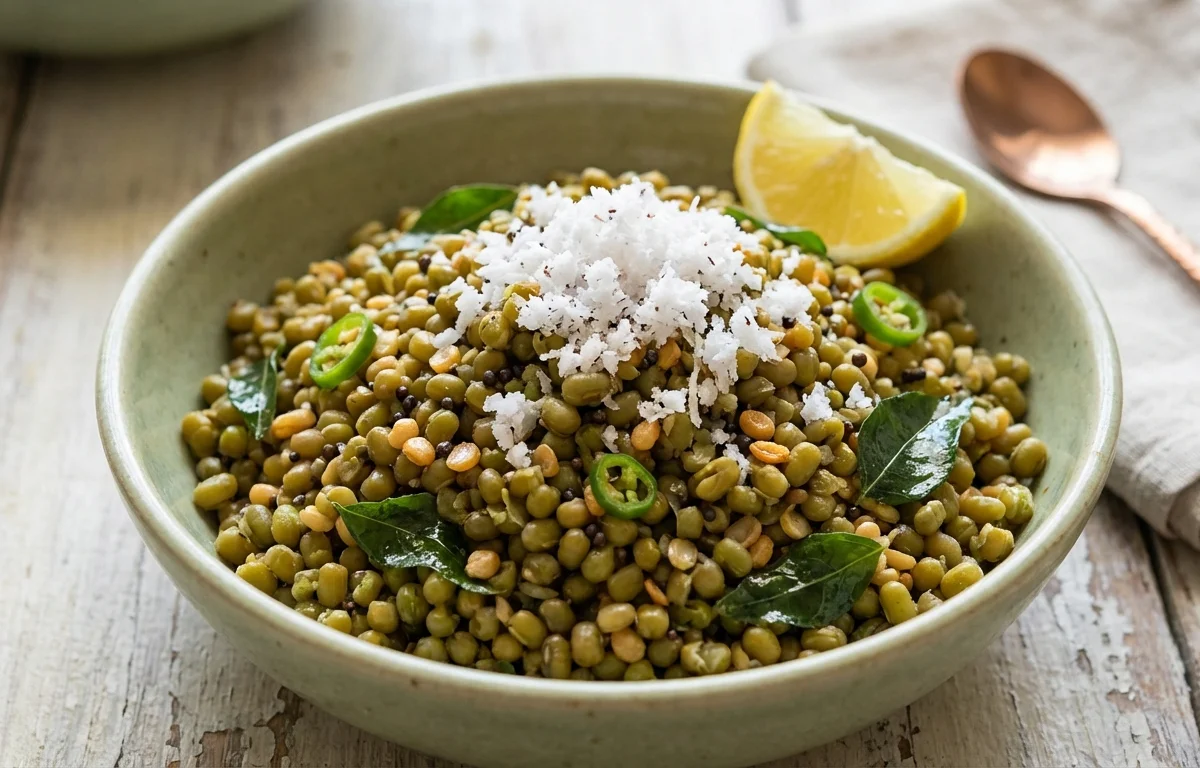
Padpe Upkari
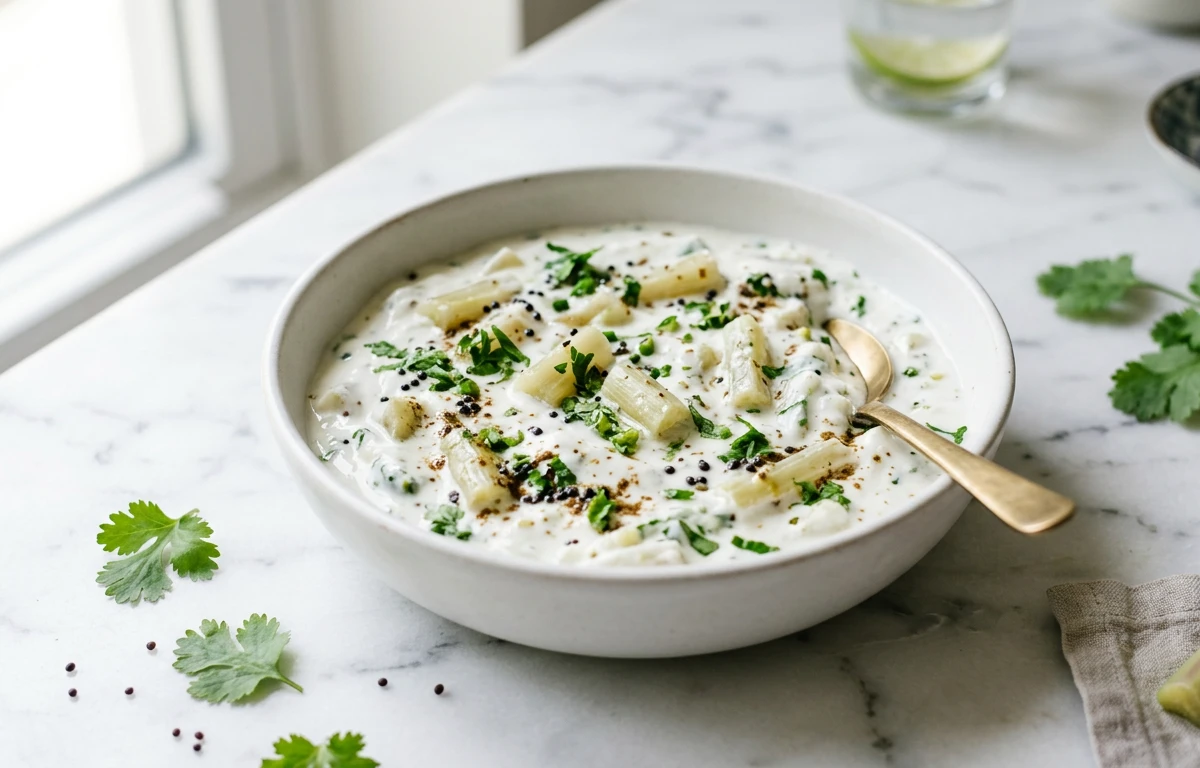
Padpe upkari is a simple Mangalorean-style stir-fry made with tender snake gourd, coconut, and a light tempering. It cooks quickly, stays gently spiced, and fits beautifully into an everyday Indian meal with rice and dal.
For 4 servings
- prep · ~8 min
Prepare the snake gourd.
1.Wash the snake gourd well.2.Trim the ends and split it lengthwise.3.Remove the seeds only if they are mature and hard.4.Finely chop the flesh into small even pieces. - temper · ~2 min
Make the tempering.
1.Heat oil in a kadai over medium heat.2.Add mustard seeds and let them splutter.3.Add urad dal and cook until lightly golden.4.Add curry leaves and green chili and sauté for a few seconds.TIPKeep the heat medium so the urad dal turns golden without burning. - boil · ~10 min
Cook the snake gourd.
Add the chopped snake gourd, salt, and water. Mix well, cover, and cook on low heat until the vegetable turns tender but not mushy.
- mix · ~2 min
Add the coconut.
Uncover and let any extra moisture dry out. Add the grated coconut and mix gently for 1 to 2 minutes so everything is well combined.
TIPDo not overcook after adding coconut or the dish loses its fresh flavor. - serve
Serve hot.
What to keep in mind.
7 tips from the recipe — small details that make a real difference to the final dish.
- 1Chop the snake gourd small and even so it cooks quickly and stays uniformly tender.
- 2If the snake gourd is mature, remove the spongy core and hard seeds fully to avoid a chewy texture.
- 3Keep the kadai on low heat after adding water; snake gourd softens fast and can turn mushy if boiled hard.
- 4Let the extra moisture evaporate before adding coconut so the upkari stays dry and fluffy, not wet.
- 5Add the grated coconut only at the end and cook briefly to preserve its sweet, fresh taste.
- 6Urad dal should turn light golden in the tempering; if it darkens too much, the dish can taste bitter.
- 7This upkari is best eaten fresh, but leftovers keep well refrigerated for a day and can be reheated gently.
Adapt it for your goals.
Spicier
Add an extra green chili or slice the chilies instead of slitting them for a sharper heat that still keeps the dish simple.
no dalNo-dal
Skip the urad dal in the tempering if you want a softer texture without the light crunch from fried lentils.
coconut richCoconut-rich
Use a little more grated coconut for a sweeter, more pronounced coastal-style finish that pairs especially well with plain rice.
onion addedOnion-added
Sauté a few tablespoons of finely chopped onion after the tempering for a slightly sweeter, fuller everyday home-style version.
Why this is on our healthy list.
Vegetable-Forward Side
Snake gourd makes this a light, everyday sabzi that adds more vegetables to a rice-and-dal meal without feeling heavy.
Moderate Oil Cooking
The dish uses only a small tempering of oil, relying on the vegetable's own moisture and coconut for texture and flavor.
Plant-Based Ingredients
Made from snake gourd, coconut, chilies, and a simple tempering, this upkari fits well into vegetarian South Indian meals.
Frequently asked questions
Only if the snake gourd is mature and the seeds are hard or spongy. Tender snake gourd can be chopped and cooked with the soft inner portion.