
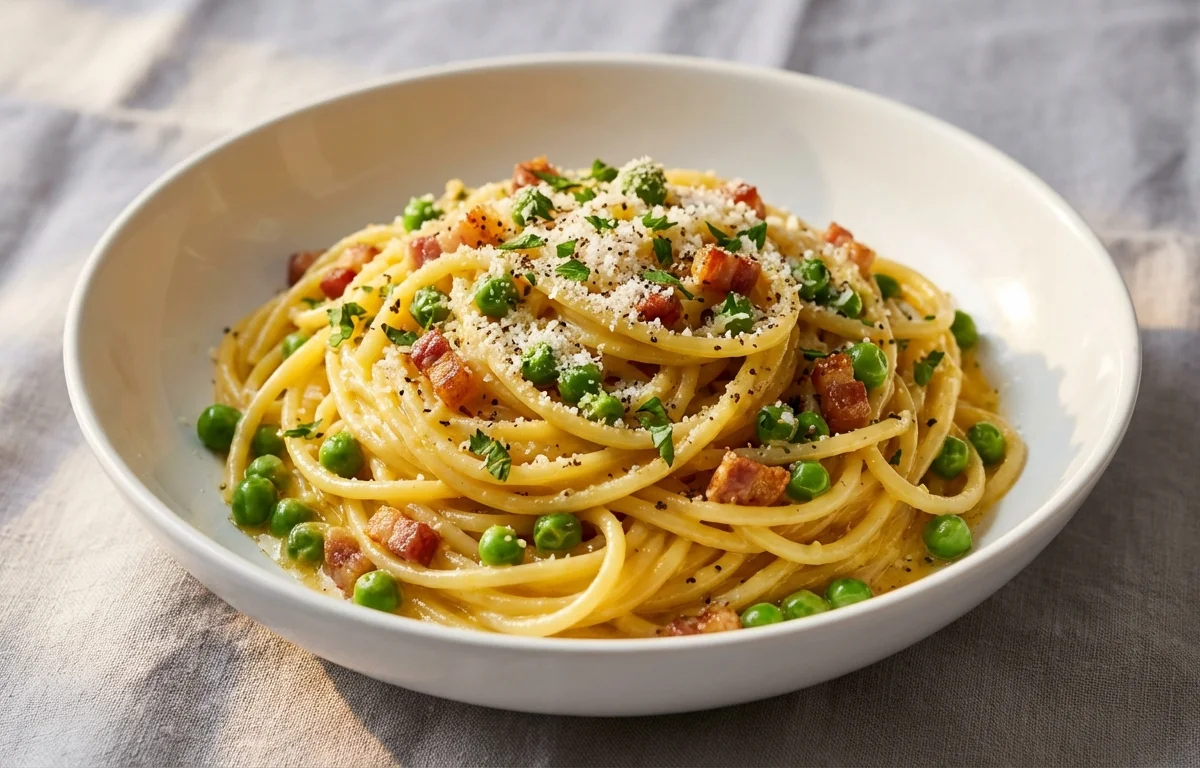
Pasta Carbonara with Peas
Silky, creamy pasta carbonara gets a fresh, sweet pop from tender garden peas. This classic Roman-inspired dish uses just eggs, cheese, and crispy bacon to create a luscious no-cream sauce that coats every strand of spaghetti. Ready in under 30 minutes, it's a weeknight dinner that feels restaurant-worthy.
For 4 servings
- boil · ~10 min
Boil the pasta water.
Fill a large pot with water, add the salt for pasta water, and bring to a rolling boil over high heat.
TIPUse at least 4 litres of water so the pasta has room to move. - mix · ~2 min
Make the egg and cheese mixture.
1.In a medium bowl, whisk together 4 egg yolks and 2 whole eggs until smooth.2.Add the grated parmesan cheese and a pinch of salt and whisk to combine.3.Add half the black pepper and mix well.TIPMake sure eggs are at room temperature to avoid scrambling when they hit the hot pasta. - fry · ~8 min
Cook the bacon until crispy.
1.Heat a large skillet over medium heat and add the bacon pieces.2.Cook, stirring occasionally, until the fat renders and the bacon is golden and crispy (6-8 minutes).3.Add minced garlic in the last 30 seconds, just until fragrant.TIPDon't drain the bacon fat — it adds essential flavor to the sauce. - boil · ~10 min
Cook the spaghetti and peas.
1.Add spaghetti to the boiling salted water and cook until al dente according to package directions.2.In the final 1 minute of cooking, add the peas to the pot.3.Just before draining, reserve 1 cup of starchy pasta water.4.Drain the pasta and peas together in a colander.TIPDon't rinse the pasta — the starch helps the sauce cling. - assemble · ~3 min
Toss everything together to create the sauce.
1.Remove the skillet with bacon from the heat and let it cool for 1 minute.2.Add the hot drained pasta and peas directly to the skillet with the bacon.3.Pour the egg and cheese mixture over the pasta and toss vigorously with tongs for 1-2 minutes.4.Add reserved pasta water, 1 tablespoon at a time, tossing continuously until the sauce is creamy and coats every strand.TIPThe key is working fast off the heat — residual warmth cooks the eggs into a silky, creamy sauce without scrambling them. - garnish · ~1 min
Finish with pepper and extra cheese.
Divide the pasta among bowls and top with the remaining black pepper and extra grated parmesan cheese.
TIPA final drizzle of good olive oil takes this over the top. - serve
Serve immediately while hot and creamy.
TIPCarbonara waits for no one — the sauce thickens as it cools, so eat it right away.
What to keep in mind.
6 tips from the recipe — small details that make a real difference to the final dish.
- 1Use freshly grated Parmesan, not pre-shredded, for the smoothest sauce without clumping.
- 2Reserve at least 1 cup of pasta water; the starch is key to emulsifying the sauce.
- 3Remove the skillet from heat before adding the egg mixture to prevent scrambling.
- 4Toss the pasta vigorously for at least a full minute to build the creamy emulsion.
- 5If the sauce seems too thick, splash in more reserved pasta water a tablespoon at a time.
- 6Let the cooked bacon cool slightly on the skillet before adding the pasta to temper the heat.
Adapt it for your goals.
Vegetarian
Skip the bacon and use 2 tablespoons of olive oil with 1 teaspoon smoked paprika for a smoky, savory depth that mimics the bacon flavor without meat.
high proteinHigh-protein
Swap half the spaghetti for chickpea or lentil pasta to boost protein and fiber while keeping the same creamy sauce and peas.
gluten freeGluten-free
Use gluten-free spaghetti or fettuccine and ensure the Parmesan is certified gluten-free; the egg-based sauce is naturally gluten-free.
herb freshHerb-fresh
Add 2 tablespoons of fresh chopped mint or basil along with the peas for a bright, spring-like twist that complements the sweet peas.
Why this is on our healthy list.
High-Quality Protein
Eggs and Parmesan provide complete proteins with all essential amino acids, supporting muscle repair and satiety.
Rich in Vitamin K
Green peas are a good source of vitamin K, which supports bone health and proper blood clotting.
Source of B Vitamins
Eggs contain B12, riboflavin, and folate, which help convert food into energy and support nervous system function.
Antioxidant from Garlic
Garlic offers allicin, a compound with antioxidant properties that may support immune function.
Frequently asked questions
The pan was likely too hot when you added the eggs. Always remove the skillet from the heat and let it cool for at least 1 minute (some recipes call for 2) before pouring in the egg mixture, and toss quickly using the residual heat.


