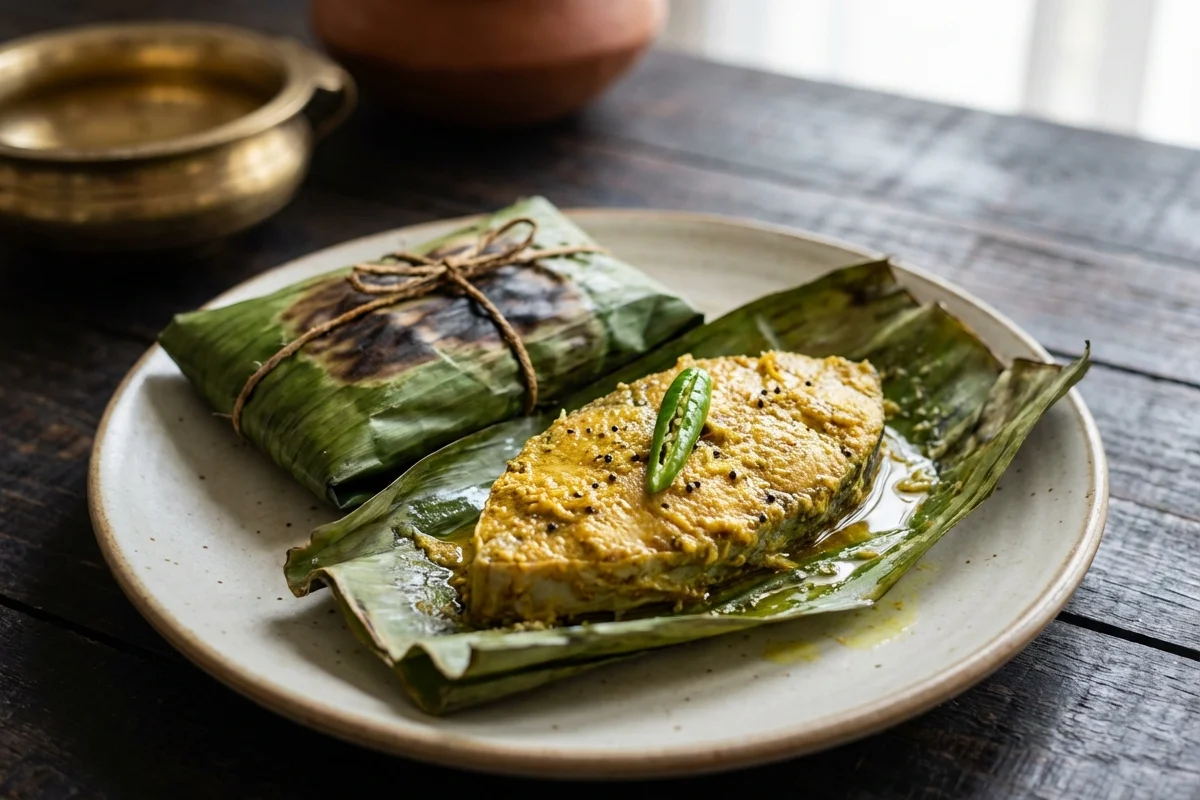
Patot Diya Maas
A fragrant Assamese fish preparation where pieces of fish are coated in a mustard, coconut, and herb paste, wrapped in banana leaves, and gently steamed until tender. Light, fresh, and deeply aromatic, it is lovely with plain rice.
For 4 servings
- prep · ~20 min
Soak the mustard seeds and prep the fish.
1.Soak the mustard seeds in water for 20 minutes, then drain.2.Wash the fish and pat it dry well.3.Rub the fish lightly with a little of the salt and the turmeric powder.TIPDry fish holds the paste better and keeps the parcels from turning watery. - mix · ~5 min
Make the mustard coconut paste.
1.Grind the soaked mustard seeds, coconut, green chili, garlic, ginger, and cilantro to a smooth paste.2.Add lemon juice, mustard oil, and the remaining salt.3.Mix well until the paste is thick and spreadable.TIPDo not over-grind the mustard for too long or it can turn bitter. - assemble · ~10 min
Wrap the fish in banana leaves.
1.Soften the banana leaves briefly over a low flame so they bend easily.2.Place one fish piece on each banana leaf.3.Spread the mustard coconut paste generously over each piece.4.Fold the leaves into neat parcels and tie with kitchen string if needed. - steam · ~20 min
Steam the parcels until the fish is cooked.
Arrange the parcels in a steamer in a single layer. Cover and steam over medium heat for 15 to 20 minutes, until the fish is tender and flakes easily.
TIPKeep the heat steady so the parcels steam gently without tearing. - serve
Serve the parcels hot.
Let the parcels sit for 2 minutes, then open and serve hot. Spoon any juices from the leaves over the fish.
What to keep in mind.
7 tips from the recipe — small details that make a real difference to the final dish.
- 1Pat the fish very dry before coating, or the mustard-coconut paste will slide off and dilute inside the parcel.
- 2Grind the soaked mustard just until smooth; over-blending can make the paste noticeably bitter.
- 3If the banana leaf cracks while folding, pass it over a low flame again for a few seconds to make it pliable.
- 4Keep the paste fairly thick and spreadable so it clings to the fish instead of leaking out during steaming.
- 5Arrange the parcels in a single layer in the steamer so they cook evenly and the leaf wrapping stays intact.
- 6Let the parcels rest for 2 minutes after steaming; the fish finishes gently and the juices settle back into the paste.
- 7Leftovers keep well refrigerated for a day; re-steam briefly rather than microwaving to preserve the leaf aroma.
Adapt it for your goals.
Less-spicy
Reduce the green chilies and let the mustard, coconut, and herbs lead; ideal if you want the Assamese flavors without much heat.
prawnPrawn
Use large prawns instead of fish for a quicker-cooking version with the same mustard-coconut leaf-wrapped profile.
bonelessBoneless
Choose firm boneless fillets for easier serving, especially if making this for children or guests who prefer no bones.
oven steamedOven-steamed
Place the wrapped parcels in a covered baking dish and steam-bake gently if you do not have a stovetop steamer.
Why this is on our healthy list.
Protein-Rich Main Dish
Fish provides satisfying protein, making this a filling main that pairs well with simple rice and light sides.
Gentle Cooking Method
Steaming cooks the fish without deep-frying, helping preserve its delicate texture while keeping the dish relatively light.
Herb and Spice Support
Ginger, garlic, cilantro, mustard, and green chili add strong flavor from fresh ingredients rather than heavy sauces.
Balanced Fats from Coconut and Fish
Fresh coconut adds richness and body, while the fish contributes nourishing natural fats depending on the variety used.
Frequently asked questions
Use a firm fish that holds its shape while steaming, such as steaks or sturdy fillets. Delicate fish can break apart inside the parcel.