Pidi Kozhukattai
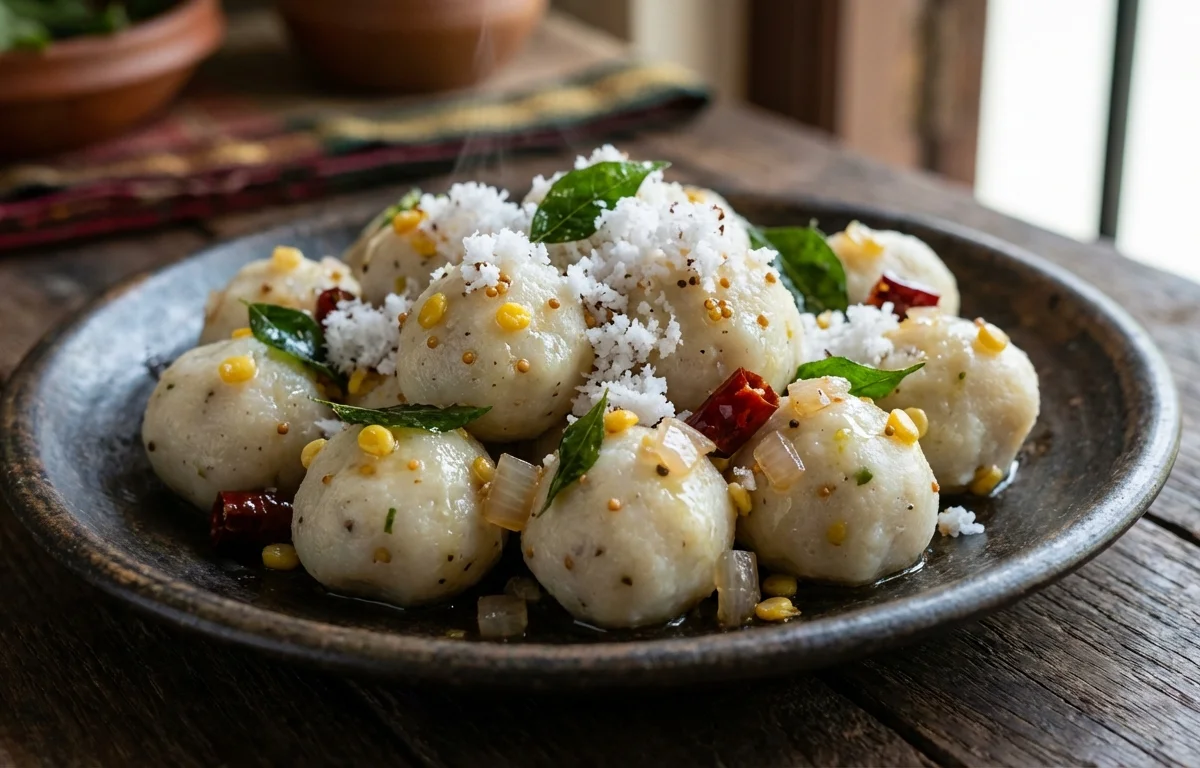
Soft hand-shaped rice dumplings with a gentle coconut flavor and a simple tempering of mustard, urad dal, and curry leaves. This comforting South Indian tiffin is light, filling, and lovely with chutney or a mild kuzhambu.
For 12 servings
- prep · ~5 min
Prepare the steamer and keep the rice flour ready.
Grease a steaming plate lightly with a few drops of oil if needed, and bring water to a boil in a steamer or idli pot while you make the dough base.
- temper · ~3 min
Make the tempering.
1.Heat oil in a pan over medium heat.2.Add mustard seeds and let them splutter.3.Add urad dal and chana dal, then cook until lightly golden.4.Add green chili, ginger, curry leaves, and asafoetida and sauté until fragrant.TIPKeep the heat medium so the dals turn golden without burning. - boil · ~5 min
Boil the water with coconut and salt.
Pour in water, then add the grated coconut and salt. Bring it to a steady boil so the flour cooks evenly when added.
- mix · ~3 min
Add the rice flour and make a soft dough.
1.Lower the heat.2.Add the rice flour little by little, stirring continuously to avoid lumps.3.Mix until the flour absorbs the water and comes together as a soft dough.4.Cook for 1 to 2 minutes more until the mixture looks smooth and leaves the sides of the pan.TIPDo not let the dough dry out; it should feel soft and warm, not stiff. - rest · ~5 min
Cool the dough until easy to handle.
Transfer the dough to a plate or bowl and let it cool just enough to touch comfortably. Keep it covered so it does not dry on top.
- assemble · ~7 min
Shape the pidi kozhukattai.
1.Grease your palms very lightly with oil.2.Pinch off small portions of dough.3.Press each portion in your fist or fingers to make the traditional ridged oval shape.4.Arrange the shaped dumplings on the steaming plate without crowding.TIPIf cracks appear, knead the dough briefly while it is still warm. - steam · ~10 min
Steam the dumplings until firm.
Steam the shaped dumplings over medium heat until they turn firm and glossy. They should hold their shape well when lifted.
- serve
Serve the pidi kozhukattai warm.
What to keep in mind.
7 tips from the recipe — small details that make a real difference to the final dish.
- 1Add the rice flour gradually into boiling water and stir constantly; dumping it in at once can create stubborn lumps.
- 2Shape the dumplings while the dough is still warm, not cold, so the ridges form easily without cracking.
- 3If the dough feels dry while shaping, sprinkle in a little hot water and knead briefly to bring back softness.
- 4Do not overcrowd the steaming plate; a little space around each kozhukattai helps them cook evenly.
- 5The dumplings are done when the surface looks slightly glossy and they lift cleanly without feeling sticky.
- 6Keep the dough covered with a plate or damp cloth during shaping so the top layer does not dry out.
- 7Leftovers can be refrigerated and reheated by steaming for a few minutes, which keeps them softer than microwaving.
Adapt it for your goals.
Mild
Reduce or skip the green chili for a gentler version that is better suited for children or a very mild breakfast.
veganVegan
This recipe is naturally vegan as written, making it an easy tiffin option for plant-based meals.
festival styleFestival-style
Skip the chili and ginger for a simpler, more traditional savory version often preferred for puja or festive offerings.
vegetable boostVegetable-boost
Mix in a little finely grated carrot or steamed broken beans for extra texture and a more colorful everyday tiffin.
Why this is on our healthy list.
Light Steamed Tiffin
Because the dumplings are steamed rather than fried, this dish feels light while still being filling and satisfying.
Plant-Based Energy
Rice flour provides easy-to-digest carbohydrates, while coconut and lentils add staying power for a balanced snack or breakfast.
Digestive Spice Support
Ginger, asafoetida, and curry leaves are traditional ingredients often used to make savory tiffin dishes feel easier on the stomach.
Frequently asked questions
The dough has likely cooled too much or become dry. Shape it while still warm, keep it covered, and knead in a few drops of hot water if needed.