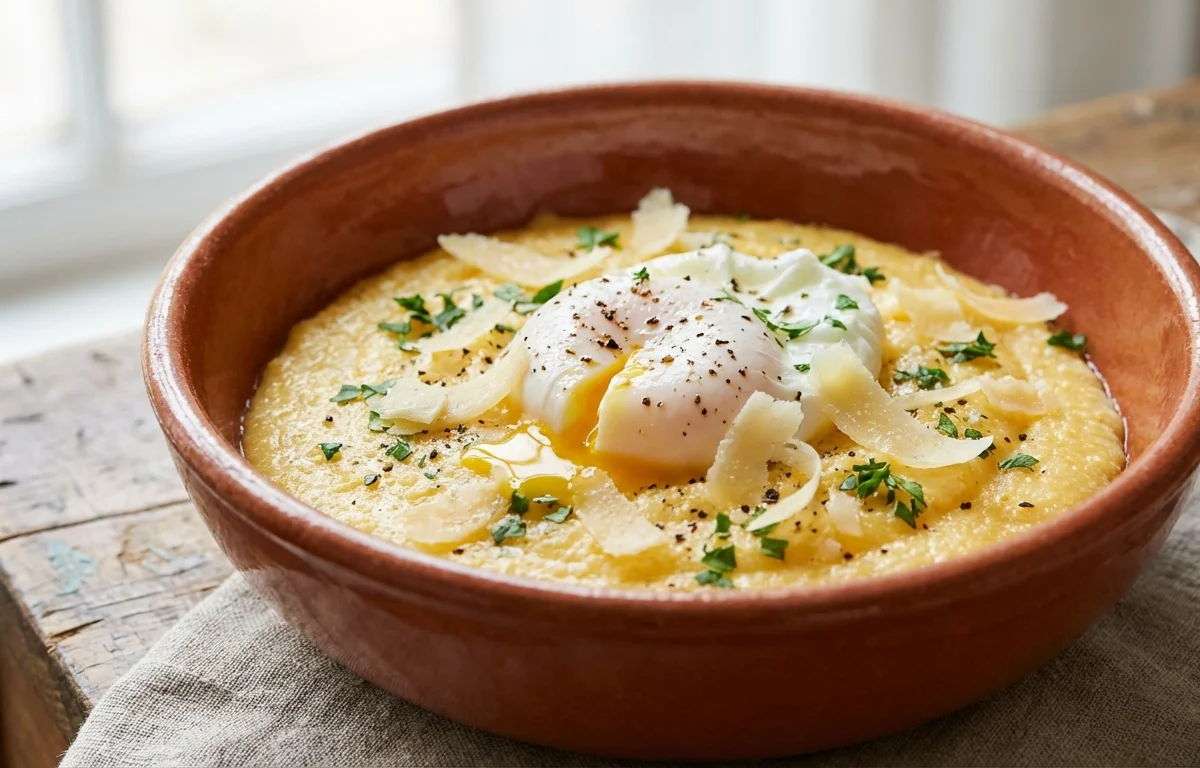
Polenta with Poached Egg and Parmesan
Creamy, buttery polenta topped with a perfectly poached egg that spills its golden yolk over everything. A shower of nutty Parmesan and crack of black pepper make this simple Italian-inspired dish feel like a warm hug in a bowl. Ready in under 30 minutes.
For 4 servings
- boil · ~5 min
Bring salted water to a boil for the polenta.
1.In a heavy-bottomed saucepan, bring 4 cups of water to a rolling boil over high heat.2.Add 0.5 teaspoon salt to the water and stir. - simmer · ~20 min
Whisk in the polenta and cook until creamy.
1.Slowly pour 1 cup polenta into the boiling water, whisking continuously to prevent lumps.2.Reduce heat to low and let it simmer gently, stirring every 3-4 minutes with a wooden spoon.3.Cook until thick, creamy, and pulling away from the sides of the pan, about 15-20 minutes.TIPStir from the bottom to prevent sticking. If the polenta gets too thick before its done, add a splash of warm water. - mix · ~2 min
Finish the polenta with butter and Parmesan.
1.Remove the saucepan from heat.2.Add 2 tablespoons butter and 0.25 cup grated Parmesan.3.Stir vigorously until the butter melts and everything is glossy and well combined.4.Taste and adjust salt if needed. Cover and keep warm. - simmer · ~5 min
Prepare the poaching liquid.
1.Fill a wide, deep pot with 4 cups of water and add 1 tablespoon white vinegar.2.Bring to a bare simmer over medium heat — look for small bubbles on the bottom and gentle wisps of steam, not a rolling boil.3.Adjust heat to maintain this temperature throughout.TIPA gentle simmer is key to a tidy poached egg. Boiling water will shred the whites. - other · ~12 min
Poach the eggs one by one.
1.Crack 1 cold egg into a small bowl.2.Use a spoon to create a gentle whirlpool in the water.3.Tip the egg into the center of the whirlpool and let it set for 3 minutes for a runny yolk.4.Lift the egg out with a slotted spoon and drain briefly on a clean kitchen towel.5.Repeat with remaining eggs, poaching up to 2 at a time if your pot allows.TIPCold eggs hold their shape better. Crack each egg into a small bowl first — it helps you slide it in gently and lets you remove any shell pieces. - assemble · ~2 min
Assemble the bowls.
1.Spoon warm, creamy polenta into 4 shallow bowls, dividing evenly.2.Nestle one poached egg on top of each mound of polenta.3.Sprinkle the remaining 0.25 cup grated Parmesan over the eggs.4.Crack black pepper over everything and drizzle with a few drops of olive oil. - serve
Serve immediately while hot.
Encourage everyone to break the yolk with their spoon and stir it through the polenta.
What to keep in mind.
6 tips from the recipe — small details that make a real difference to the final dish.
- 1For lump-free polenta, pour the cornmeal in a slow, steady stream while whisking vigorously.
- 2Stir the polenta every 3-4 minutes from the bottom with a wooden spoon to prevent scorching.
- 3If polenta thickens too much before cooking through, add a splash of warm water to loosen it.
- 4Use cold eggs straight from the fridge — they hold their shape better in the poaching water.
- 5Create a gentle whirlpool before sliding in the egg to help the white wrap neatly around the yolk.
- 6Drain poached eggs briefly on a clean kitchen towel to remove excess water before serving.
Adapt it for your goals.
Herb & Garlic
Stir in 2 tablespoons of chopped fresh herbs (parsley, chives, or thyme) and a minced garlic clove into the polenta just before serving for a bright, aromatic twist.
Spicy SausageSpicy Sausage
Top the polenta with crumbled, cooked spicy Italian sausage before adding the egg for a heartier, protein-packed meal with a kick.
VeganVegan
Substitute the butter with vegan butter or olive oil, use a vegan Parmesan-style shred, and replace the egg with a soft-cooked tofu or a poached chickpea flour egg alternative.
Mushroom & ThymeMushroom & Thyme
Sauté sliced cremini or wild mushrooms with thyme and a splash of white wine, then spoon over the polenta under the egg for an earthy, umami-rich variation.
Why this is on our healthy list.
Good Source of Protein
The egg provides high-quality protein with all essential amino acids, helping with muscle repair and satiety.
Calcium from Parmesan
Parmesan cheese is rich in calcium, which supports strong bones and teeth.
Energy from Complex Carbs
Polenta is a carbohydrate from corn, offering slow-release energy to keep you full and fueled.
Heart-Healthy Fats
Olive oil and butter (in moderation) provide monounsaturated and saturated fats that aid in nutrient absorption and add richness.
Frequently asked questions
Yes, but the cooking time will be much shorter (about 5 minutes). Reduce water slightly as instant polenta absorbs less liquid, and follow package instructions.