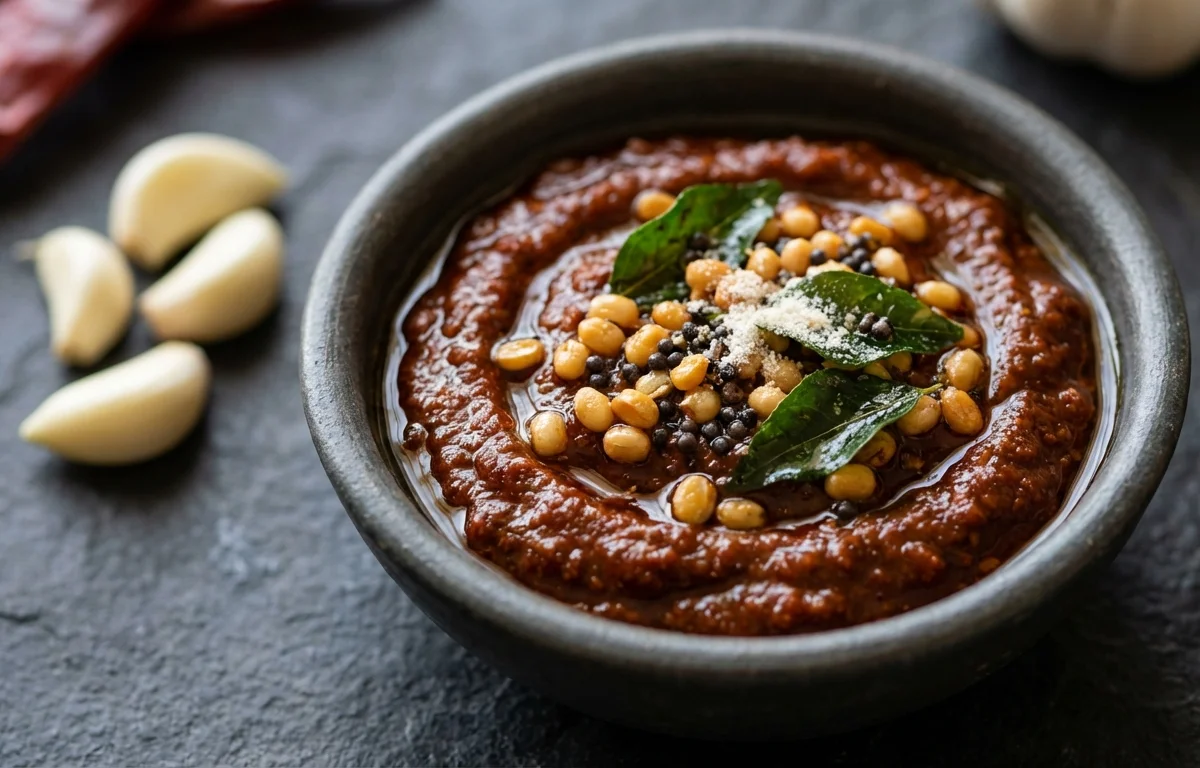
Poondu Chutney
A bold Tamil-style garlic chutney with dried red chilies, tamarind, and a quick tempering. It is spicy, tangy, and deeply savory, making a small but punchy side for idli, dosa, and even curd rice.
For 8 servings
- saute · ~4 min
Cook the garlic and chilies.
1.Heat 2 tsp oil in a small pan over medium heat.2.Add garlic and dried red chilies.3.Cook until the garlic turns lightly golden and the chilies darken slightly, 3 to 4 minutes.4.Turn off the heat and let the mixture cool slightly.TIPKeep the heat medium so the garlic sweetens without turning bitter. - mix · ~2 min
Grind the chutney.
1.Add the cooked garlic and chilies to a mixer jar.2.Add tamarind, salt, and water.3.Grind to a smooth or slightly coarse chutney, depending on how you like it. - temper · ~1 min
Make the tempering.
1.Heat 1 tsp oil in the same pan over medium heat.2.Add mustard seeds and let them splutter.3.Add urad dal and cook until light golden.4.Add curry leaves and fry for a few seconds. - assemble · ~1 min
Finish the chutney.
Pour the tempering over the ground chutney and mix well. If needed, add a spoon of water to loosen it slightly for serving with idli or dosa.
- serve
Serve the poondu chutney.
What to keep in mind.
7 tips from the recipe — small details that make a real difference to the final dish.
- 1Saute the garlic only until lightly golden; deep browning can make the chutney bitter.
- 2If your dried chilies are very hot, remove some seeds before cooking to keep the garlic flavor forward.
- 3Use just enough water to grind; a thicker chutney holds up better with hot idli and dosa.
- 4Let the sauteed garlic-chili mixture cool slightly before grinding so the chutney blends evenly.
- 5Fry the urad dal in the tempering until pale golden, not dark brown, for a nutty crunch without bitterness.
- 6If serving with curd rice, loosen the chutney with a spoonful of water so it mixes in smoothly.
- 7This chutney tastes even better after 15 to 20 minutes, once the tamarind and tempering settle into the garlic.
Adapt it for your goals.
Low-oil
Dry-roast the chilies and lightly saute the garlic in less oil, then use a minimal tempering for a lighter version.
extra spicyExtra-spicy
Add 2 to 3 more dried red chilies for a fierier chutney that stands up especially well to plain idli or curd rice.
onion garlic styleOnion-garlic style
Saute a few small shallots with the garlic for a slightly sweeter, fuller chutney with more body.
no temperingNo-tempering
Skip the mustard-urad dal tempering for a simpler chutney when you want a quicker, smoother side dish.
Why this is on our healthy list.
Garlic-Rich Condiment
This chutney uses a generous amount of garlic, adding strong savory flavor along with the natural compounds garlic is known for.
Light Yet Flavorful
Because it gets most of its punch from garlic, chilies, and tamarind, this side dish delivers big taste with relatively little oil.
Digestive Spice Elements
Tamarind, curry leaves, and the small tempering of mustard and urad dal add traditional ingredients often used to make meals feel more balanced.
Frequently asked questions
Yes, but the tempering adds a lot of aroma and texture. Without it, the chutney will taste sharper and simpler.