
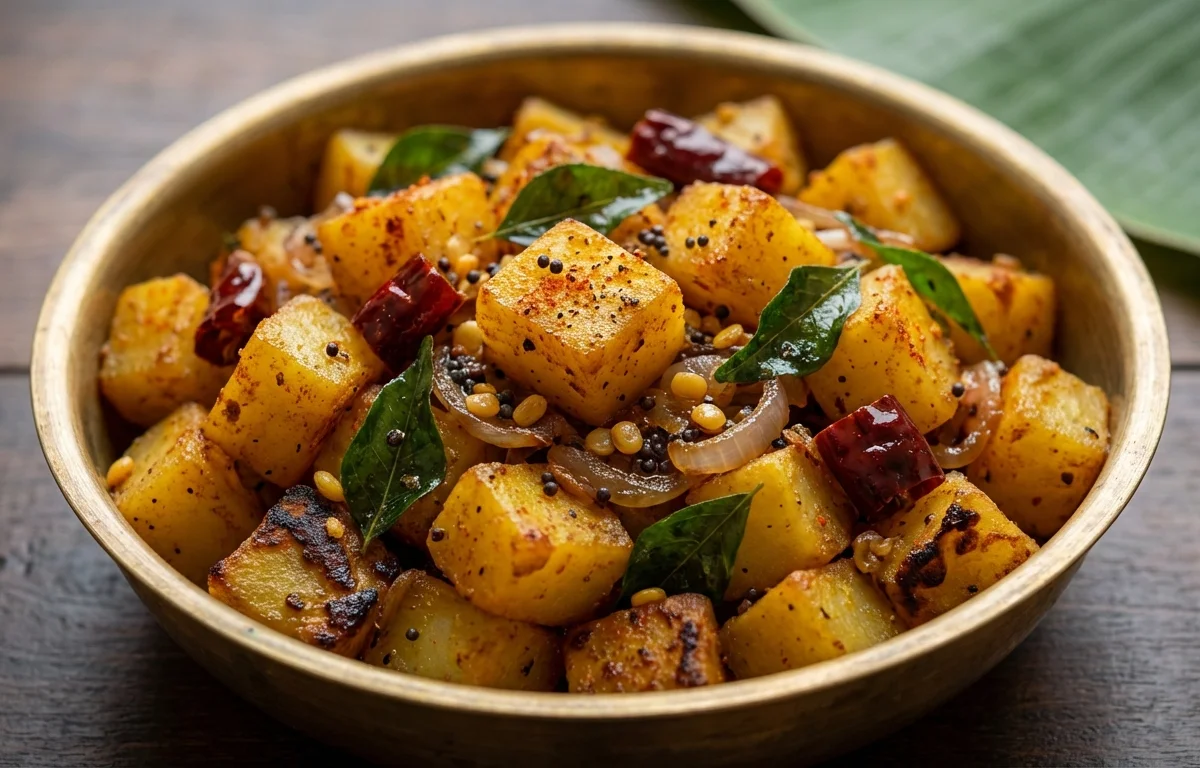
Potato Mezhukkupuratti
This Kerala-style potato stir-fry is simple, comforting, and full of flavor from coconut oil, curry leaves, and mild spices. Crisp edges and soft centers make it a perfect side for rice and dal.
For 4 servings
- boil · ~12 min
Boil the potatoes until just tender.
1.Add potato, water, and salt to a pot.2.Bring to a boil over medium-high heat.3.Cook until the potato cubes are just tender but still hold their shape, about 8 to 10 minutes.4.Drain well and let them sit for 2 minutes so excess moisture evaporates.TIPDo not overcook the potatoes or they will break apart in the pan. - temper · ~4 min
Make the coconut oil tempering.
1.Heat coconut oil in a wide pan over medium heat.2.Add mustard seeds and let them splutter.3.Add dried red chili and curry leaves.4.Add shallot and cook until lightly softened and fragrant.TIPUse a wide pan so the potatoes get more contact with the heat and crisp better. - saute · ~8 min
Cook the potatoes with the spices.
1.Add turmeric powder, red chili powder, and black pepper to the pan.2.Stir quickly for a few seconds without burning the spices.3.Add the boiled potato and toss gently to coat well.4.Cook on medium heat, turning occasionally, until the edges are lightly crisp and the potatoes look dry and glossy.TIPTurn the potatoes gently with a flat spatula to keep the cubes intact. - serve
Serve hot with rice and curry.
What to keep in mind.
7 tips from the recipe — small details that make a real difference to the final dish.
- 1Cut the potatoes into small, even cubes so they boil and crisp at the same rate.
- 2After draining, let the potatoes steam off for a couple of minutes; drier surfaces brown better in the pan.
- 3Wait for the mustard seeds to fully splutter before adding the curry leaves and chilies for a proper Kerala-style tempering.
- 4Slice the shallots thin so they soften quickly and coat the potatoes evenly without turning chunky.
- 5Stir the spice powders only briefly in the oil; turmeric and chili powder can turn bitter if they scorch.
- 6Use a wide pan and avoid overcrowding so the potato edges get crisp instead of steaming.
- 7Toss gently and only occasionally once the potatoes go in, or the cubes may break and turn mushy.
Adapt it for your goals.
Extra-spicy
Increase the red chili powder and add one more dried red chili for a hotter version that pairs especially well with plain rice and curd.
onion freeOnion-free
Skip the shallots and rely on curry leaves, mustard seeds, pepper, and extra coconut oil for a simpler version when you want a cleaner, lighter flavor.
garlicGarlic
Add a few sliced garlic cloves after the mustard seeds splutter for a deeper, more savory stir-fry without changing the basic Kerala character.
yam mixYam-mix
Replace part of the potato with cubed elephant yam or raw banana for a more traditional mixed mezhukkupuratti texture and earthier taste.
Why this is on our healthy list.
Comforting Energy Source
Potatoes provide satisfying carbohydrates that make this a filling side dish, especially with rice, dal, or curry.
Plant Compounds from Spices
Turmeric, black pepper, dried red chili, curry leaves, and shallots bring antioxidant-rich spices and aromatics to the dish.
Moderate Ingredient List
This recipe uses a short list of whole ingredients and a modest amount of oil compared with heavier fried potato dishes.
Frequently asked questions
They were likely boiled too long or stirred too aggressively. Cook only until just tender, drain well, and toss gently with a flat spatula.



.webp)
.webp)