Prawns Hinga Udda
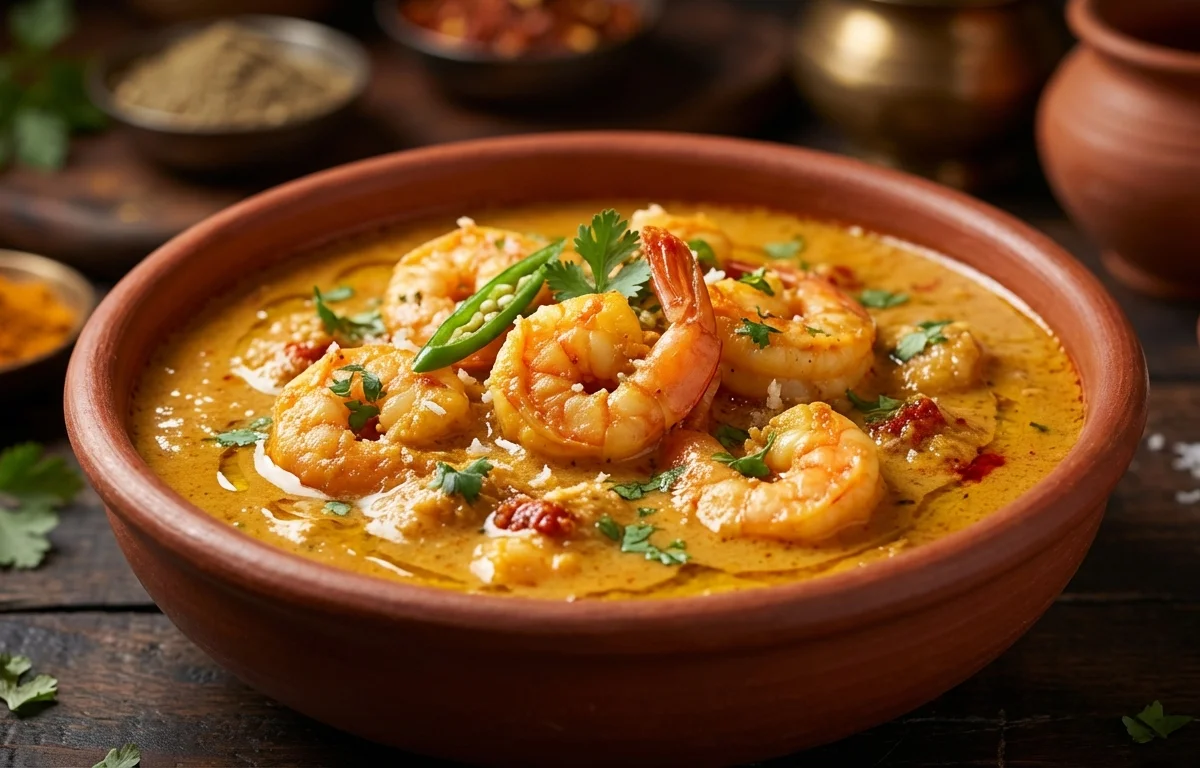
A light, aromatic prawn curry from eastern India where hing and mustard do the heavy lifting. The gravy stays simple and delicate, letting the sweetness of fresh prawns shine in every spoonful.
For 4 servings
- prep · ~15 min
Soak and grind the mustard.
1.Soak the mustard seeds in a little water for 15 minutes.2.Drain and grind with a few tablespoons of fresh water to a smooth paste.3.Set the mustard paste aside so the bitterness settles slightly.TIPGrind the mustard smooth and avoid over-blending for too long, or the paste can turn bitter. - mix · ~5 min
Season the prawns.
Mix the cleaned prawns with half of the salt and one pinch of turmeric powder. Let them sit for 5 minutes while you heat the oil.
- saute · ~3 min
Lightly fry the prawns.
1.Heat the mustard oil in a pan until it reaches a smoking point, then lower the heat slightly.2.Add the prawns in a single layer.3.Cook just until they turn pink and lightly firm, about 1 minute per side.4.Remove the prawns to a plate so they do not overcook.TIPDo not fully cook the prawns here; they finish in the gravy and stay tender. - temper · ~1 min
Make the hing base.
1.In the same pan, keep the heat low to medium.2.Add the asafoetida and let it bloom for a few seconds.3.Add the slit green chilies and stir briefly until fragrant.TIPKeep the heat gentle after adding hing so it perfumes the oil without burning. - simmer · ~5 min
Cook the mustard gravy.
Add the mustard paste, remaining turmeric powder, remaining salt, and water. Stir well and bring to a gentle simmer for 4 to 5 minutes, until the raw mustard smell softens.
- simmer · ~4 min
Finish the curry with the prawns.
Slide the lightly fried prawns back into the pan and simmer for 3 to 4 minutes, just until cooked through and the gravy turns aromatic.
- rest · ~2 min
Let the curry rest briefly.
- serve
Serve hot with steamed rice.
What to keep in mind.
6 tips from the recipe — small details that make a real difference to the final dish.
- 1Strain the ground mustard paste if it feels coarse; a smoother paste gives a silkier, less bitter gravy.
- 2Heat mustard oil until it just smokes before cooking, then reduce the heat so its sharp raw edge mellows.
- 3Do not brown the prawns in step 3; pull them out as soon as they curl lightly and turn pink.
- 4Keep the mustard gravy at a gentle simmer, not a hard boil, so the paste stays smooth and the prawns remain tender.
- 5Resting the curry for 2 minutes after cooking helps the hing, mustard, and chili aromas settle into the gravy.
- 6This curry is best eaten fresh, but if storing, cool quickly and refrigerate for up to 1 day to avoid rubbery prawns.
Adapt it for your goals.
Low-oil
Use slightly less mustard oil and skip the separate prawn fry, simmering the prawns directly at the end for a lighter version.
spicierSpicier
Add more slit green chilies or crush one into the gravy if you want extra heat without changing the dish's clean mustard profile.
fish versionFish-version
Replace prawns with firm fish pieces for a similar Odia-style mustard curry with the same hing-forward aroma.
Why this is on our healthy list.
Lean Seafood Protein
Prawns provide satisfying protein, making the curry filling without relying on heavy cream or rich gravies.
Light, Minimal Gravy
The curry uses water, mustard, and aromatics instead of coconut milk or dairy, keeping the dish relatively light.
Digestive Spice Profile
Asafoetida, mustard, and green chili bring strong flavor in small amounts and are traditionally used in light savory cooking.
Frequently asked questions
Usually the mustard was ground too long, left too coarse, or boiled too hard. Grind it smooth and simmer gently only until the raw smell softens.