
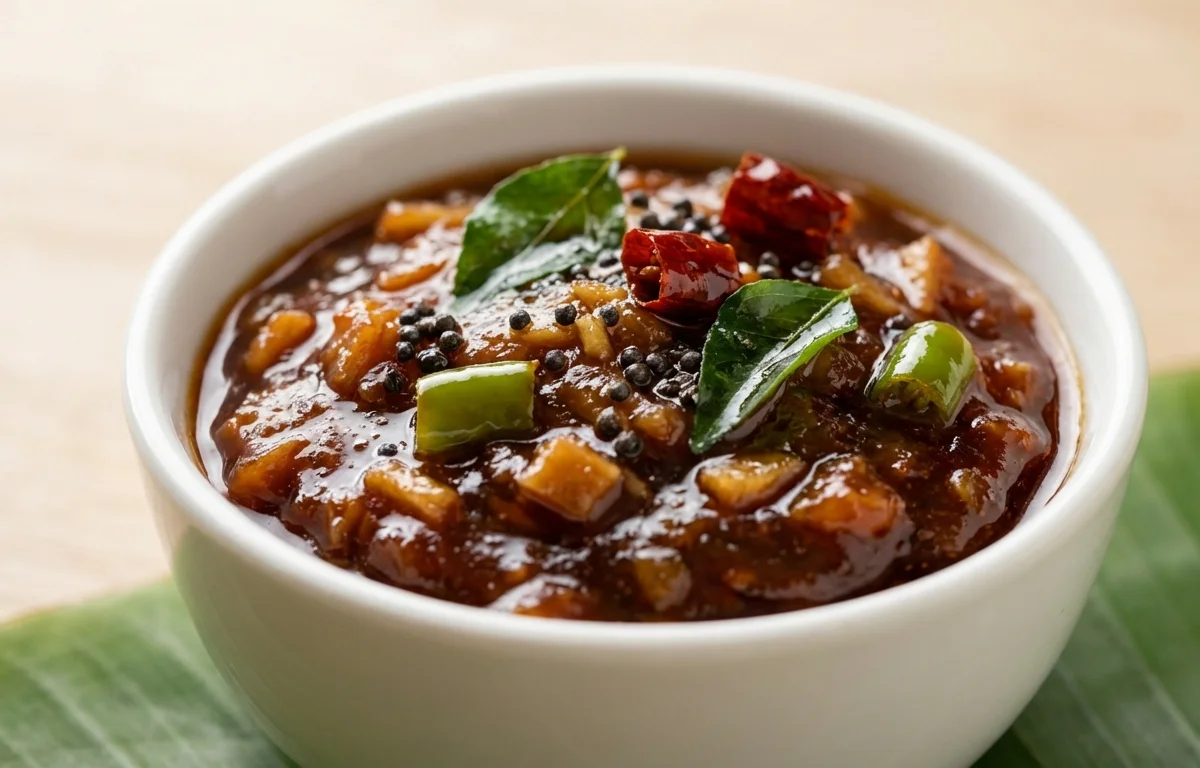
Puli Inji
A bold Kerala ginger relish that balances tangy tamarind, gentle sweetness, and a warming spice kick. It is deeply savory, slightly sticky, and made to brighten festive meals like sadya with just a small spoonful.
For 8 servings
- prep · ~10 min
Soak the tamarind and prep the ginger.
1.Soak the tamarind in warm water for 10 minutes.2.Peel and finely chop the ginger into small bits.3.Finely chop the green chili. - mix · ~3 min
Make the tamarind extract.
Mash the soaked tamarind well in the water and strain it to get a smooth extract. Keep the liquid ready and discard the fibers and seeds.
- temper · ~2 min
Make the tempering.
1.Heat the coconut oil in a small kadai over medium heat.2.Add mustard seeds and let them splutter.3.Add dried red chili, curry leaves, and asafoetida.4.Cook for a few seconds until fragrant.TIPKeep the heat moderate so the curry leaves crisp without burning. - saute · ~8 min
Cook the ginger and green chili.
1.Add the chopped ginger and green chili to the tempering.2.Cook, stirring often, until the ginger loses its raw smell and turns lightly golden.3.Stir in the turmeric powder and red chili powder.TIPCook the ginger well here; undercooked ginger makes the relish taste harsh. - simmer · ~3 min
Add tamarind, jaggery, and salt.
Pour in the tamarind extract, then add jaggery and salt. Mix well and bring it to a gentle simmer.
- simmer · ~12 min
Simmer until thick and glossy.
Cook on low to medium heat, stirring now and then, until the mixture thickens to a spoonable relish and the oil begins to show at the edges.
TIPThe relish thickens more as it cools, so stop when it still looks slightly loose. - rest · ~10 min
Cool the puli inji.
Take the pan off the heat and let the relish cool completely so the flavors settle and deepen.
- serve
Serve in small spoonfuls.
Serve puli inji as a tangy side with rice meals or a Kerala sadya. Store any extra in a clean jar in the fridge.
What to keep in mind.
6 tips from the recipe — small details that make a real difference to the final dish.
- 1Chop the ginger very evenly so it cooks at the same rate and the relish feels pleasantly spoonable, not stringy.
- 2Fry the ginger until the raw aroma disappears and the edges turn light golden; this is key to a rounded, less harsh finish.
- 3Strain the tamarind extract well so no fibers or seeds end up in the final puli inji.
- 4Stop simmering when it looks slightly looser than you want, because it thickens noticeably as it cools.
- 5Let the relish rest fully after cooking; the sweet, sour, and spicy notes become more balanced once cooled.
- 6Store only after it has cooled completely, and always use a dry spoon to keep the jar fresh longer.
Adapt it for your goals.
Jaggery-forward
Add a little extra jaggery for a sweeter, rounder relish that pairs especially well with festive sadya spreads.
spicierSpicier
Increase green chili or red chili powder slightly if you want a sharper heat to cut through rich rice meals.
chunkyChunky
Leave the ginger a touch more coarsely chopped for a more textured, pickle-like puli inji.
milderMilder
Reduce the chilies and let the tamarind-jaggery balance lead, ideal for those who prefer a gentler relish.
Why this is on our healthy list.
Ginger-Rich Digestive Support
With ginger as the main ingredient, this relish is traditionally valued in meals for its warming, digestive character.
Tangy Condiment in Small Portions
Puli inji is served in small spoonfuls, so a little goes a long way in adding bold flavor to a meal.
Plant-Based Flavor Boost
Its strong taste comes from ginger, tamarind, chilies, curry leaves, and spices rather than dairy-based additions.
Frequently asked questions
It should look thick, glossy, and spoonable, with a little oil showing at the edges. It will firm up more after cooling.



.webp)
.webp)