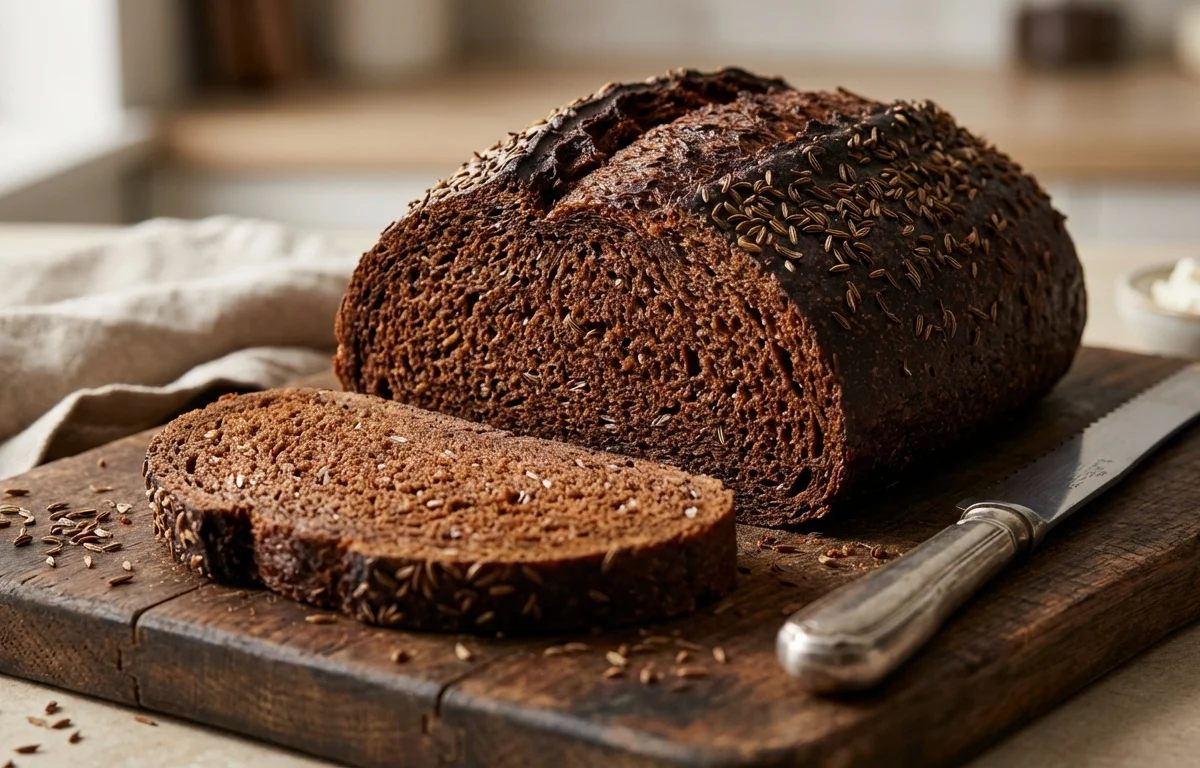
Pumpernickel Bread
A dense, dark German-style rye bread with a deep, slightly sweet flavor from molasses and cocoa. Slow-baked low and long for a moist, chewy crumb that pairs beautifully with smoked fish, cured meats, and sharp cheeses.
For 12 servings
- mix · ~1 min
Combine the dry ingredients.
1.In the bowl of a stand mixer, whisk together rye flour, bread flour, cocoa powder, caraway seeds, yeast, and salt. - mix · ~7 min
Add the wet ingredients and form a dough.
1.Pour in warm water and molasses.2.Mix with the dough hook on low speed until a shaggy dough forms, about 2 minutes.3.Increase to medium speed and knead for 5 minutes, until the dough is smooth and slightly tacky but not sticky.TIPRye dough will always be stickier than wheat dough; resist adding too much extra flour. - rest · ~65 min
Let the dough rise.
1.Shape the dough into a ball and place in a lightly oiled bowl, turning to coat.2.Cover with a clean kitchen towel and let rise in a warm place until not quite doubled, about 60-75 minutes.TIPRye flour has less gluten than wheat; it won't double as dramatically. A 1.5x increase is perfect. - prep · ~3 min
Shape the loaf.
1.Grease a 9x5-inch loaf pan with vegetable oil and dust lightly with cornmeal.2.Gently deflate the dough and shape it into a log.3.Place it seam-side down in the prepared pan. - rest · ~50 min
Proof the loaf a second time.
1.Cover the pan loosely with the towel and let rise in a warm place until the dough crests just above the rim of the pan, about 45 minutes.2.Preheat the oven to 325°F during the last 15 minutes of proofing.TIPUnder-proofed pumpernickel will crack drastically in the oven. Let it come just to the rim. - bake · ~60 min
Bake the pumpernickel bread.
1.Bake for 50-60 minutes, until the loaf sounds hollow when tapped and the internal temperature reaches 200°F.2.The crust will be very dark — that's characteristic of pumpernickel.TIPPlace a small pan of hot water on the bottom rack during the first 15 minutes of baking for a crispier crust. - rest · ~180 min
Cool completely before slicing.
1.Remove the loaf from the pan and transfer to a wire rack.2.Let it cool completely, at least 3 hours, before slicing. The crumb continues to set as it cools.TIPSlicing warm pumpernickel will produce a gummy, squashed crumb. Patience is key for the classic dense texture.
What to keep in mind.
6 tips from the recipe — small details that make a real difference to the final dish.
- 1Weigh your flours for accuracy: rye flour is denser than bread flour, so volume measures can vary.
- 2If the dough feels too sticky after kneading, wet your hands rather than adding more flour to avoid drying it out.
- 3For a deeper, more complex flavor, let the shaped loaf proof overnight in the refrigerator.
- 4Bake until the internal temperature hits 200°F for a fully cooked, moist crumb every time.
- 5Cool the bread completely (at least 3 hours) before slicing to prevent a gummy texture.
- 6Store leftover pumpernickel wrapped in a cloth bag at room temperature for up to 4 days; freeze for longer storage.
Adapt it for your goals.
Seeded
Fold in 1/4 cup of sunflower seeds, flaxseeds, or sesame seeds after kneading for added crunch and nutty flavor.
spicedSpiced
Add 1 teaspoon of ground coriander and 1/2 teaspoon of fennel seeds for a warm, aromatic twist that complements the caraway.
no carawayNo-caraway
Omit the caraway seeds entirely for a milder, more neutral pumpernickel that pairs well with sweet toppings like cream cheese and jam.
whole wheatWhole-wheat
Replace the bread flour with whole wheat flour for a heartier texture and nuttier flavor; expect a slightly denser crumb.
veganVegan
This recipe is already vegan—just ensure your molasses is certified vegan (some brands process with bone char).
Why this is on our healthy list.
Rich in Dietary Fiber
Rye flour provides more fiber than white wheat flour, supporting digestive health and promoting satiety.
Good Source of Iron
Dark molasses and rye flour both contribute iron, which is essential for oxygen transport and energy production.
Contains Antioxidants
Unsweetened cocoa powder adds flavonoids, which help combat oxidative stress in the body.
Lower Glycemic Impact
Rye bread generally has a lower glycemic index compared to white bread, leading to more stable blood sugar levels.
Frequently asked questions
Pumpernickel is meant to be dense due to high rye flour content. However, if it's truly brick-like, you may have over-proofed the dough or added too much extra flour.