Ratha Poriyal
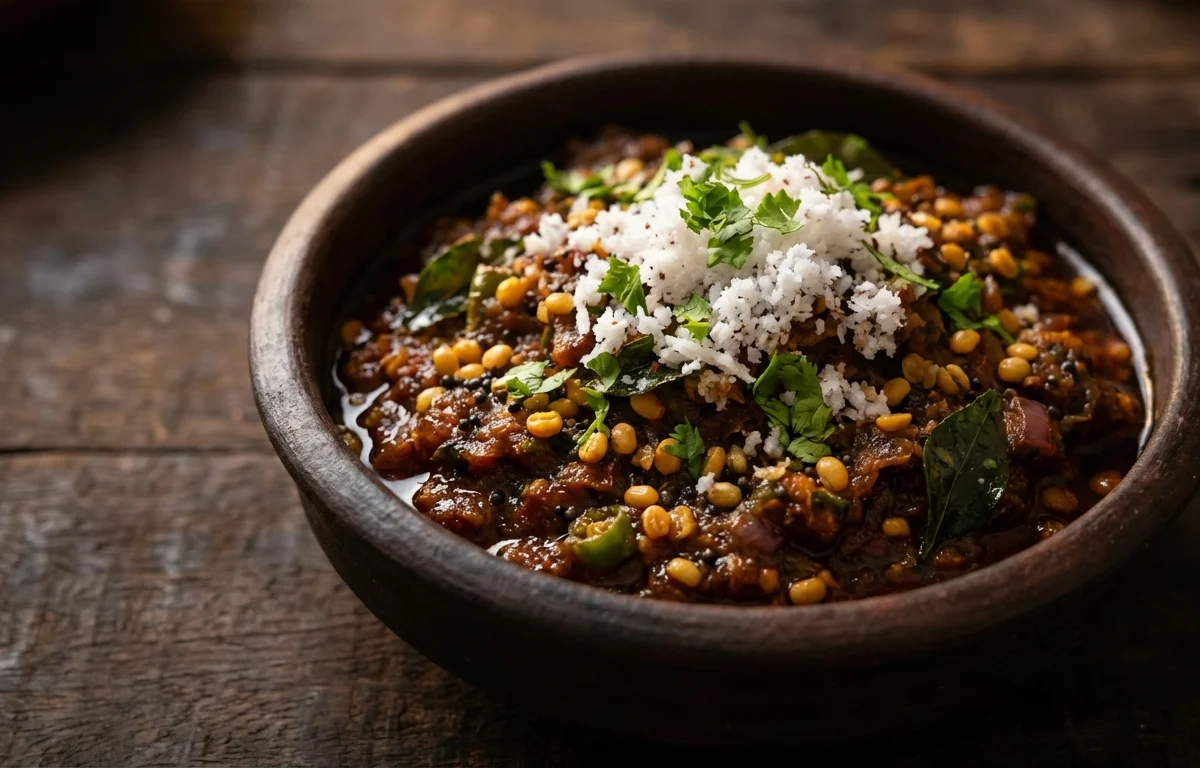
A unique and savory Chettinad delicacy made from cooked goat's blood, stir-fried with onions, green chilies, and fresh coconut. This traditional dish has a crumbly texture and is packed with rich, earthy flavors.
For 4 servings
Cook and Crumble the Blood
1.Pour the fresh goat's blood into a heavy-bottomed pan. Add 1/4 tsp of the turmeric powder and a pinch of salt.2.Place on low-medium heat and cook, stirring continuously with a whisk or spoon to break up any clots. Continue cooking for 8-10 minutes until it solidifies and resembles a firm, dark scrambled egg or tofu block.3.Remove the pan from the heat and allow the cooked blood to cool down completely.4.Once cooled, use your hands or a fork to crumble it into small, coarse, grain-like pieces. Set aside.Prepare the Tempering (Tadka)
1.Heat the gingelly oil in a wide pan or kadai over medium heat.2.Once the oil is hot, add the mustard seeds and allow them to splutter completely.3.Add the urad dal and dried red chilies. Sauté for about 30-45 seconds until the dal turns a light golden brown and becomes aromatic.4.Toss in the curry leaves and let them sizzle and become crisp for a few seconds.Sauté Aromatics
1.Add the finely chopped onions and slit green chilies to the pan.2.Sauté for 4-5 minutes, stirring occasionally, until the onions soften and become translucent.3.Add the ginger-garlic paste and cook for another minute until its raw smell disappears.Combine, Finish, and Serve
1.Add the crumbled blood to the pan, along with the remaining turmeric powder and salt to taste.2.Mix everything together gently but thoroughly. Stir-fry for 5-7 minutes, allowing the crumbled blood to absorb all the flavors of the spices.3.Stir in the freshly grated coconut and mix well. Cook for another 2 minutes.4.Garnish with finely chopped coriander leaves, give it a final mix, and turn off the heat.5.Serve the Ratha Poriyal hot as a traditional side dish with sambar rice, rasam rice, or kuzhambu.
What to keep in mind.
5 tips from the recipe — small details that make a real difference to the final dish.
- 1Always use fresh goat's blood from a hygienic and trusted butcher for the best taste and safety.
- 2Stir the blood continuously while cooking it initially to prevent large, hard lumps from forming and to achieve a fine, crumbly texture.
- 3Do not overcook the blood, as it can become tough and rubbery. Cook just until it's firm.
- 4Using gingelly (sesame) oil is key to achieving the authentic Chettinad flavor.
- 5Don't skip the fresh coconut; it adds a subtle sweetness and moisture that balances the rich, earthy flavor of the blood.
Adapt it for your goals.
Spice Variation
For a different flavor profile, add 1/2 teaspoon of freshly ground black pepper or a pinch of Chettinad masala powder along with the turmeric.
Texture AdditionTexture Addition
Add a handful of cooked chickpeas or black-eyed peas along with the crumbled blood for extra texture and protein.
Vegetarian AlternativeVegetarian Alternative
A vegetarian version can be made by replacing the goat's blood with crumbled firm tofu or paneer, following the same recipe. This is often called 'Tofu/Paneer Podimas'.
Why this is on our healthy list.
Rich in Iron
Goat's blood is an exceptional source of heme iron, which is easily absorbed by the body. This helps in the formation of hemoglobin, prevents anemia, and boosts energy levels.
High-Quality Protein Source
It provides a significant amount of protein, essential for muscle repair, building tissues, and overall body function.
Boosts Immunity
The presence of essential minerals like zinc and selenium, along with protein, helps in strengthening the immune system and fighting off infections.
Frequently asked questions
It has a unique, rich, and savory flavor with an earthy undertone, similar to liver but with a softer, crumbly texture. The spices, onions, and coconut balance the richness, making it a very flavorful dish.