Sada Pulao
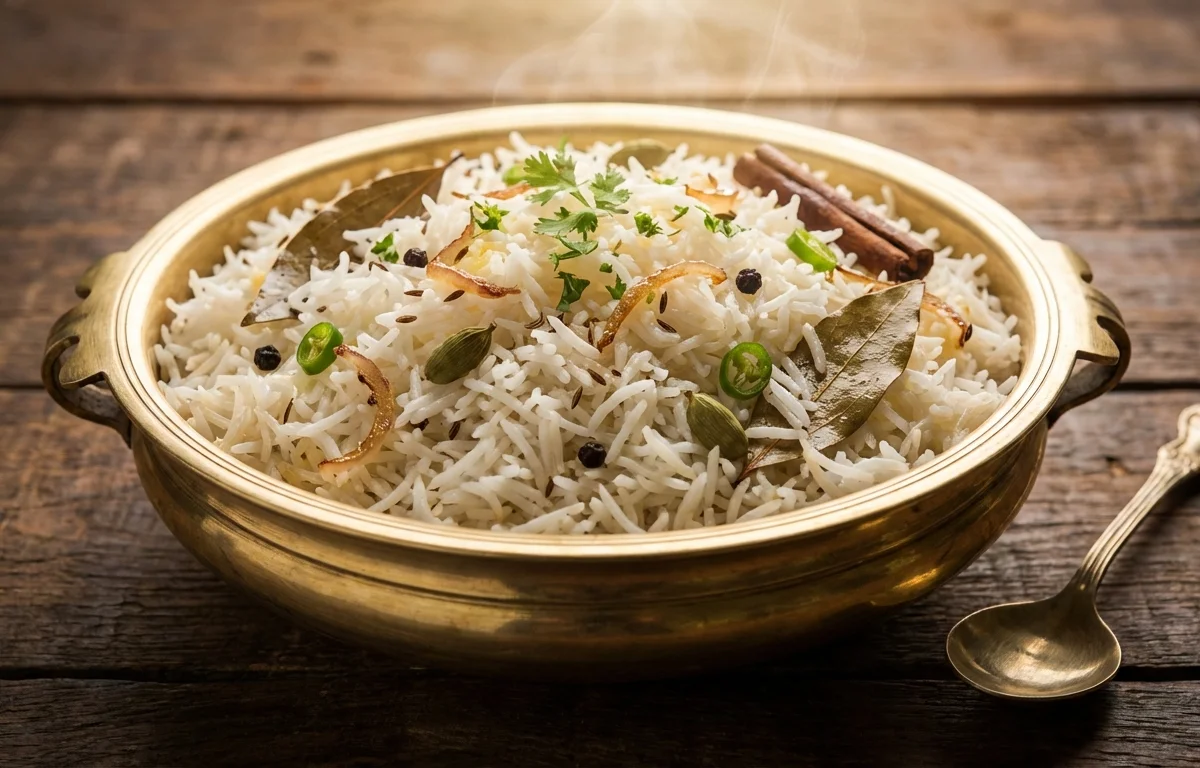
A simple, aromatic rice dish from Maharashtra where basmati rice is gently cooked with whole spices, onions, and ghee. Light, fragrant, and perfect as a comforting meal base, pairing beautifully with any dal, curry, or raita.
For 4 servings
- prep · ~20 min
Wash and soak the rice.
Wash the basmati rice in 2-3 changes of water until the water runs clear. Soak in enough water to cover for 20 minutes, then drain well.
- temper · ~2 min
Temper the whole spices in ghee.
1.Heat ghee in a heavy-bottomed pot over medium heat.2.Add cumin seeds and let them sizzle for 30 seconds.3.Add bay leaf, cardamom, cloves, cinnamon, peppercorns, and star anise. Sauté until fragrant, about 1 minute.TIPKeep the heat at medium — whole spices need gentle heat to release their oils without burning. - saute · ~5 min
Sauté the onions and green chili.
1.Add the sliced onion and slit green chilies to the pot.2.Sauté until the onions turn translucent and soft, about 4-5 minutes. No need to brown them deeply. - simmer · ~16 min
Add rice, water, and salt, then cook.
1.Add the drained rice to the pot and gently stir for 1 minute to coat the grains with ghee.2.Pour in the water and add the salt. Stir once gently.3.Bring to a rolling boil, then reduce heat to the lowest setting.4.Cover with a tight-fitting lid and cook for 15 minutes without opening.TIPDo not stir after adding water — it can break the grains. A tight lid is key for even steaming. - rest · ~5 min
Rest the pulao before serving.
Turn off the heat and let the pot rest, covered, for 5 minutes. This allows the steam to settle and the grains to firm up.
- garnish
Fluff gently with a fork and garnish.
Remove the lid. Using a fork, gently fluff the rice to separate the grains. Transfer to a serving dish and sprinkle with chopped cilantro.
TIPUse a fork, not a spoon — a spoon mashes the delicate grains. Fluff from the edges inward.
What to keep in mind.
6 tips from the recipe — small details that make a real difference to the final dish.
- 1Soaking basmati rice for 20 minutes ensures each grain stays separate and fluffy after cooking.
- 2Temper whole spices over medium heat to release their essential oils without burning or turning bitter.
- 3Sauté onions only until translucent — browning them will overpower the delicate aroma of the rice.
- 4Do not stir the rice after adding water; stirring breaks the grains and makes the pulao sticky.
- 5Let the cooked pulao rest, covered, for 5 minutes off the heat so the steam evenly finishes the grains.
- 6Use a fork to fluff the rice gently from the edges inward to keep each grain intact.
Adapt it for your goals.
Vegetable pulao
Add 1/2 cup each of diced carrots, green peas, and green beans along with the onions for a more complete one-pot meal with extra texture and colour.
veganVegan
Replace ghee with coconut oil or a neutral vegetable oil to keep the dish completely plant-based while still getting a rich flavour base.
low oilLow-oil
Reduce ghee to 2 teaspoons and dry-roast the whole spices for 30 seconds in the pot before adding a splash of water to sauté the onions — for a lighter version.
Why this is on our healthy list.
Low in Saturated Fat
Using a modest amount of ghee (just 1 tablespoon) keeps the saturated fat content low while still providing a rich, buttery flavour.
Aromatic Spices Support Digestion
Cumin, cardamom, cloves, and black peppercorns are traditionally used in Indian cooking for their carminative properties, aiding digestion.
Gluten-Free Base Meal
Basmati rice is naturally gluten-free, making this pulao a safe, comforting base for those avoiding gluten.
Frequently asked questions
Soaking for 20 minutes hydrates the outer starch layer, allowing the grains to cook uniformly and remain separate rather than clumping together.