
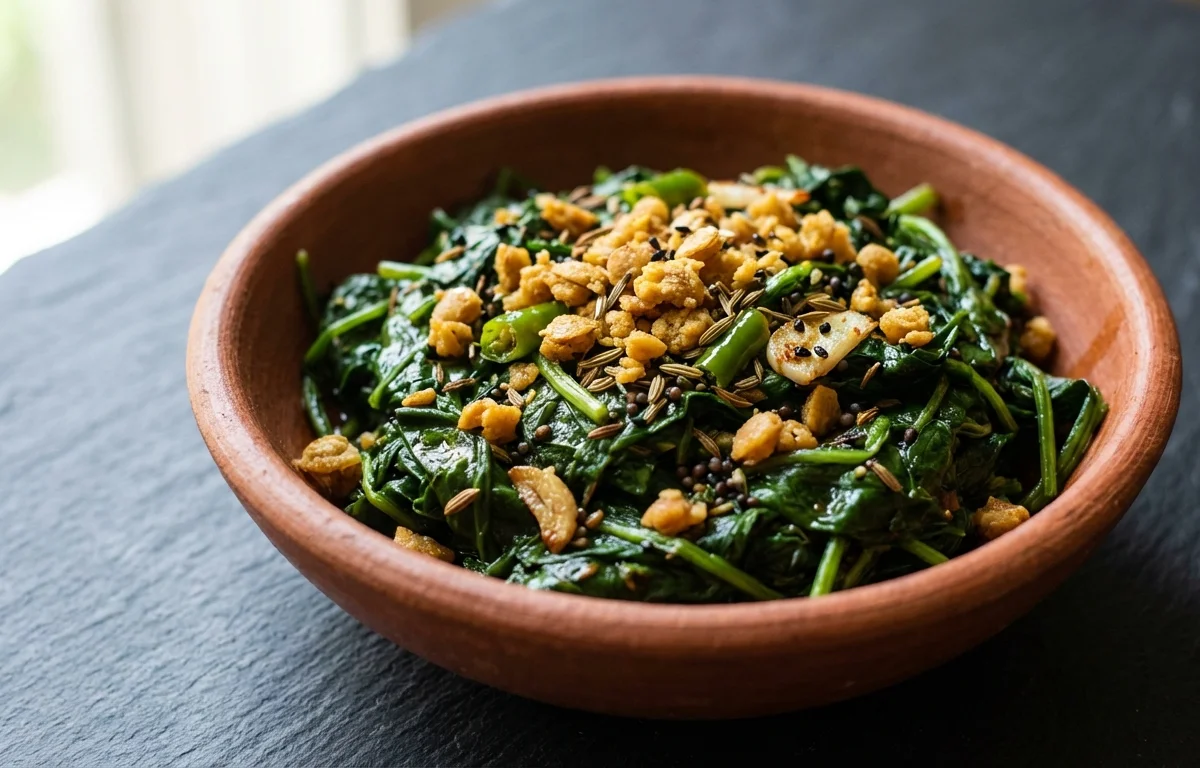
Saga Bhaja
A simple Bengali-style leafy greens stir-fry made with fresh saag, garlic, and a light tempering. It cooks quickly, tastes earthy and comforting, and pairs beautifully with plain rice and dal as part of an everyday meal.
For 4 servings
- prep · ~10 min
Prepare the greens.
Wash the spinach thoroughly in several changes of water to remove any grit. Drain well and roughly chop it so it cooks down evenly.
- temper · ~2 min
Heat the oil and temper the spices.
1.Heat mustard oil in a kadai over medium heat until it just starts to smoke lightly.2.Lower the heat and add kalonji.3.Add dried red chili and sliced garlic.4.Cook for 30 to 40 seconds until the garlic turns lightly golden and fragrant.TIPDo not let the garlic get dark brown or it will taste bitter. - saute · ~7 min
Cook the spinach.
1.Add the chopped spinach to the kadai and mix well with the tempered oil.2.Add salt and sugar.3.Cook over medium heat, stirring often, until the leaves wilt and release moisture.4.Keep cooking until the moisture dries up and the greens look glossy and lightly fried.TIPCook uncovered so the extra moisture evaporates quickly and the bhaja stays dry. - serve
Serve hot with rice.
Take the saga bhaja off the heat and serve warm as a side dish with plain rice and other meal accompaniments.
What to keep in mind.
7 tips from the recipe — small details that make a real difference to the final dish.
- 1Drain the washed spinach very well; excess water will steam the greens instead of giving a dry bhaja texture.
- 2Let the mustard oil smoke lightly before tempering to mellow its raw sharpness and bring out the classic Bengali flavor.
- 3Slice the garlic evenly so it turns lightly golden at the same time and does not leave bitter burnt bits in the pan.
- 4Cook the spinach uncovered and on medium heat so its released moisture evaporates instead of making the dish soggy.
- 5Do not overcrowd a small kadai; if needed, add the spinach in batches so it wilts evenly and fries lightly.
- 6Stop cooking when the greens look glossy and almost dry, but still green; overcooking can make spinach dull and muddy-tasting.
- 7This dish is best eaten fresh, but leftovers keep well in the fridge for about a day and can be reheated quickly in a pan.
Adapt it for your goals.
Jain
Skip the garlic and use extra dried red chili plus a pinch of grated ginger for aroma while keeping the bhaja simple and sattvic-friendly.
low oilLow-oil
Reduce the mustard oil slightly and use a wider pan so the spinach moisture evaporates faster, keeping the dish lighter without turning mushy.
mixed greensMixed-greens
Use a combination of spinach with amaranth or red saag for a more layered, traditional greens flavor and slightly heartier texture.
potato addedPotato-added
Add tiny diced potato before the garlic and cook until nearly tender, then proceed for a more filling everyday Bengali side.
Why this is on our healthy list.
Leafy Green Richness
Spinach brings the dish plenty of leafy-green goodness, making this a simple way to include more vegetables in a meal.
Light Everyday Side
With very little oil and no heavy gravy, this bhaja fits well as a lighter accompaniment to rice and dal.
Garlic and Spice Aroma
Garlic, dried red chili, and kalonji add strong flavor without needing rich sauces, helping keep the dish straightforward and balanced.
Frequently asked questions
Yes. Amaranth, red spinach, or tender mustard greens work well, though cooking time and bitterness may vary slightly.





-curry.webp)
.webp)