Sakkarai Pongal
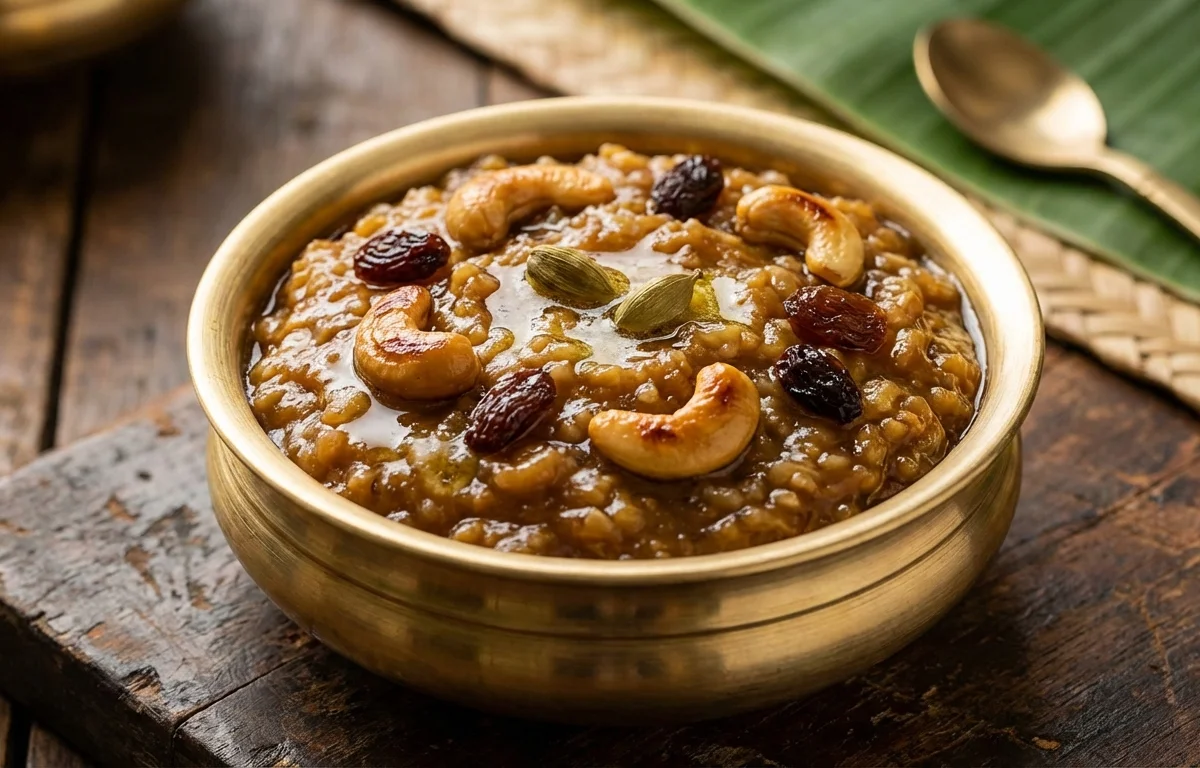
A creamy, melt-in-the-mouth sweet dish made from rice and moong dal, slow-cooked with jaggery and ghee. This classic Tamil Nadu delicacy is flavored with cardamom, cashews, and raisins, making it a festive staple for Pongal celebrations and temple offerings. Every spoonful is rich, comforting, and beautifully fragrant.
For 4 servings
- prep · ~3 min
Roast the moong dal.
Dry roast moong dal in a small pan over low heat for 2-3 minutes until it turns light golden and releases a nutty aroma. Do not let it brown too much. Transfer to a bowl and let it cool.
TIPRoasting the dal is essential — it lends a deep, nutty flavor that defines Sakkarai Pongal. - prep · ~15 min
Wash and soak the rice and dal.
Wash the rice and roasted moong dal together in 2-3 changes of water. Drain and soak in 2 cups of fresh water for 15 minutes. Drain the soaking water before cooking.
- pressure cook · ~10 min
Pressure cook the rice and dal.
1.Transfer the soaked rice and dal to a pressure cooker.2.Add 2 cups of fresh water and 1 tablespoon of ghee.3.Pressure cook on medium-high heat for 3-4 whistles.4.Let the pressure release naturally, then mash the mixture lightly with a ladle until soft and creamy.TIPCooking with a tablespoon of ghee prevents the rice-dal mixture from becoming sticky. - boil · ~5 min
Prepare the jaggery syrup.
1.Add powdered jaggery and 0.5 cup water to a heavy-bottomed kadai.2.Heat gently until the jaggery dissolves completely, stirring occasionally.3.Bring to a boil and simmer for 3-4 minutes until the syrup thickens slightly and has a string-like consistency.4.Strain the syrup through a fine sieve to remove any impurities.TIPThe syrup should reach a one-string consistency — when pressed between thumb and forefinger, it should form a single thin string. - mix · ~7 min
Combine the jaggery syrup with the cooked rice-dal mixture.
Add the strained jaggery syrup to the mashed rice-dal in the cooker. Mix well and turn on low heat. Cook together, stirring continuously, for 5-7 minutes until the mixture thickens and starts leaving the sides of the pan. The color will deepen to a rich golden-brown.
TIPKeep the heat low and stir constantly to prevent the mixture from sticking to the bottom. - temper · ~2 min
Fry the cashews and raisins.
1.Heat the remaining 3 tablespoons of ghee in a small pan over medium-low heat.2.Add the broken cashew nuts and fry until golden brown (about 1 minute).3.Add the raisins and fry for 30 seconds until they puff up.4.Pour the entire ghee with the nuts and raisins into the pongal mixture.TIPFry cashews on medium-low heat — they burn quickly and turn bitter. - mix · ~2 min
Add flavorings and finish.
Add the cardamom powder, grated nutmeg, and a tiny pinch of salt to the pongal. Mix everything together thoroughly. Cook for another 2 minutes until the ghee glistens on the surface. Turn off the heat.
TIPThat pinch of salt is the secret — it balances the sweetness and makes the jaggery flavor pop. - serve · ~1 min
Serve Sakkarai Pongal warm.
Spoon the Sakkarai Pongal into small katoris or bowls while still warm. The pongal will thicken as it cools, so serving it warm ensures the best soft, gooey texture.
What to keep in mind.
7 tips from the recipe — small details that make a real difference to the final dish.
- 1Roast the moong dal until just golden, not brown, to avoid bitterness while keeping its nutty flavor.
- 2Using freshly powdered cardamom from whole pods gives a far more aromatic finish than pre-ground.
- 3Stir the pongal continuously after adding jaggery syrup to prevent scorching on the bottom.
- 4Let the pressure release naturally so the rice and dal become soft and creamy without turning mushy.
- 5Add a pinch of salt to balance sweetness and intensify the jaggery's complex flavor.
- 6Fry cashews on medium-low heat and watch closely — they go from golden to burnt in seconds.
- 7Serve the pongal warm; it thickens as it cools, so keep it at a soft, spoonable texture.
Adapt it for your goals.
Vegan
Replace ghee with coconut oil or a neutral plant-based oil. Use the same volume for tempering and cooking. The flavor shifts slightly, but it remains creamy and festive for a vegan diet.
low sugarLow-sugar
Reduce jaggery to ¾ cup or substitute with coconut sugar or a blend of dates paste and jaggery. The dish will be less sweet but still flavorful, suitable for those monitoring sugar intake.
high proteinHigh-protein
Double the moong dal to ½ cup and reduce rice to ¼ cup. This increases protein content while maintaining a creamy texture. Add a tablespoon of crushed peanuts for extra crunch and protein.
gluten freeGluten-free
This recipe is naturally gluten-free. Ensure your jaggery is certified gluten-free, as some brands may be processed with wheat flour. Serve as is for a safe option.
Why this is on our healthy list.
Rich in Plant Protein
Moong dal provides high-quality plant protein that supports muscle repair and keeps you full longer, making this a satisfying sweet dish with nutritional value.
Good Source of Iron
Jaggery is a traditional source of iron, which helps maintain healthy blood cells and energy levels. It also contains trace minerals like magnesium and potassium.
Digestive Support
Moong dal is light and easy to digest, while cardamom and nutmeg aid digestion and reduce bloating, making Sakkarai Pongal a gentle choice for festive eating.
Energy-Boosting Carbohydrates
Rice provides complex carbohydrates for sustained energy, ideal for a post-fast or celebratory meal that replenishes energy stores.
Frequently asked questions
Yes, but the texture may be less creamy. Sona masoori or ponni rice gives a soft, sticky result perfect for pongal. Use short-grain white rice as a substitute.