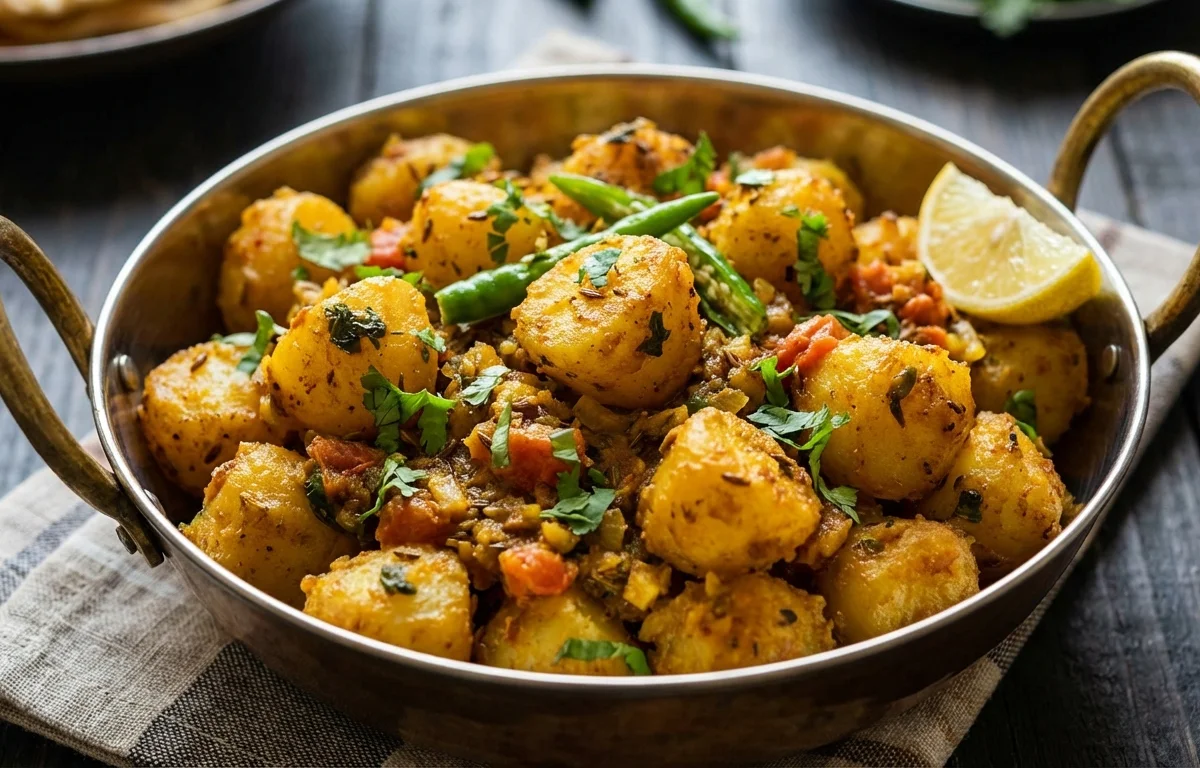
Sindhi Bhugge Aloo
A simple Sindhi potato dish where boiled potatoes are gently crushed and cooked with onions, green chilies, and warm spices. It turns lightly crisp in places, soft inside, and tastes wonderful with roti, dal, or kadhi.
For 4 servings
- prep · ~15 min
Boil and crush the potatoes.
1.Boil the potatoes until just tender and easy to pierce with a knife.2.Peel them while still warm.3.Lightly crush each potato by hand or with the back of a cup so the pieces stay chunky. - temper · ~1 min
Heat the oil and crackle the cumin.
Heat oil in a wide pan over medium heat. Add cumin seeds and let them sizzle for a few seconds until fragrant.
TIPUse a wide pan so the potatoes get more contact with the surface and brown a little. - saute · ~7 min
Cook the onion, ginger, and green chili.
1.Add sliced onion and cook until soft and lightly golden.2.Add chopped ginger and green chili.3.Cook for 1 minute until the raw smell fades. - saute · ~1 min
Add the spices.
Lower the heat and add turmeric powder, red chili powder, coriander powder, dry mango powder, and salt. Mix quickly so the spices bloom without burning.
TIPKeep the heat low at this stage because powdered spices can scorch fast. - saute · ~10 min
Add the potatoes and bhuno well.
1.Add the crushed potatoes to the pan.2.Mix gently to coat them with the onion and spice mixture.3.Cook on medium heat, turning every couple of minutes, until the edges look lightly crisp and the potatoes absorb the flavors. - garnish
Finish with lemon juice and coriander leaves.
Turn off the heat. Sprinkle in lemon juice and chopped coriander leaves, then toss gently.
- serve
Serve hot.
Serve Sindhi Bhugge Aloo hot with roti, phulka, dal, or Sindhi kadhi.
What to keep in mind.
7 tips from the recipe — small details that make a real difference to the final dish.
- 1Boil the potatoes only until just tender; overboiled potatoes will mash instead of staying chunky.
- 2Peel and lightly crush the potatoes while still warm so they crack nicely without turning gummy.
- 3Use a wide, heavy pan and avoid overcrowding so the broken edges can crisp instead of steam.
- 4Let the potatoes sit undisturbed for a minute or two between turns to develop the signature light crust.
- 5Add the powdered spices on low heat and stir quickly; amchur and chili can turn bitter if scorched.
- 6Finish the lemon juice after switching off the heat so the tang stays bright and fresh.
- 7This dish reheats well in a skillet; avoid microwaving if you want to keep the crisp edges.
Adapt it for your goals.
Low-oil
Use a good nonstick or well-seasoned pan and reduce the oil slightly; the dish stays homey but lighter, though the crust will be a bit less pronounced.
high proteinHigh-protein
Add boiled chickpeas or pan-fried paneer along with the potatoes for a more filling version that still matches the onion-spice base.
no onionNo-onion
Skip the onion and increase ginger, cumin, and coriander leaves for a simpler fasting-style or lighter variation with a cleaner potato flavour.
spicierSpicier
Increase green chilies and red chili powder for a hotter version that pairs especially well with plain dal or yogurt.
Why this is on our healthy list.
Comforting Energy Source
Potatoes provide satisfying carbohydrates and potassium, making this dish filling and useful as part of a balanced meal.
Digestive Spice Support
Ginger, cumin, and coriander powder add aroma while traditionally helping make a simple potato dish feel easier to digest.
Includes Fresh Herbs and Citrus
Coriander leaves and lemon juice add freshness and plant compounds without needing heavy cream or rich gravies.
Frequently asked questions
Yes. Boil and crush the potatoes in advance, then finish the sauté later. For best texture, add the lemon juice and coriander only just before serving.