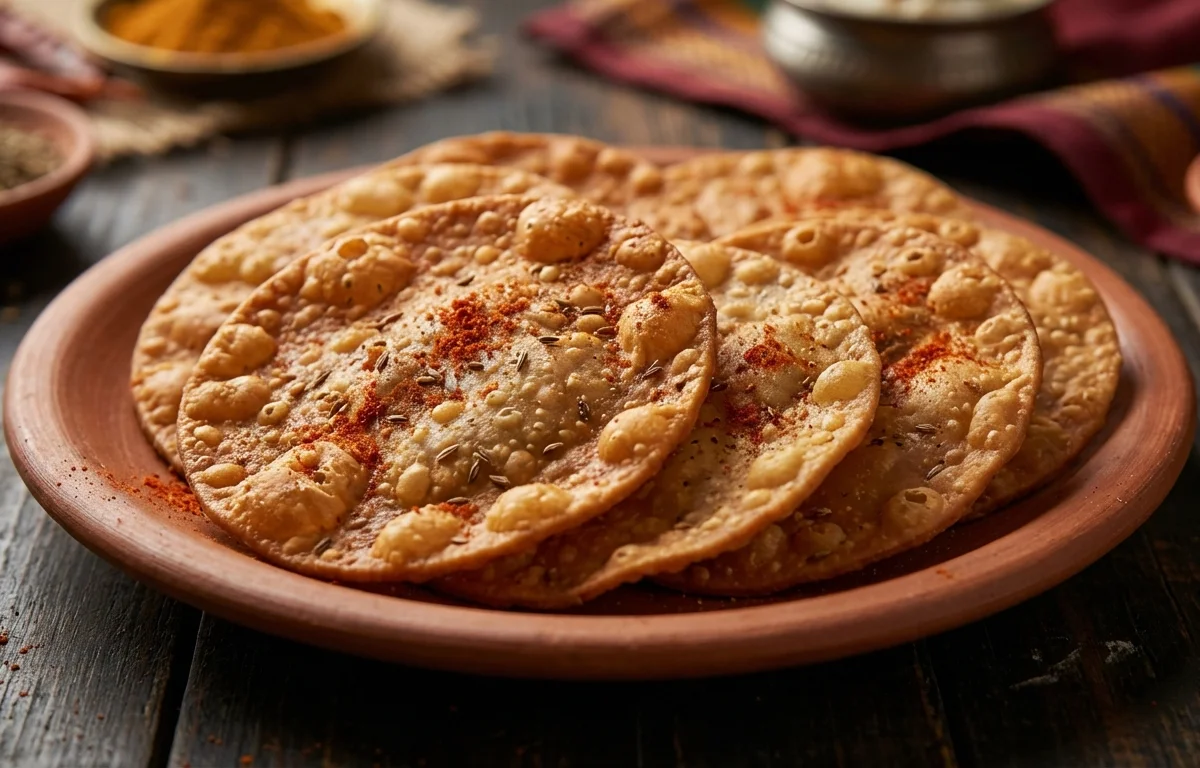
Sindhi Pakwan
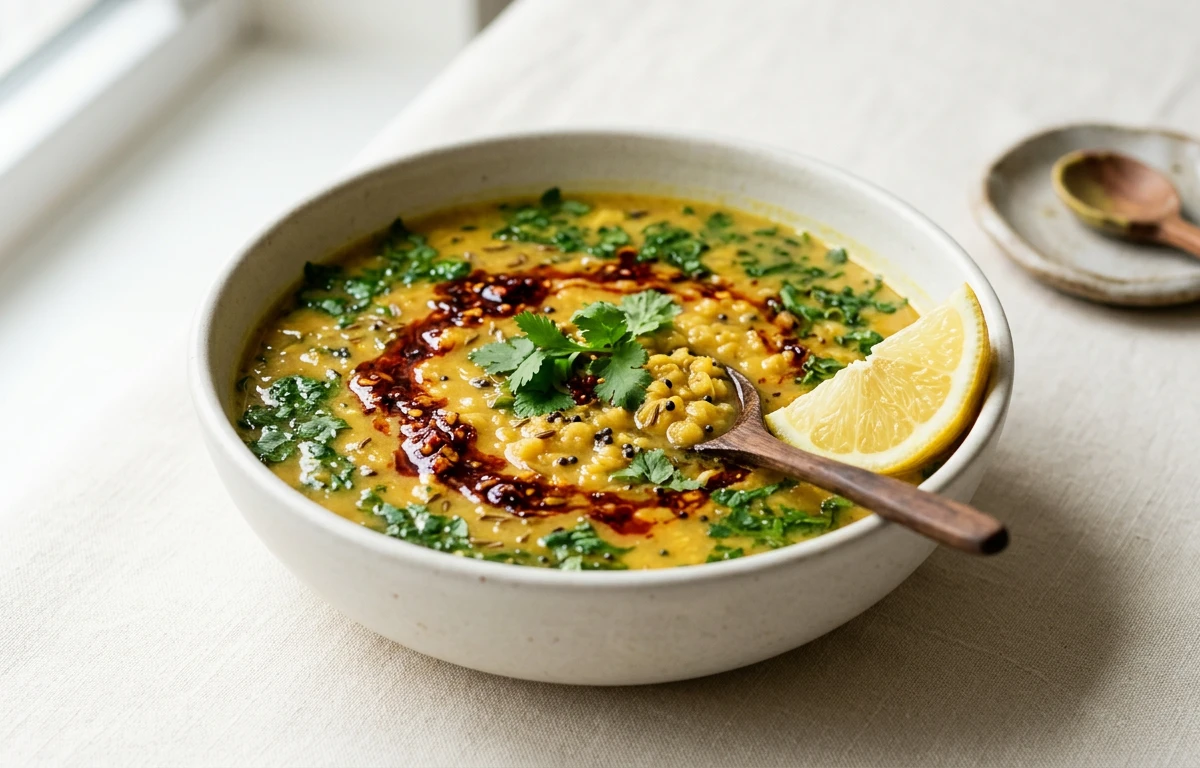
Crisp, flaky Sindhi flatbreads seasoned with cumin and black pepper, then fried until golden. These crunchy pakwan are traditionally served with dal, but they also make a satisfying tea-time snack on their own.
For 8 servings
- mix · ~3 min
Mix the dry ingredients.
1.Add all-purpose flour and semolina to a wide bowl.2.Mix in cumin seeds, black pepper, carom seeds, and salt.3.Pour in 2 tbsp oil and rub it through the flour until the mixture looks sandy. - knead · ~5 min
Knead a stiff dough.
Add water little by little and knead into a firm, smooth dough. It should be stiffer than roti dough so the pakwan fry up crisp.
TIPA stiff dough helps the pakwan stay flaky and crunchy instead of puffing too much. - rest · ~15 min
Rest the dough.
Cover the dough and let it rest for 15 minutes so it relaxes slightly and rolls more evenly.
- prep · ~8 min
Divide and roll the pakwan.
1.Divide the dough into 8 equal balls.2.Roll each ball into a thin disc about 5 to 6 inches wide.3.Prick each disc all over with a fork to keep it flat while frying.TIPRoll the discs thin and prick well so they turn crisp all the way through. - fry · ~20 min
Fry the pakwan until crisp.
1.Heat oil for frying in a kadai over medium heat.2.Slide in one rolled disc at a time and press gently with a slotted spoon so it stays submerged.3.Fry until golden and crisp on both sides, about 2 to 3 minutes per pakwan.4.Remove and drain well before frying the next batch.TIPKeep the heat medium; very hot oil browns the outside too fast and leaves the center hard. - serve · ~3 min
Cool slightly and serve.
Let the pakwan cool for a few minutes so they crisp up fully, then serve warm or at room temperature.
What to keep in mind.
7 tips from the recipe — small details that make a real difference to the final dish.
- 1Rub the 2 tbsp oil into the flour well; that sandy texture is what gives pakwan its flaky bite.
- 2Keep the dough firmer than roti dough, or the pakwan may puff and turn bready instead of crisp.
- 3Roll each disc evenly thin, especially at the center, so the whole pakwan fries to the same crunch.
- 4Prick the discs generously with a fork right before frying to prevent large bubbles from forming.
- 5Fry on medium heat only; if the oil is too hot, the outside darkens before the inside turns crisp.
- 6Cool the fried pakwan on a rack, not in a stacked pile, so trapped steam does not soften them.
- 7Once fully cooled, store in an airtight tin to keep them crunchy for several days.
Adapt it for your goals.
Baked
Bake the rolled, pricked discs with a light oil brushing for a lighter version with less frying, though the texture will be slightly less rich.
spicierSpicier
Add a pinch of red chilli powder or extra crushed black pepper to the dough for a sharper tea-time snack.
whole wheatWhole-wheat
Replace part of the all-purpose flour with whole wheat flour for a nuttier taste and a slightly heartier pakwan.
mini pakwanMini-pakwan
Roll smaller discs for snack platters or to serve alongside Sindhi dal, where bite-size pieces are easier to portion.
Why this is on our healthy list.
Digestive Spice Support
Ajwain and cumin are traditional spices often used to make fried breads feel lighter and more aromatic.
Satisfying Crunch
The semolina and firm dough create a filling, crisp texture that pairs well with protein-rich dal for a balanced meal.
Lower Added Ingredients
This dough is made without sugar or heavy enrichments, relying on simple pantry ingredients and spices for flavor.
Frequently asked questions
The dough was likely too soft or the discs were not pricked enough. Keep the dough stiff and dock each disc well with a fork.