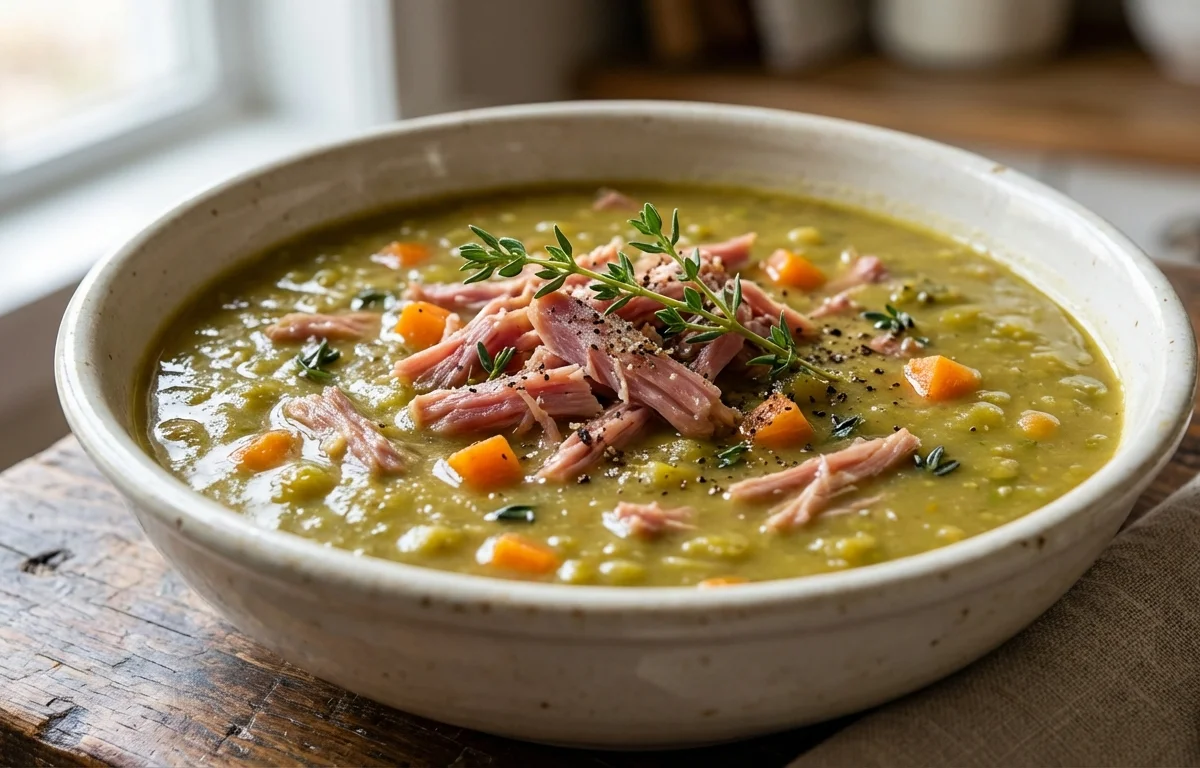
Split Pea Soup with Ham
A thick, hearty soup built on slowly simmered split peas and a smoky ham bone. The peas break down into a velvety, earthy broth while tender shreds of ham and mirepoix vegetables add savory depth. It's the kind of one-pot meal that fills the kitchen with warmth on a cold afternoon.
For 8 servings
- prep · ~3 min
Rinse and pick over the split peas.
Pour split peas into a colander and rinse under cold running water until water runs clear. Spread them on a plate and pick out any pebbles or discolored peas.
- saute · ~9 min
Sauté the mirepoix until softened.
1.Heat olive oil in a large soup pot over medium heat.2.Add diced onion, carrot, and celery with a pinch of salt.3.Cook, stirring occasionally, until vegetables have softened and onion turns translucent (6-8 minutes).4.Add minced garlic and stir for 30 seconds until fragrant.TIPDon't rush the mirepoix — the gentle sweat builds the soup’s savory backbone. - simmer · ~3 min
Add split peas, ham, and water. Bring to a gentle simmer.
1.Add the rinsed split peas to the pot.2.Nestle the ham bone into the center of the peas.3.Pour in 6 cups of water, making sure everything is submerged.4.Add bay leaves and dried thyme.5.Scrape any browned bits off the bottom with a wooden spoon.TIPStart with cold water and bring it up together — this extracts more flavor from the ham bone. - simmer · ~70 min
Simmer partially covered for 60–75 minutes.
Bring to a boil then reduce heat to low. Partially cover with a lid and simmer gently, stirring occasionally, until peas are completely broken down and the soup is thick. Skim off any foam that rises to the surface during the first 20 minutes.
TIPStir every 15 minutes near the end — the thick soup can scorch on the bottom. - prep · ~5 min
Remove the ham bone. Pick the meat and return it to the pot.
Using tongs, lift out the ham bone and any large pieces of meat. Let them cool enough to handle. Pull the meat off the bone, shred or chop it into bite-sized pieces. Discard the bone, fat, and bay leaves. Stir the shredded ham back into the soup.
TIPIf the soup seems too thin, simmer uncovered for 5 extra minutes to reduce. If too thick, add water a splash at a time. - simmer · ~2 min
Season and finish the soup.
1.Grind black pepper into the pot.2.Taste the soup before adding salt — the ham adds substantial saltiness.3.Add a pinch of salt only if needed.4.Simmer 2 more minutes to let the seasoning meld.TIPAlways salt at the end for ham-based soups. Early salting can make it overly salty once the broth reduces. - serve
Ladle into warm bowls and serve hot.
Portion into four soup bowls while still steaming. The soup will continue to thicken as it cools.
What to keep in mind.
7 tips from the recipe — small details that make a real difference to the final dish.
- 1Pick over split peas carefully; a single pebble can ruin a spoonful.
- 2Don't skip sweating the mirepoix — it builds the soup's savory backbone.
- 3Start with cold water and bring it up together to extract more flavor from the ham bone.
- 4Skim foam during the first 20 minutes of simmering for a cleaner broth.
- 5Stir every 15 minutes near the end to prevent scorching as the soup thickens.
- 6Always taste before salting — the ham bone releases substantial salt into the broth.
- 7Let the soup rest 10 minutes off the heat before serving; it thickens as it cools.
Adapt it for your goals.
Vegetarian
Replace the ham bone with 1 tablespoon of smoked paprika and 1 teaspoon of liquid smoke added with the peas. Use vegetable broth instead of water and finish with a splash of lemon juice for brightness. Ideal for plant-based diets.
spicedSpiced
Add 1 teaspoon of ground cumin and 1/2 teaspoon of smoked paprika along with the garlic. Stir in 1/4 teaspoon of cayenne pepper at the end for warmth. Perfect for those who want a smoky, mildly spicy twist.
herb freshHerb-fresh
Stir in 2 tablespoons of fresh lemon juice and 1/4 cup of chopped fresh parsley or dill just before serving. The acidity and bright herbs cut through the soup's richness, making it taste lighter and fresher.
Why this is on our healthy list.
Rich in Plant-Based Protein
Split peas are a high-protein legume, making this soup a satisfying source of plant-based protein that supports muscle repair and satiety.
High in Dietary Fiber
The split peas provide both soluble and insoluble fiber, which aids digestion, helps regulate blood sugar, and promotes a feeling of fullness.
Good Source of B Vitamins
Split peas contain folate, thiamine, and other B vitamins that support energy metabolism and red blood cell production.
Low in Saturated Fat
This soup uses a small amount of ham and olive oil, keeping saturated fat content moderate while still delivering rich, savory flavor.
Frequently asked questions
Yes, yellow split peas work as a direct substitute. They have a slightly milder, earthier flavor and will still break down into a creamy texture, though the final color will be pale gold instead of green.