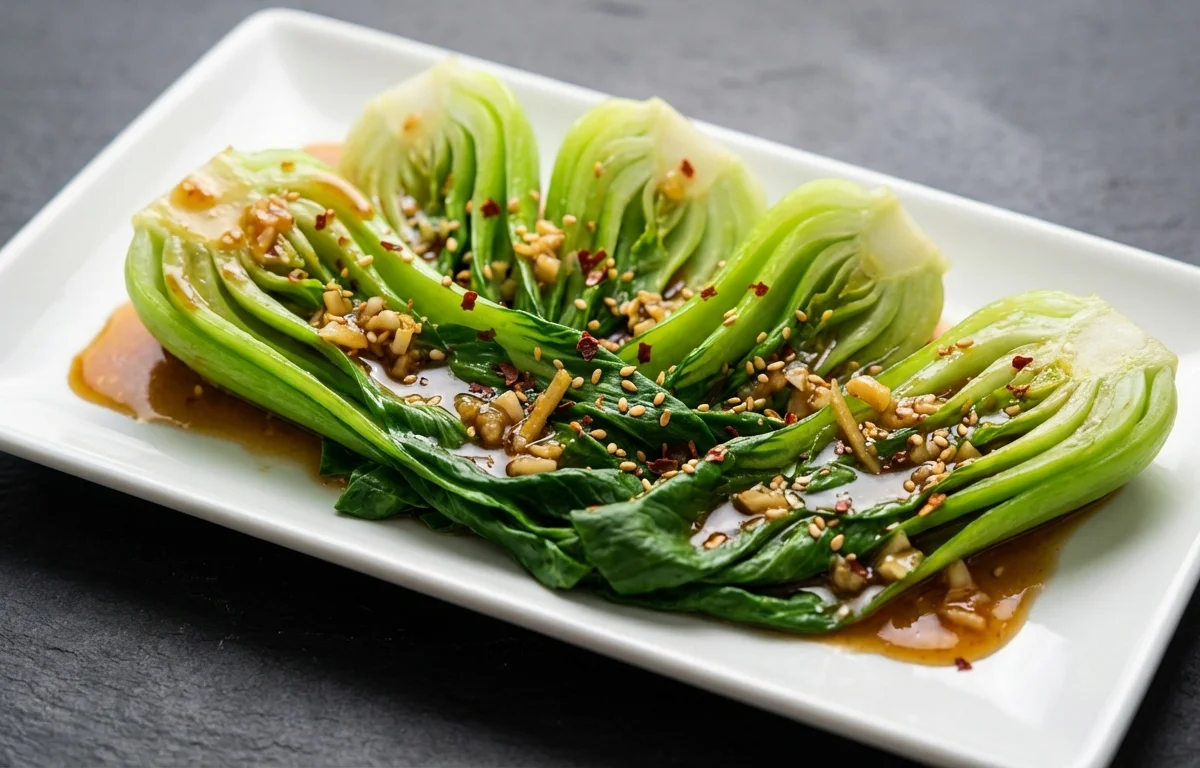
Steamed Bok Choy with Garlic Ginger Sauce
Crisp-tender steamed bok choy drizzled with a fragrant garlic-ginger sauce that comes together in under 10 minutes. The gentle steaming keeps the leaves vibrant green and the stalks juicy, while the sizzled aromatics mingle with a touch of soy for a clean, savory finish. A perfect light side that pairs with almost anything.
For 4 servings
- prep
Trim and wash the bok choy.
Trim the root end of the bok choy just enough to separate the leaves, keeping the heads intact. Rinse thoroughly under cold running water to remove any grit trapped between the layers. Drain well and pat dry.
TIPBaby bok choy stays tender and sweet; if using large bok choy, slice into quarters so the thick stalks cook evenly with the leaves. - steam · ~4 min
Steam the bok choy until vibrant and tender.
1.Bring 0.5 cup water to a boil in a pot that fits your steamer basket.2.Arrange bok choy in the steamer basket, cover, and steam until stalks are easily pierced with a knife (3-4 min).3.Carefully remove the basket and transfer bok choy to a serving plate.TIPDon’t oversteam — the leaves should be bright green and the stalks still have a slight bite. - saute · ~1 min
Bloom the garlic and ginger.
1.Heat vegetable oil in a small saucepan over medium-low heat.2.Add minced garlic and ginger. Cook gently, stirring constantly, until fragrant and just starting to turn golden (45-60 sec).3.Immediately remove from heat so the aromatics don't burn.TIPKeep the heat low — garlic burns in seconds and turns bitter if you walk away. - mix
Finish the sauce.
1.Stir the soy sauce and a pinch of salt into the warm garlic-ginger oil.2.Add the toasted sesame oil and swirl to combine. - assemble
Spoon the sauce over the steamed bok choy and serve.
Drizzle the aromatic sauce evenly over the plated bok choy. Serve warm right away as a side.
TIPResidual heat from the bok choy helps the sauce sink into every leaf.
What to keep in mind.
7 tips from the recipe — small details that make a real difference to the final dish.
- 1Pat bok choy dry after washing to prevent steaming from becoming waterlogged.
- 2Slice baby bok choy in half lengthwise for even cooking from stalk to leaf.
- 3Use tongs to gently shake steamer basket so steam circulates evenly around bok choy.
- 4Test doneness by piercing the thickest stalk with a knife; it should slide in with slight resistance.
- 5Bloom garlic and ginger over medium-low heat to avoid bitter burnt flavors.
- 6For make-ahead, steam bok choy and refrigerate; reheat briefly in a hot skillet before adding sauce.
- 7Leftover steamed bok choy keeps 2 days in the fridge; refresh in a steamer for 30 seconds.
Adapt it for your goals.
Spicy Sichuan
Add 1/2 teaspoon chili crisp or a small dried red chile (crumbled) to the blooming garlic and ginger for a smoky, numbing heat that contrasts the mild bok choy.
umami boostUmami boost
Stir 1 teaspoon oyster sauce into the finishing sauce for deeper, savory richness; perfect when serving alongside plain steamed rice.
low oilLow-oil
Replace the vegetable oil with 2 tablespoons water or vegetable broth and steam the aromatics directly in the liquid for a lighter, oil-free sauce.
citrus finishCitrus finish
Add 1 teaspoon fresh lime juice and a grating of zest to the finished sauce — the acidity cuts through the richness and brightens the dish.
Why this is on our healthy list.
Rich in Vitamin K
Bok choy is an excellent source of vitamin K, which supports bone health and proper blood clotting.
Low in Calories
This dish is naturally low in calories while being high in volume, making it a satisfying addition to any meal without heavy caloric load.
Antioxidant from Ginger
Fresh ginger provides gingerol, a compound with anti-inflammatory and antioxidant properties that may help reduce oxidative stress.
Sodium Controlled
Using low-sodium soy sauce and a pinch of salt keeps the sodium in check while still delivering savory flavor.
Frequently asked questions
Yes. Slice large bok choy into quarters lengthwise so the thick stalks cook evenly with the leaves. Steam an extra minute or two, checking tenderness with a knife tip.