Sukhi Aloo Sabzi
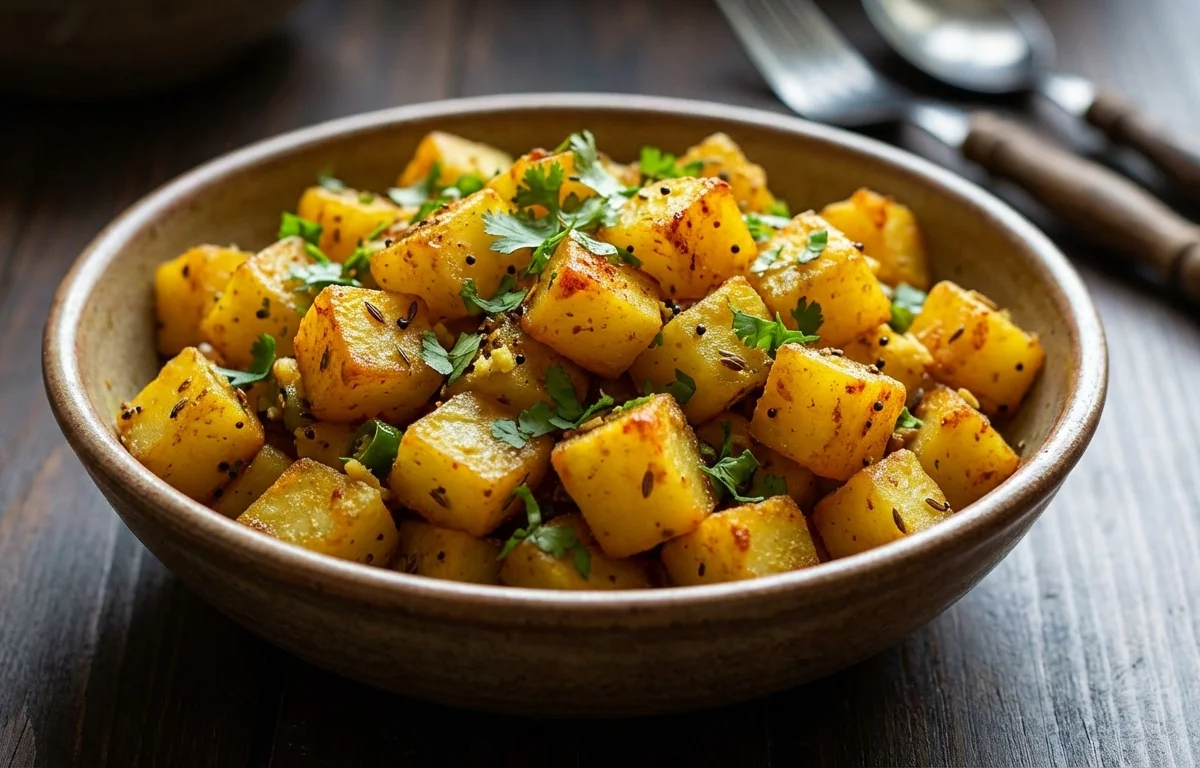
A simple, comforting North Indian potato dish where tender boiled potatoes are tossed with cumin, turmeric, and a squeeze of lemon. The dry, spice-coated cubes turn slightly crisp at the edges, making it perfect for scooping up with a hot roti or paratha.
For 4 servings
- prep
Boil and cube the potatoes.
Boil the potatoes until just fork-tender. Cool, peel, and cut into 1-inch cubes. They should hold their shape without being mushy.
- temper · ~1 min
Temper the cumin in hot oil.
1.Heat oil in a heavy-bottomed pan over medium heat.2.Add cumin seeds and let them sizzle until fragrant and slightly darker (30 seconds).TIPCumin seeds should crackle immediately on hitting the oil. If they don't, the oil isn't hot enough. - saute · ~1 min
Sauté the aromatics.
1.Add chopped ginger and slit green chilies to the pan.2.Sauté for 30 seconds until the raw ginger smell softens. - saute
Bloom the spice powders.
1.Lower the heat to the minimum setting.2.Add turmeric powder, red chili powder, and coriander powder.3.Stir continuously for 15-20 seconds until the spices deepen in color and smell toasty. Do not let them burn.TIPBlooming spices in low heat releases their natural oils and flavor. If the pan is too hot, they will burn and turn bitter. - saute · ~7 min
Toss the potatoes with the spices.
1.Add the boiled potato cubes and salt to the pan.2.Gently toss to coat every piece evenly with the spice mixture.3.Cook on medium heat for 5-7 minutes, stirring occasionally, until the potatoes are heated through and slightly crisp on the edges.TIPUse a gentle hand when tossing to keep the potato cubes intact. - garnish
Finish with lemon juice, mango powder, and fresh coriander.
1.Turn off the heat.2.Sprinkle the dry mango powder and lemon juice over the potatoes.3.Toss once more, then garnish generously with chopped coriander leaves.
What to keep in mind.
6 tips from the recipe — small details that make a real difference to the final dish.
- 1Boil potatoes until just fork-tender, not mushy, so they hold their shape when cubed.
- 2Let the cumin seeds crackle fully in hot oil before adding ginger to build a deep aroma.
- 3Bloom the spice powders on low heat for 15–20 seconds to release oils without burning.
- 4Toss potato cubes gently with a spatula to keep them intact and prevent breakage.
- 5Add dry mango powder and lemon juice only after turning off the heat to preserve their tangy punch.
- 6For extra crisp edges, spread the potatoes in a single layer while cooking and don't stir too often.
Adapt it for your goals.
Vegan
This recipe is already vegan—skip the ghee and use any neutral vegetable oil. The flavors stay authentic and satisfying.
low oilLow-oil
Reduce oil to 1 tablespoon and use a non-stick pan. The potatoes will still crisp slightly but with fewer calories.
high proteinHigh-protein
Add 1/2 cup of boiled chickpeas or paneer cubes along with the potatoes for extra protein and texture.
jainJain
Omit ginger and garlic (not used here) and replace green chilies with black pepper or asafoetida. Use rock salt instead of regular salt.
Why this is on our healthy list.
Rich in Resistant Starch
Potatoes that are boiled and then cooled (as in this recipe) contain resistant starch, which supports gut health and helps regulate blood sugar.
Anti-Inflammatory Spices
Turmeric, ginger, and cumin are all known for their anti-inflammatory properties, helping to reduce oxidative stress in the body.
Good Source of Vitamin C
Potatoes provide vitamin C, and the addition of lemon juice boosts this immune-supporting nutrient even further.
Low in Fat and Vegan-Friendly
With only 2 tablespoons of oil for the whole dish, this is a low-fat, plant-based recipe that fits many dietary preferences.
Frequently asked questions
Yes, leftover boiled potatoes work great—just cube them and toss into the spice mixture. They may crisp up even faster.



.webp)