Surnoli Dosa
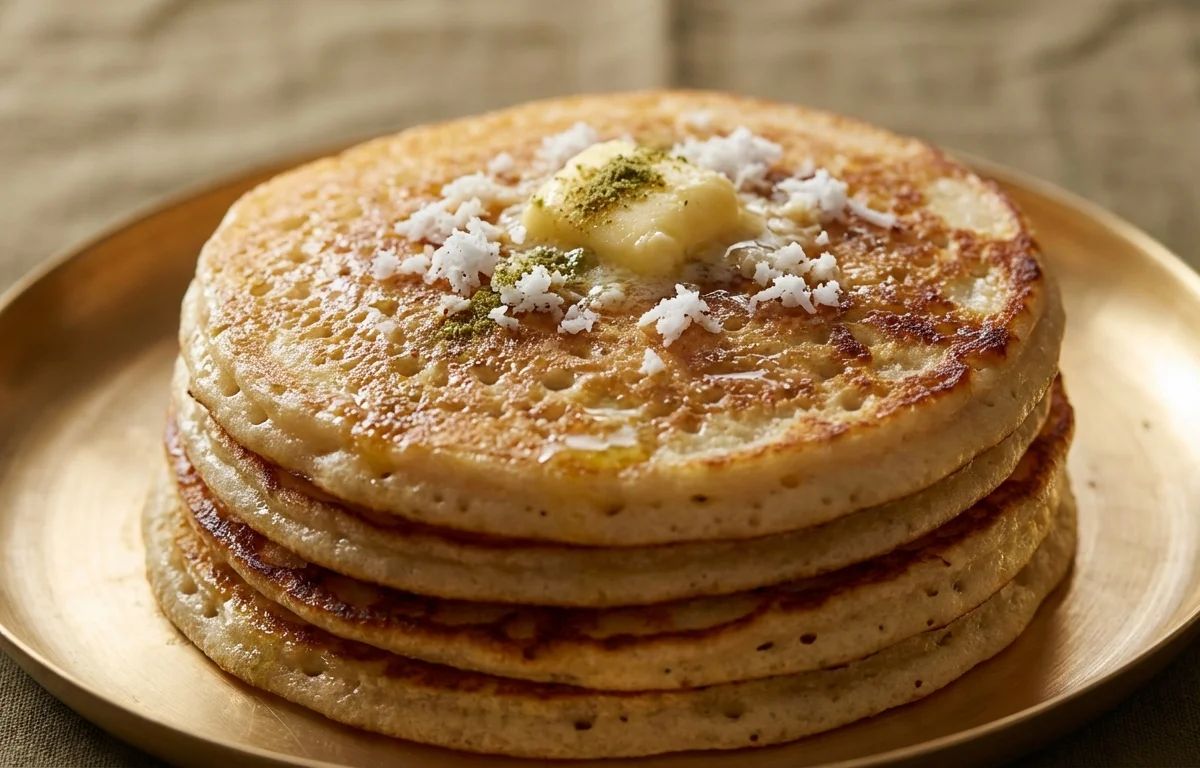
Surnoli is a soft, lightly sweet dosa from coastal Karnataka made with rice, poha, jaggery, and coconut. The fermented batter cooks into thick golden pancakes with tiny holes and a lovely gentle tang.
For 8 servings
- prep · ~240 min
Soak the rice, poha, and fenugreek.
1.Wash the raw rice well and soak it in water for 4 hours.2.Rinse the flattened rice and soak it separately for 20 to 30 minutes before grinding.3.Soak the fenugreek seeds with the rice.TIPSoaking poha for too long can make the batter gluey, so add it only near grinding time. - mix · ~15 min
Grind the batter.
1.Drain the rice and fenugreek seeds.2.Grind the rice, fenugreek seeds, flattened rice, fresh coconut, and jaggery with water to a smooth, thick batter.3.Add the salt and mix well. The batter should be thicker than regular dosa batter but still pourable. - rest · ~480 min
Ferment the batter.
Cover the batter and leave it in a warm place for 8 hours or overnight, until slightly risen and airy.
TIPThe batter should smell mildly sweet and tangy after fermentation, not sharply sour. - mix
Stir the batter before cooking.
Mix the fermented batter gently. Add a little water only if it looks too thick to spread on its own.
- fry · ~6 min
Cook the surnoli dosa.
1.Heat a tawa over medium heat and lightly grease it with a little ghee.2.Pour a small ladleful of batter and spread it lightly into a thick small dosa. Do not spread it thin like a regular dosa.3.Drizzle a little ghee around the edges, cover, and cook until the top looks set and small holes appear.4.Flip and cook the other side for 1 to 2 minutes until lightly golden.TIPKeep the heat medium so the inside cooks through before the outside browns too much. - serve
Serve the surnoli dosa warm.
What to keep in mind.
7 tips from the recipe — small details that make a real difference to the final dish.
- 1Keep the batter slightly thicker than regular dosa batter so the surnoli stays soft and spongy, not flat.
- 2If your jaggery has grit, melt and strain it before grinding to avoid sandy bits in the dosa.
- 3After fermentation, stir the batter gently; overmixing knocks out the trapped air that creates tiny holes.
- 4Cook on medium heat with the pan covered so the center steams through before the bottom darkens.
- 5Do not spread the batter thin; a small, thick round is what gives surnoli its characteristic pillowy texture.
- 6A well-fermented batter will smell mildly sweet-tangy and look slightly risen, which is the best cue to start cooking.
- 7Leftover batter keeps well in the fridge for about 2 days; bring it closer to room temperature before making more dosas.
Adapt it for your goals.
Low-oil
Cook on a good nonstick or well-seasoned tawa with minimal ghee if you want a lighter everyday version.
veganVegan
Replace ghee with coconut oil or a neutral oil; the coconut in the batter keeps the dosa rich and flavorful.
less sweetLess-sweet
Reduce the jaggery slightly for a more balanced breakfast-style surnoli that pairs better with chutney.
no coconutNo-coconut
Skip the fresh coconut if unavailable; the texture will be a little less rich but the dosa will still ferment and cook well.
Why this is on our healthy list.
Naturally Fermented Batter
The overnight fermentation can make the rice-based batter lighter and easier to digest than an unfermented one.
Energy-Giving Breakfast
Rice, poha, and jaggery provide quick energy, making surnoli a satisfying morning meal or snack.
Contains Good Plant Ingredients
Fresh coconut and fenugreek add natural flavor, texture, and beneficial plant compounds to the batter.
Frequently asked questions
The batter was likely too thick, under-fermented, or cooked on high heat. It should be airy, pourable, and cooked covered on medium heat.