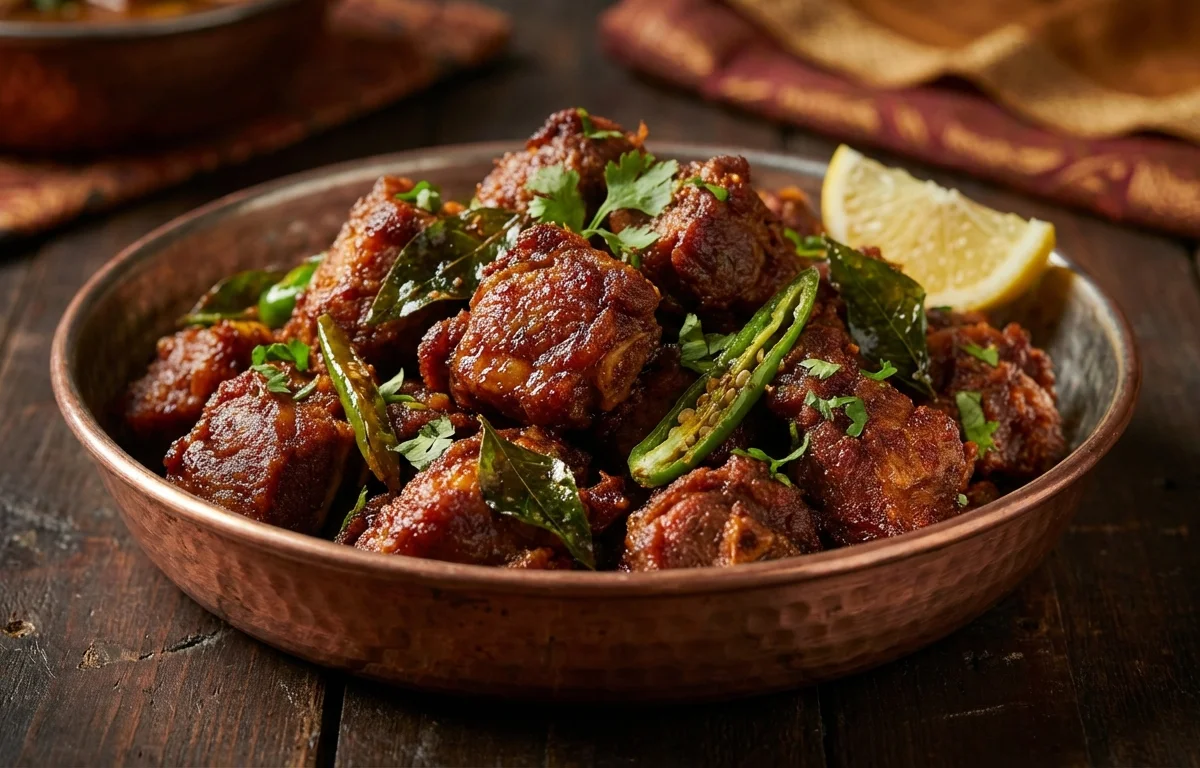
Tala Hua Gosht
A robust North Indian meat dish where mutton is first softened, then fried down with onions, tomatoes, and warm spices until the masala clings to every piece. Rich, spicy, and made for pairing with roti or rice.
For 4 servings
- prep · ~10 min
Prepare the meat and aromatics.
1.Rinse the mutton and drain well.2.Slice the onions thinly and chop the tomatoes finely.3.Slit the green chilies and keep the whisked yogurt ready. - pressure cook · ~25 min
Cook the mutton until tender.
1.Add mutton, half of the ginger-garlic paste, bay leaf, cinnamon, cardamom, cloves, salt, and water to a pressure cooker.2.Cook on medium heat for 4 to 5 whistles until the meat is nearly tender.3.Let the pressure drop naturally, then open and keep the mutton with its cooking liquid aside.TIPDo not overcook the meat at this stage. It should be tender but still hold its shape for the frying step. - saute · ~15 min
Cook the onion masala.
1.Heat oil in a wide pan over medium heat.2.Add cumin seeds and let them sizzle for a few seconds.3.Add the sliced onions and cook until deep golden brown.4.Add the remaining ginger-garlic paste and green chilies, then sauté until the raw smell goes away.5.Add tomatoes and cook until soft and pulpy.TIPA wide pan helps the masala fry properly and gives the dish its signature bhuna texture. - mix · ~4 min
Add the spices and yogurt.
Lower the heat and add turmeric powder, red chili powder, coriander powder, and garam masala. Mix quickly, then stir in the yogurt and cook until the masala looks glossy and well combined.
TIPKeep the heat low when adding yogurt so it blends smoothly instead of splitting. - fry · ~15 min
Fry the mutton with the masala.
1.Add the pressure-cooked mutton to the pan and toss well to coat every piece in the masala.2.Pour in 0.5 cup of the reserved cooking liquid and cook uncovered over medium heat.3.Keep stirring and frying until the liquid reduces and the masala clings to the meat.TIPStir often in the last few minutes so the masala fries instead of sticking and burning. - garnish · ~1 min
Finish with lemon juice and coriander leaves.
- serve · ~1 min
Serve hot.
Serve Tala Hua Gosht hot with roti, naan, or plain rice.
What to keep in mind.
7 tips from the recipe — small details that make a real difference to the final dish.
- 1Use a wide, heavy pan for the final bhuna so the cooking liquid reduces fast and the masala coats the mutton instead of steaming it.
- 2Brown the onions to a deep golden color, not just soft, because they build the dish's rich fried flavour and darker masala.
- 3After pressure cooking, keep the mutton pieces intact while stirring so the meat fries well without shredding off the bone.
- 4Whisk the yogurt until smooth and add it on low heat to prevent curdling when it meets the hot masala.
- 5If the masala starts catching at the bottom during the final fry, splash in a spoon or two of reserved stock rather than extra water.
- 6Finish with lemon juice only after turning off the heat so its brightness stays sharp against the rich meat.
- 7This dish tastes even better after a short rest, as the fried masala settles onto the mutton and the spices round out.
Adapt it for your goals.
Extra-spicy
Add more slit green chilies or a little extra red chili powder for a fiercer North Indian dhaba-style heat.
dry bhunaDry-bhuna
Use less reserved cooking liquid in the final step and fry longer for a drier version that pairs especially well with naan or roomali roti.
gravy styleGravy-style
Add more of the reserved stock after frying the masala if you want a looser curry to serve with rice.
bonelessBoneless
Make it with boneless mutton for easier serving, though bone-in pieces usually give deeper flavour to the cooking liquid.
Why this is on our healthy list.
Rich in Protein
Mutton makes this dish filling and protein-rich, which helps make it a satisfying main course.
Contains Warming Spices
Cumin, cloves, cinnamon, cardamom, ginger, and garlic add aromatic compounds along with the dish's signature depth.
Includes Fermented Dairy
Yogurt adds tang and body while helping tenderize the meat during cooking.
Frequently asked questions
Yes. Simmer the mutton covered in a heavy pot until nearly tender, then continue with the frying step; it will simply take longer.


.webp)