
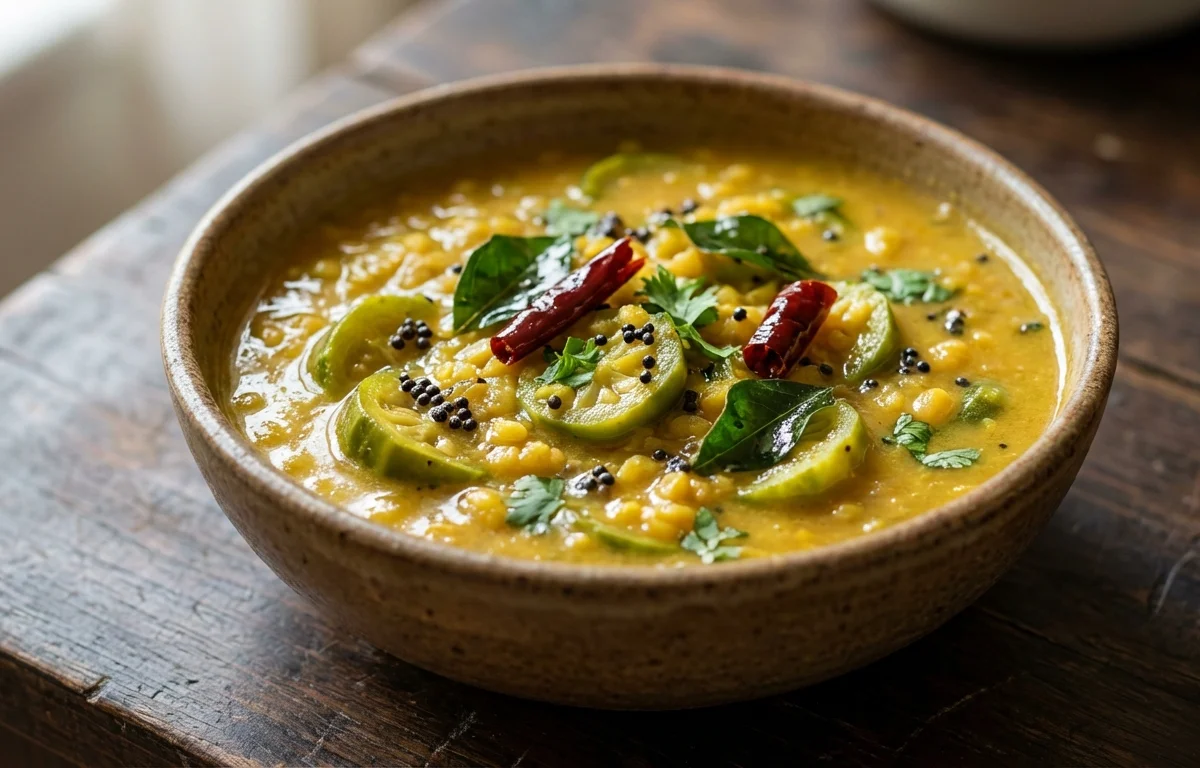
Tendli Moong Dal Ghashi
A beloved Konkani-style dish where tender ivy gourd slices are simmered in a creamy coconut and roasted spice gravy with mild moong dal. The gravy gets its signature golden hue from slow-roasted coriander seeds and dried red chilies ground fresh with coconut. Light yet deeply satisfying, this coastal classic pairs beautifully with steamed rice and a drizzle of coconut oil for an authentic touch.
For 4 servings
- prep · ~5 min
Prep the tendli and soak the tamarind.
1.Wash 250g tendli well, trim the ends, and slice into thin rounds (about 3 mm).2.Soak the tamarind ball in 2 tbsp warm water for 10 minutes, then squeeze to extract pulp. Discard the fiber.TIPPick young tender tendli that feel firm — mature ones can be fibrous with hard seeds inside. - roast · ~10 min
Roast the coconut-spice paste ingredients.
1.Heat a small pan on medium-low heat. Dry roast 1.5 tbsp coriander seeds, 1 tsp urad dal, 4 dried red chilies (broken, seeds removed), and a pinch of fenugreek seeds.2.Stir continuously until the dal turns light golden and the spices smell fragrant (2–3 minutes). Do not let them burn.3.Add 0.5 cup fresh grated coconut and roast for another 2 minutes until the coconut turns a shade darker. Remove from heat and cool completely.4.Transfer the cooled mixture to a mixer jar. Add the tamarind pulp and 0.25 cup water. Grind to a very smooth, fine paste. Set aside.TIPRoasting on medium-low is crucial — high heat scorches the coconut and makes the paste bitter. The coconut should be just lightly golden, not brown. - pressure cook · ~10 min
Cook the moong dal separately.
Pressure cook 0.25 cup washed moong dal with 0.75 cup water and a pinch of turmeric on medium heat for 2 whistles. Let the pressure release naturally, then mash the dal lightly with a whisk. Set aside.
- simmer · ~15 min
Cook the tendli and combine with dal.
1.In a heavy-bottomed pot, add the sliced tendli, remaining turmeric, salt, and 0.5 cup water.2.Bring to a simmer on medium heat, cover, and cook until the tendli is fork-tender (about 8–10 minutes).3.Add the mashed moong dal to the cooked tendli along with the ground coconut-spice paste.4.Rinse the mixer jar with 0.25 cup water, add it to the pot, and stir well. Adjust consistency with a little more water if needed — it should coat the back of a spoon and pour easily.5.Let it simmer on low heat for 5–7 minutes to let the flavors meld. Turn off the heat.TIPNever let the ghashi boil rapidly after adding the coconut paste — a gentle simmer keeps the gravy creamy and prevents splitting. - temper · ~2 min
Make the tempering.
1.In a small tadka pan, heat 2 tsp coconut oil on medium heat.2.Add 0.5 tsp mustard seeds and let them pop and crackle completely (about 20 seconds).3.Add 8 fresh curry leaves and a pinch of asafoetida. Fry for 5 seconds until leaves turn crisp and aromatic.4.Immediately pour the sizzling tempering over the ghashi and hear it sizzle. Cover the pot for 2 minutes to trap the aroma. - rest · ~5 min
Let the ghashi rest briefly before serving.
Cover and let the flavored ghashi sit for 5 minutes so the tempering infuses into the gravy. The coconut oil will bloom on the surface — this is the classic Konkani presentation. Serve hot with steamed rice.
TIPA final raw drizzle of 1 tsp coconut oil over each serving takes the aroma to the next level — but this is optional.
What to keep in mind.
7 tips from the recipe — small details that make a real difference to the final dish.
- 1Pick young, firm tendli with no soft spots or blemishes for the best texture.
- 2Roast the coconut only until it darkens a shade — scorching makes the paste bitter.
- 3Grind the coconut-spice paste very smooth; a coarse paste won't emulsify into a creamy gravy.
- 4After adding the coconut paste, keep the ghashi at a gentle simmer, never a rolling boil.
- 5Let the tempering sizzle directly into the ghashi, then cover for 2 minutes to trap the aromas.
- 6The ghashi thickens as it rests; add a splash of water when reheating if needed.
- 7A fresh drizzle of coconut oil just before serving heightens the authentic Konkani flavor.
Adapt it for your goals.
Oil-free
Omit the coconut oil for tempering and instead dry-temper with mustard seeds and curry leaves in a non-stick pan; skip the final drizzle. Ideal for those on a low-fat or oil-free diet.
high proteinHigh-protein
Increase moong dal to 1/2 cup and cook with more water; the thicker, protein-packed gravy pairs well with quinoa or brown rice for a heartier meal.
veganVegan
This recipe is naturally vegan — just ensure the tamarind is pure and skip any optional ghee drizzle; serve with rice for a complete plant-based meal.
kale swapKale-swap
Replace tendli with chopped kale or chard leaves; cook until tender, then proceed. A great way to enjoy this coastal gravy with leafy greens when tendli is out of season.
Why this is on our healthy list.
Rich in Dietary Fiber
Ivy gourd and moong dal both provide soluble fiber, supporting healthy digestion and steady blood sugar levels.
Plant-Based Protein Source
Moong dal contributes easily digestible plant protein, making this dish a satisfying main for vegetarian meals.
Good Source of Antioxidants
Coriander seeds, dried red chilies, and curry leaves contain natural antioxidant compounds that help combat oxidative stress.
Low in Saturated Fat
Using a small amount of coconut oil and fresh coconut keeps saturated fat moderate while delivering authentic flavor.
Contains Beneficial Spices
Fenugreek seeds, turmeric, and asafoetida support digestion and have anti-inflammatory properties in traditional cooking.
Frequently asked questions
Frozen tendli work but release more water — reduce the added water slightly and simmer longer to evaporate excess moisture. Canned tendli are not recommended as they become mushy.


