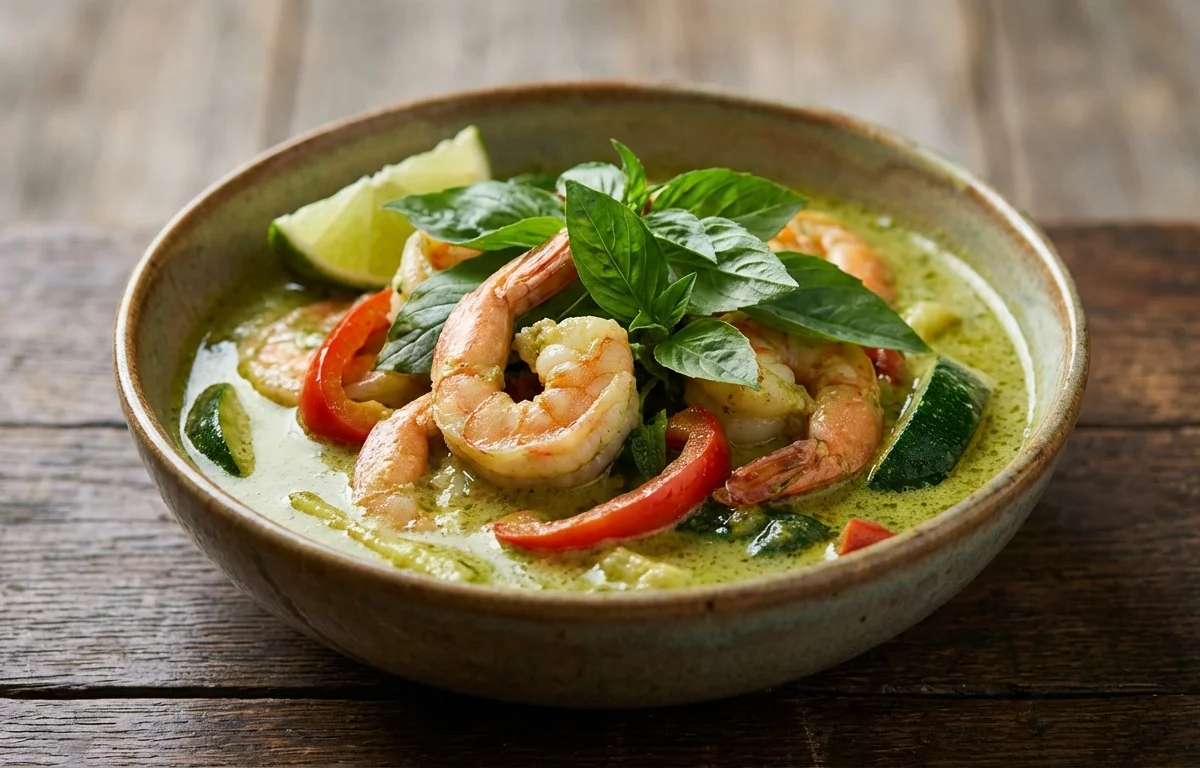
Thai Green Curry with Shrimp
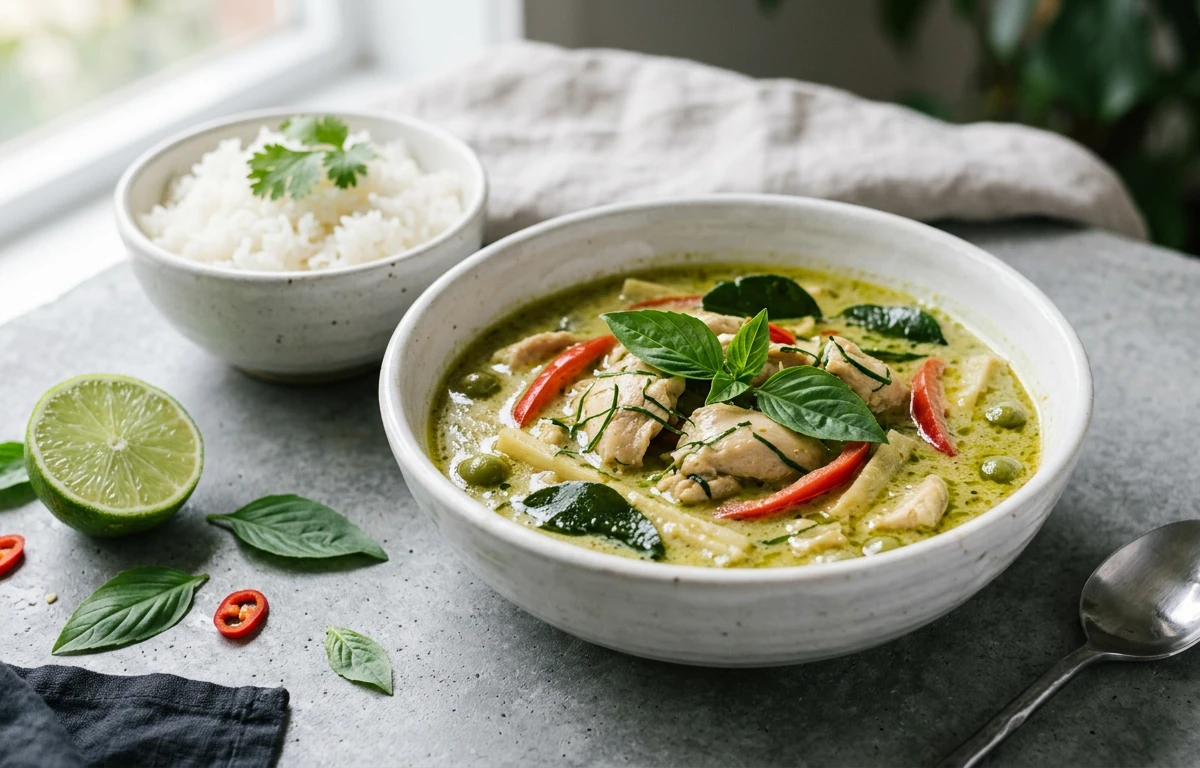
A vibrant, aromatic Thai curry with plump shrimp swimming in a luscious coconut-green chili sauce. Fragrant with lemongrass, galangal, and fresh basil, this dish balances sweet, spicy, and savory notes perfectly. Ready in about 30 minutes, it's a weeknight dinner that tastes like a trip to Bangkok.
For 4 servings
- prep · ~10 min
Prep all ingredients before you start cooking.
1.Peel and devein shrimp, leaving tails on. Pat dry with paper towels.2.Cut eggplant into bite-sized pieces, slice bell pepper into strips, trim and halve green beans.3.Tear kaffir lime leaves, discarding the tough center stem.4.Pick Thai basil leaves from stems and set aside. - saute · ~3 min
Bloom the curry paste in oil.
1.Heat oil in a wok or large skillet over medium heat.2.Scoop the thick coconut cream from the top of the can (about 2 tbsp) and add it to the pan. Let it sizzle and crackle for 1 minute until fragrant.3.Add the green curry paste and stir-fry continuously for 1-2 minutes until the paste darkens slightly and becomes very aromatic.TIPFrying the paste first deepens its flavor — don't skip this step. - simmer · ~2 min
Build the curry base.
1.Pour in the remaining coconut milk and stir until the paste is fully dissolved.2.Add kaffir lime leaves, fish sauce, and palm sugar. Stir well.3.Bring to a gentle simmer over medium heat. - simmer · ~9 min
Cook the vegetables until tender.
1.Add eggplant, green beans, and bamboo shoots to the simmering curry.2.Cook for 5-7 minutes, stirring occasionally, until eggplant is soft and beans are crisp-tender.3.Add the bell pepper strips and cook for 2 more minutes.TIPStart with the firmer vegetables first — bell pepper cooks fast. - simmer · ~3 min
Poach the shrimp in the curry.
1.Add the shrimp to the simmering curry, distributing them evenly.2.Cook for 2-3 minutes until shrimp turn pink and opaque. Do not overcook.3.Stir in the Thai basil leaves and a pinch of salt. Turn off the heat.TIPShrimp curl into a 'C' shape when perfectly cooked — if they become an 'O', they're overdone. - garnish · ~1 min
Taste, adjust seasoning, and serve.
Taste the curry and adjust with more fish sauce for saltiness or a pinch of sugar for sweetness. Ladle into bowls and garnish with additional fresh Thai basil leaves.
What to keep in mind.
6 tips from the recipe — small details that make a real difference to the final dish.
- 1Use the thick cream from the top of the coconut milk can to fry the paste — it adds richness and prevents the paste from burning.
- 2Pat shrimp very dry before adding to the curry so they sear quickly and don't release excess water.
- 3Taste the curry before adding salt — fish sauce is salty, so adjust seasoning at the end.
- 4Simmer the curry gently; a rolling boil can cause the coconut milk to split and become grainy.
- 5Add the shrimp last and cook just until opaque — they continue cooking in the residual heat after the pot is off the stove.
- 6For a thicker sauce, let the curry simmer uncovered for a few extra minutes before adding the vegetables.
Adapt it for your goals.
Vegetarian
Replace shrimp with firm tofu or extra vegetables like zucchini and mushrooms. Use soy sauce or tamari instead of fish sauce for a savory depth.
Lower FatLower-Fat
Use light coconut milk and reduce oil to 1 teaspoon. Add extra vegetables like sliced carrots and bok choy to increase volume without extra fat.
SpicierSpicier
Add 1-2 minced Thai bird’s eye chilies or an extra tablespoon of green curry paste for a fiery kick. Great for heat lovers.
Seafood MedleySeafood Medley
Add squid, mussels, or white fish fillets along with the shrimp for a luxurious seafood curry. Adjust cooking times so delicate seafood isn't overcooked.
Why this is on our healthy list.
Rich in Lean Protein
Shrimp provides high-quality, low-fat protein that supports muscle health and keeps you full longer.
Antioxidant-Rich Vegetables
Eggplant, bell peppers, and green beans deliver fiber, vitamins A and C, and protective plant compounds.
Healthy Fats from Coconut
Full-fat coconut milk contains medium-chain triglycerides (MCTs) that can provide quick energy and support metabolism.
Aromatic Anti-Inflammatory Spices
Galangal, lemongrass, and kaffir lime leaves in the curry paste have natural anti-inflammatory properties.
Frequently asked questions
Yes. Thaw them completely in the refrigerator overnight or under cold running water, then pat very dry before adding to the curry to avoid diluting the sauce.