
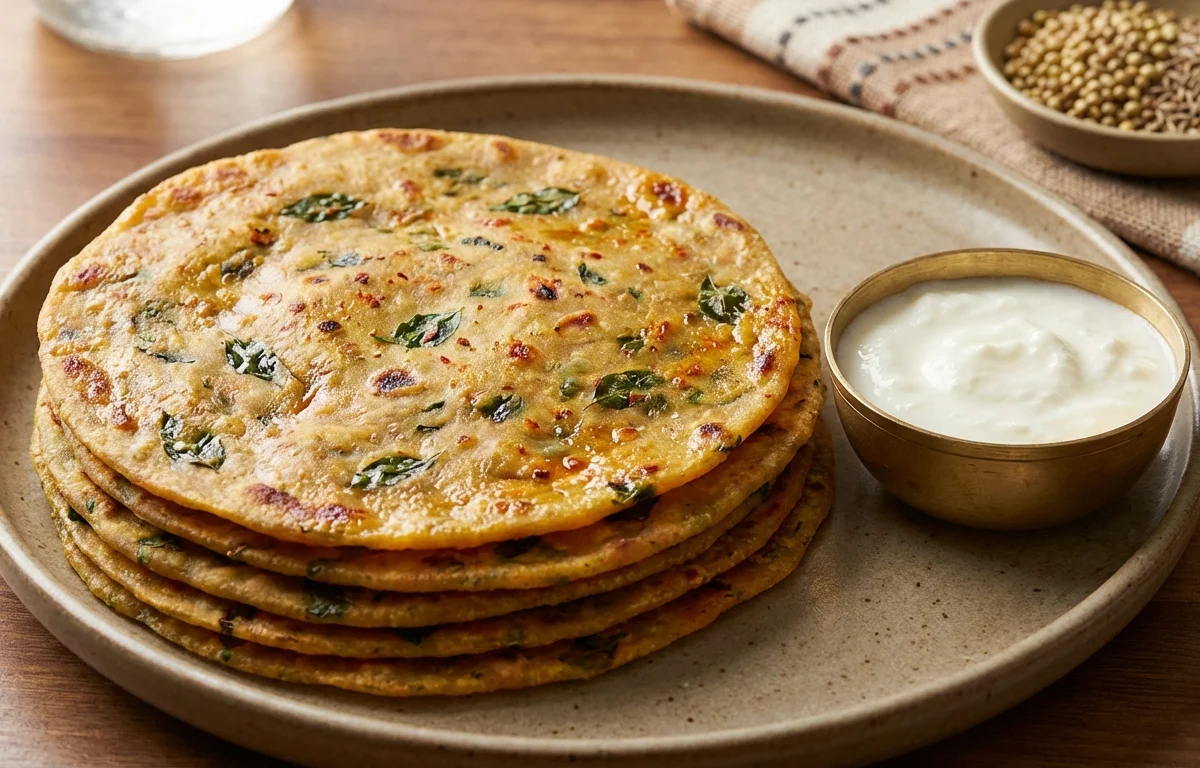
Thepla
Thin, soft Gujarati flatbreads made with whole wheat flour, yogurt, fenugreek leaves, and gentle spices. They stay tasty for hours, making them perfect for breakfast, travel, or a light meal with pickle and yogurt.
For 8 servings
- prep · ~5 min
Prepare the ingredients.
1.Wash the fenugreek leaves well and chop them finely.2.Measure the flour, yogurt, oil, spices, salt, and water.3.Keep a little extra dry flour nearby for rolling. - knead · ~15 min
Knead the thepla dough.
1.Add whole wheat flour, chopped fenugreek leaves, turmeric powder, red chili powder, cumin powder, coriander powder, asafoetida, and salt to a bowl.2.Add yogurt and 1 tbsp oil, then rub everything together lightly.3.Add water little by little and knead into a soft, smooth dough.4.Cover the dough and let it rest for 10 minutes. - mix · ~4 min
Divide and shape the dough.
1.Knead the rested dough once more until smooth.2.Divide it into 8 equal balls.3.Flatten each ball gently and dust with dry flour. - assemble · ~7 min
Roll the thepla.
Roll each dough ball into a thin round, about 6 to 7 inches wide. Dust lightly with flour as needed so it does not stick.
TIPRoll them evenly and thin for soft thepla that cook quickly without turning chewy. - fry · ~12 min
Cook the thepla on a hot tawa.
1.Heat a tawa over medium heat and place one rolled thepla on it.2.Cook until small bubbles appear and the bottom has light spots.3.Flip, spread a little oil, and cook the second side.4.Flip again, spread a little oil on the other side, and press gently until both sides have golden spots.TIPKeep the heat at medium so the thepla cooks through and stays soft instead of drying out. - serve · ~1 min
Serve the thepla warm or cool completely for storage.
What to keep in mind.
7 tips from the recipe — small details that make a real difference to the final dish.
- 1Squeeze excess water from washed methi before chopping, or the dough can turn sticky and need too much extra flour.
- 2Add water very gradually since the yogurt and fenugreek already bring moisture to the dough.
- 3Resting the dough for 10 minutes helps the wheat absorb moisture, making thepla easier to roll thin without cracking.
- 4Roll each thepla evenly thin; thick centers stay doughy while thin edges dry out on the tawa.
- 5Cook on medium heat only—high heat gives brown spots fast but leaves the inside less supple.
- 6Stack cooked thepla in a cloth-lined container to trap gentle steam and keep them soft for hours.
- 7For travel, cool thepla completely before packing so trapped steam does not make them soggy.
Adapt it for your goals.
Low-oil
Use just a light brushing of oil on the tawa instead of spreading it on both sides if you want a lighter everyday version.
spicierSpicier
Increase red chili powder slightly for a hotter thepla that pairs especially well with plain yogurt or sweet pickle.
dahi freeDahi-free
Replace yogurt with water for a simpler dough if dairy is unavailable, though thepla will be a bit less soft over time.
ajwainAjwain
Add a pinch of ajwain to the dough for a more aromatic, digestion-friendly variation often enjoyed with tea.
Why this is on our healthy list.
Whole Grain Base
Made with whole wheat flour, these thepla offer more fiber and grain nutrients than flatbreads made from refined flour.
Includes Leafy Greens
Fresh fenugreek leaves add plant compounds, color, and a savory herbal note while boosting the vegetable content of the meal.
Balanced Everyday Meal
The combination of whole wheat, yogurt, and moderate oil makes this a sustaining breakfast or travel food with carbs, some protein, and fat.
Frequently asked questions
They were likely rolled too thick, cooked on heat that was too high, or not stacked covered after cooking. Medium heat and thin rolling keep them soft.

.webp)
.webp)
.webp)