Til Chutney
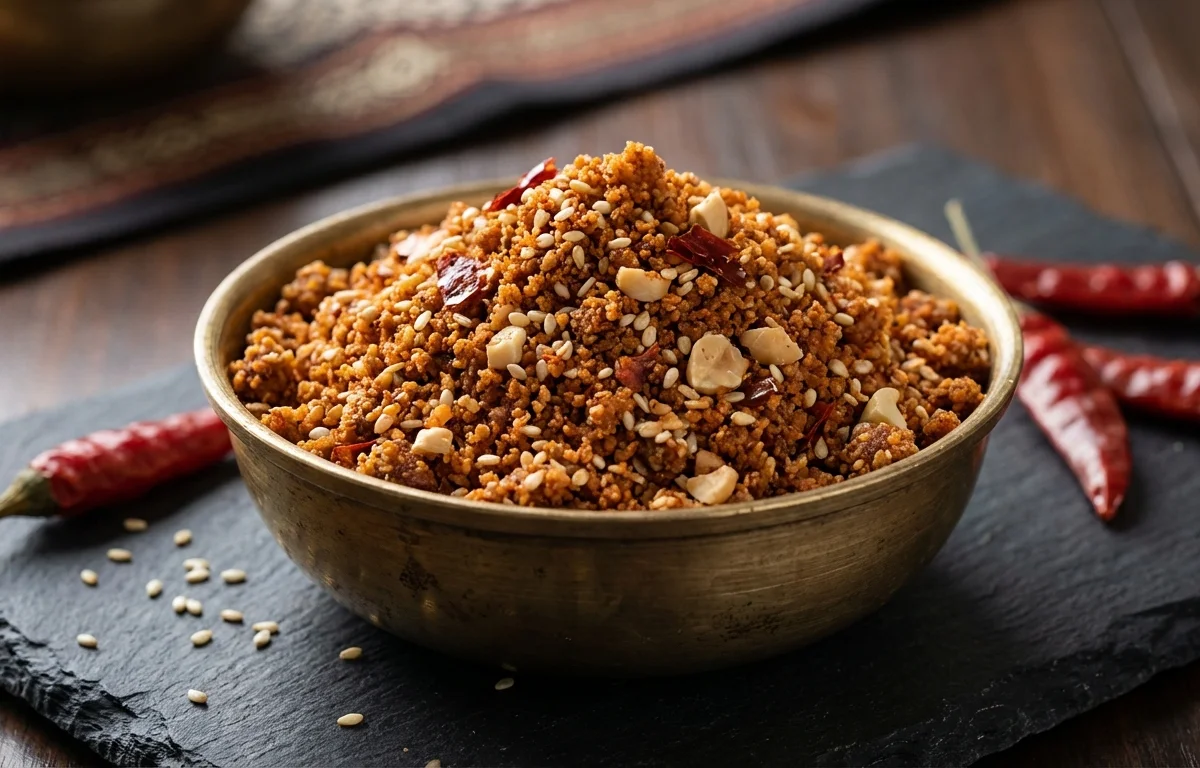
A nutty, tangy chutney made from roasted white sesame seeds, green chilies, and tamarind. This South Indian condiment comes together in minutes and adds a creamy, slightly sour punch to dosas, idlis, or hot rice with a drizzle of ghee.
For 8 servings
- prep · ~10 min
Soak the tamarind.
Place the tamarind in a small bowl with 2 tablespoons of warm water. Set aside for 10 minutes to soften, then squeeze and discard the pulp.
- saute · ~3 min
Dry roast the sesame seeds.
Heat a small frying pan over low heat. Add the white sesame seeds and dry roast, stirring constantly, until they turn golden and release a nutty aroma. Remove immediately to a plate to cool.
TIPWatch closely — sesame seeds burn fast. The moment they turn golden, take them off the heat. - mix · ~1 min
Blend into a coarse paste.
In a blender, combine the cooled roasted sesame seeds, green chilies, soaked tamarind, garlic cloves, and salt. Add 1 to 2 tablespoons of water and grind to a thick, slightly coarse consistency.
TIPScrape down the sides and pulse instead of running continuously for the best texture. - temper · ~2 min
Prepare the tempering.
1.Heat oil in a small tadka ladle over medium heat until shimmering.2.Add mustard seeds and let them splutter (30 seconds).3.Add dried red chili, curry leaves, and asafoetida. Fry until curry leaves turn crisp (10 seconds).4.Pour the sizzling tempering over the ground chutney and mix well. - serve
Serve fresh or store.
Transfer the Til Chutney to a serving bowl. Serve immediately with dosa, idli, or hot rice with a drizzle of ghee. Store leftovers in the refrigerator for up to a week.
What to keep in mind.
6 tips from the recipe — small details that make a real difference to the final dish.
- 1Dry roast sesame seeds on low heat, stirring constantly, until they are just golden and fragrant.
- 2Let the roasted sesame seeds cool completely before grinding to prevent the chutney from becoming pasty.
- 3Soak the tamarind in warm water for the full 10 minutes to fully soften and extract maximum tang.
- 4Pulse the blender rather than running it continuously for a coarse, textured chutney.
- 5Pour the hot tempering over the chutney just before serving to keep the aroma fresh and the tadka crisp.
- 6Store in an airtight container in the fridge for up to a week; stir before serving as it may separate.
Adapt it for your goals.
Spicier
Increase the green chilies to 5 or add a small piece of ginger for an extra kick of heat and warmth.
sweeterSweeter
Add 1 teaspoon of jaggery or brown sugar while grinding for a sweet-sour chutney that pairs beautifully with savory snacks.
no tamarindNo-tamarind
Replace tamarind with 1 teaspoon of lemon juice or a small piece of dried mango powder (amchur) for a tangy twist.
veganVegan
This recipe is naturally vegan; just ensure you serve it with plant-based ghee or skip the ghee drizzle.
herbedHerbed
Add a handful of fresh coriander or mint leaves while grinding for a bright, herby variation.
Why this is on our healthy list.
Rich in Healthy Fats
Sesame seeds provide polyunsaturated and monounsaturated fats that support heart health and help absorb fat-soluble vitamins.
Good Source of Plant Calcium
Sesame seeds are naturally high in calcium, which is essential for strong bones and teeth.
Digestive Aid
Tamarind and asafoetida are traditionally used to support digestion and reduce bloating.
Antioxidant Properties
Curry leaves and sesame seeds contain antioxidants that help fight oxidative stress in the body.
Frequently asked questions
Yes, but the flavor will be earthier and less delicate; the chutney will also turn dark grey instead of the usual light beige.