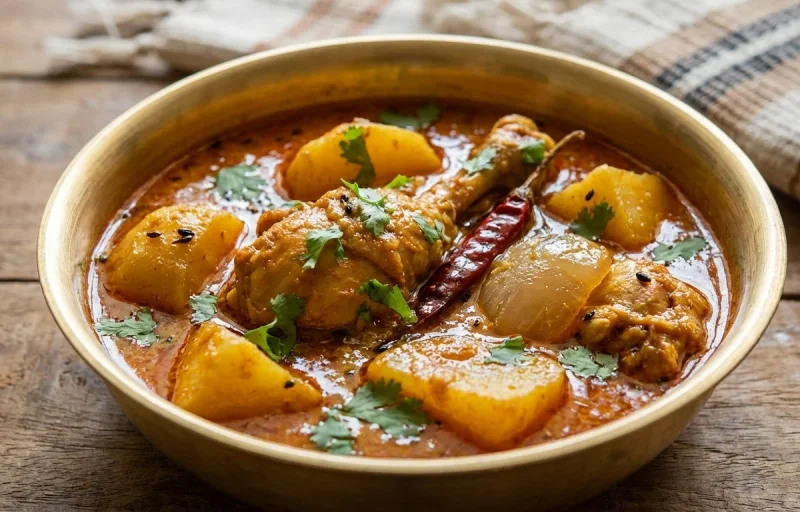
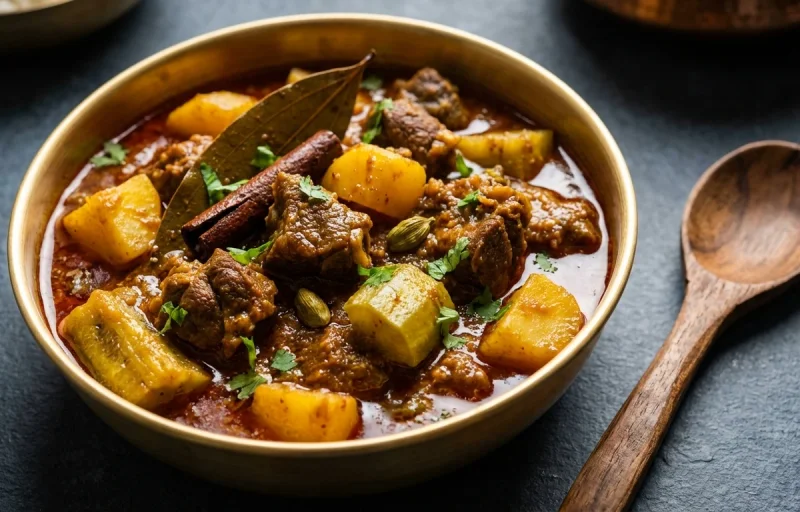
Til Diya Kukura Mangkho
A rustic Assamese chicken curry where toasted sesame seeds and black pepper form the heart of the dish. The chicken simmers slowly in a nutty, aromatic paste, resulting in tender meat cloaked in a rich, dark gravy. Earthy, warming, and deeply comforting—this is the taste of an Assamese kitchen.
For 4 servings
- prep · ~5 min
Prepare the sesame-pepper paste.
1.Dry roast 4 tbsp white sesame seeds in a pan on low heat until fragrant and lightly golden (2-3 min). Transfer to a plate to cool.2.Once cooled, grind the roasted sesame seeds with 12 black peppercorns and a splash of water into a smooth, thick paste. Set aside.TIPCool the seeds completely before grinding, or they'll release oil and become sticky. - prep · ~2 min
Bruise the aromatics.
1.In a mortar, lightly crush the roughly chopped onion, 6 garlic cloves, and 1 inch piece of ginger into a coarse, chunky paste. Do not make it too fine. - temper · ~10 min
Sear the chicken in mustard oil.
1.Heat 3 tbsp mustard oil in a heavy-bottomed skillet until it reaches its smoking point, then lower the heat to medium.2.Add 2 bay leaves and let them crackle for a few seconds.3.Add the 750g chicken pieces and sear until they are lightly browned on all sides (about 8-10 min). Remove the chicken and set aside.TIPHeating mustard oil to its smoke point removes its raw pungency and makes it sweeter and more digestible. - saute · ~12 min
Fry the aromatic paste.
1.In the same oil, add the crushed onion-garlic-ginger mixture.2.Sauté on medium-low heat, stirring frequently, until the raw smell is gone and the paste turns a deep golden brown (about 10-12 min).TIPPatience is key here—undercooking the paste will leave a raw, harsh taste in the final curry. - saute · ~7 min
Bloom the turmeric and cook the paste.
1.Add 1 tsp turmeric powder to the pan and sauté for 1 minute until it releases its aroma.2.Add the prepared sesame-pepper paste and 0.5 tsp salt. Cook for another 5-6 minutes, stirring constantly, until the oil starts to separate from the spice mixture. - simmer · ~30 min
Simmer the chicken in the gravy.
1.Return the seared chicken pieces and any collected juices to the pan.2.Add 2 slit green chilies and 1 cup of water. Stir well to coat the chicken in the gravy.3.Bring to a boil, then reduce the heat to low, cover with a lid, and let it simmer gently for 25-30 minutes, or until the chicken is tender and cooked through.TIPStir once or twice during simmering to prevent sticking; add a splash of hot water if the gravy thickens too much before the chicken is cooked. - rest · ~5 min
Let the flavors settle.
Turn off the heat and let the curry rest, covered, for 5 minutes. The gravy will thicken further and the flavors will meld beautifully.
- serve
Serve the Til Diya Kukura Mangkho hot.
Transfer to a serving bowl and serve hot with steamed rice or plain roti.
What to keep in mind.
6 tips from the recipe — small details that make a real difference to the final dish.
- 1Heat mustard oil until it smokes to tame its sharp pungency into a mellow nuttiness.
- 2Cool roasted sesame seeds completely before grinding, or they will turn into a sticky paste.
- 3Crush the onion-garlic-ginger coarsely in a mortar for rustic texture, not a smooth puree.
- 4Sauté the aromatic paste until deep golden brown to avoid a raw, harsh taste in the curry.
- 5Use bone-in chicken pieces for richer flavor and tender meat that doesn't dry out.
- 6Let the curry rest covered for 5 minutes after cooking so the gravy thickens and flavors meld.
Adapt it for your goals.
Low-oil
Reduce mustard oil to 1 tablespoon and use a non-stick pan. Sear the chicken quickly, then add a splash of water while sautéing the paste to prevent sticking. This lowers fat without sacrificing the core sesame-pepper flavor.
vegetarian (tofu/paneer)Vegetarian (tofu/paneer)
Replace chicken with 500g firm tofu or paneer cubes. Sear them lightly before setting aside, then simmer in the gravy for only 10 minutes. Perfect for a plant-based or vegetarian meal that still craves the nutty, peppery gravy.
extra spicyExtra-spicy
Increase black peppercorns to 20 and add 2 more slit green chilies. The heat builds gradually, making this version for those who love a fiery, tingly finish.
Why this is on our healthy list.
Rich in Antioxidants
Sesame seeds and black peppercorns are packed with antioxidants that help combat oxidative stress in the body.
Supports Bone Health
Sesame seeds are a good source of calcium and zinc, which are essential for maintaining strong bones and immune function.
Aids Digestion
Black pepper stimulates digestive enzymes and turmeric has anti-inflammatory properties that can soothe the gut.
High-Quality Protein
Chicken provides lean protein that supports muscle repair and keeps you feeling full longer.
Frequently asked questions
Yes, black sesame seeds work too. They have a slightly earthier and more bitter flavor, so reduce the quantity to 3 tablespoons and toast them a little longer.