
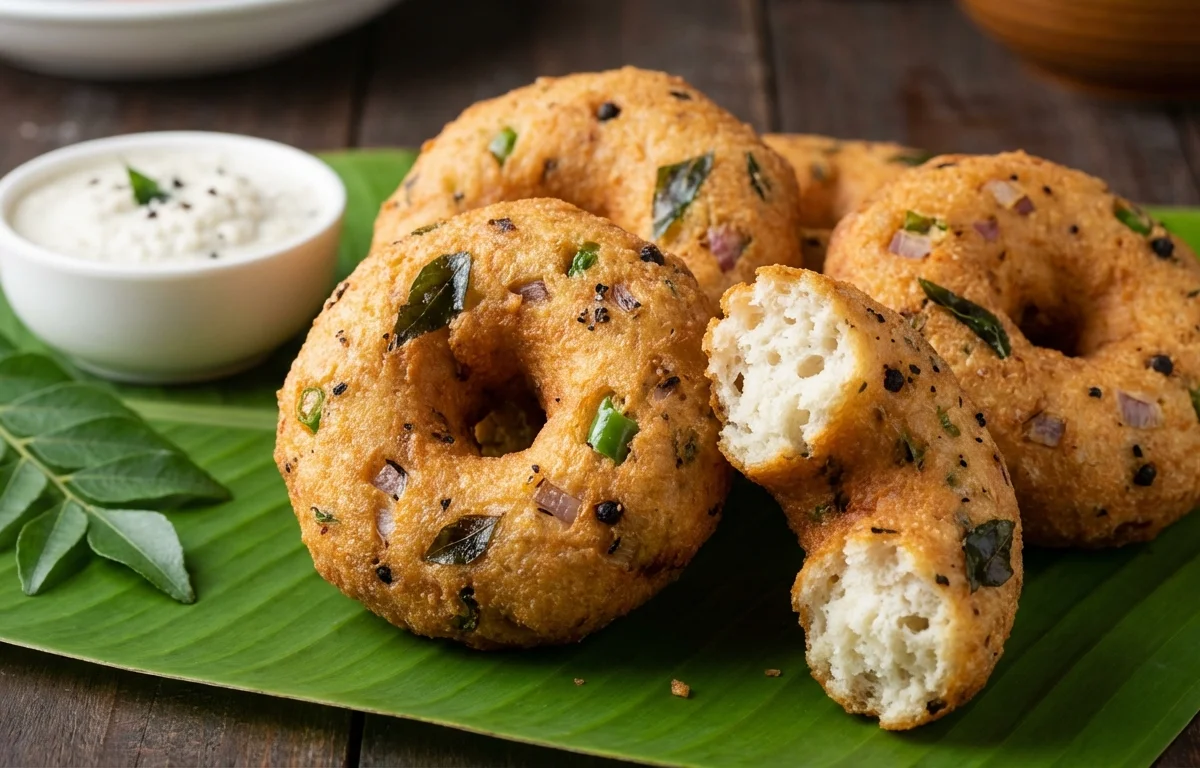
Ulundu Vadai
Crispy, golden fried lentil doughnuts with a soft, fluffy inside and a distinct hole in the center. A classic South Indian breakfast and festival staple, these savoury fritters pair perfectly with coconut chutney and sambar.
For 4 servings
- prep
Soak the urad dal.
Wash the urad dal thoroughly and soak in enough water to cover by 2 inches for 3 hours. Drain completely before grinding.
TIPWell-soaked dal grinds smoother with less water, which makes fluffier vadas. - mix · ~10 min
Grind the dal into a fluffy batter.
1.Add the drained urad dal to a grinder.2.Sprinkle 2-3 tablespoons of ice-cold water to start.3.Grind in short pulses, scraping down the sides, until the batter is smooth, light, and fluffy.4.Test readiness: drop a small ball of batter into a bowl of water; it should float immediately.TIPUse minimal water. A thick, airy batter is the secret to crispy yet soft vadas. - mix · ~2 min
Mix in the seasonings.
Transfer the batter to a bowl. Add chopped green chili, ginger, curry leaves, crushed black pepper, and salt. Mix well with your hand in one direction for a minute to incorporate air.
TIPMixing by hand in a single direction helps build the airy structure. - prep
Shape the vadas.
1.Wet your hands with water to prevent sticking.2.Take a lemon-sized ball of batter and place it on a damp cloth or plastic sheet.3.Flatten into a disc about 2 inches wide.4.Using a wet finger, make a hole in the center to create the classic doughnut shape.TIPKeep your palm and fingers wet at all times; the batter is very sticky. - fry · ~6 min
Deep fry the vadas.
1.Heat oil in a kadai over medium heat until a small drop of batter rises steadily without browning fast.2.Carefully slide 3-4 shaped vadas into the hot oil.3.Fry on one side until golden (2-3 minutes), then flip with a slotted spoon.4.Fry the other side until deep golden and crisp.TIPMaintain medium heat; high heat browns the outside too fast and leaves the inside raw. - fry
Drain and serve hot.
Remove vadas with a slotted spoon and drain on paper towels. Repeat shaping and frying with the remaining batter. Serve immediately.
TIPVadas are at their crispiest right out of the oil, so fry just before serving.
What to keep in mind.
5 tips from the recipe — small details that make a real difference to the final dish.
- 1Use ice-cold water when grinding the dal to keep the batter light and airy.
- 2Test the oil temperature by dropping a tiny bit of batter; it should sizzle and rise slowly.
- 3Wet your palms and fingers frequently to prevent the sticky batter from clinging.
- 4Fry only 3-4 vadas at a time to maintain oil temperature and ensure even cooking.
- 5Serve vadas immediately after frying for maximum crispiness; they soften as they cool.
Adapt it for your goals.
Onion Vadai
Add 1/2 cup finely chopped onion and a pinch of asafoetida to the batter for extra texture and a mild sweet-savory note.
Low OilLow-Oil
Shallow-fry the vadas in just 1/4 inch oil, flipping once, for a lighter version with less oil absorption.
Spicy Pepper VadaiSpicy Pepper Vadai
Increase black pepper to 1 teaspoon and add 1/2 teaspoon finely chopped garlic for a fiery, aromatic kick.
Why this is on our healthy list.
Rich in Plant Protein
Urad dal is packed with protein, making these vadas a satisfying plant-based snack that supports muscle repair.
Good Source of Dietary Fiber
The lentils provide fiber that aids digestion and helps maintain steady energy levels.
Frequently asked questions
Oily vadas usually mean the oil was not hot enough; maintain medium heat so the batter sets quickly without absorbing excess oil.


